

Why water sampling frequency matters for private wells
Many Swedish well owners assume their water is safe simply because it looks clear and tastes fine. That assumption can be dangerous. About 20% of Swedish wells show risk for microbiological contamination, and the troubling part is that contaminated water rarely signals its presence through smell or color. This article walks you through the real risks of irregular testing, explains exactly how often you should sample, and shows you how to turn your results into concrete steps that protect your family every single day.
Table of Contents
- Understanding the risks of irregular water sampling
- How water sampling frequency protects your family’s health
- Recommended sampling intervals and what influences frequency
- Turning results into practical actions
- The real value of consistent water sampling: what most guides miss
- Get expert help to protect your well water quality
- Frequently asked questions
Key Takeaways
| Point | Details |
|---|---|
| Routine testing prevents risks | Frequent water sampling helps identify contamination before it affects your family’s health. |
| Sampling frequency is customizable | Wells require different testing intervals based on age, exposure, and household needs. |
| Actionable results drive safety | Understanding and acting on test outcomes is key to maintaining safe drinking water. |
| Professional support adds value | Accredited labs and expert guidance help streamline your sampling and safeguard your well. |
Understanding the risks of irregular water sampling
Most people think of water quality as something fixed, something that either is or isn’t a problem. In reality, well water quality shifts constantly. Soil conditions change. Neighboring agricultural activity introduces new runoff. An aging well casing develops a small crack. None of these changes announce themselves. You simply continue drinking the water, unaware that something has changed underground.
Microbiological contamination is a real risk for Swedish private wells, and the health consequences range from mild stomach upset to serious illness, particularly in children, pregnant women, and elderly family members. Bacteria such as E. coli and coliform bacteria (a broad group of bacteria that indicate fecal contamination) enter groundwater through surface runoff, cracked well casings, and nearby septic systems. These organisms are invisible and odorless. The only way to know they are present is to test for them.
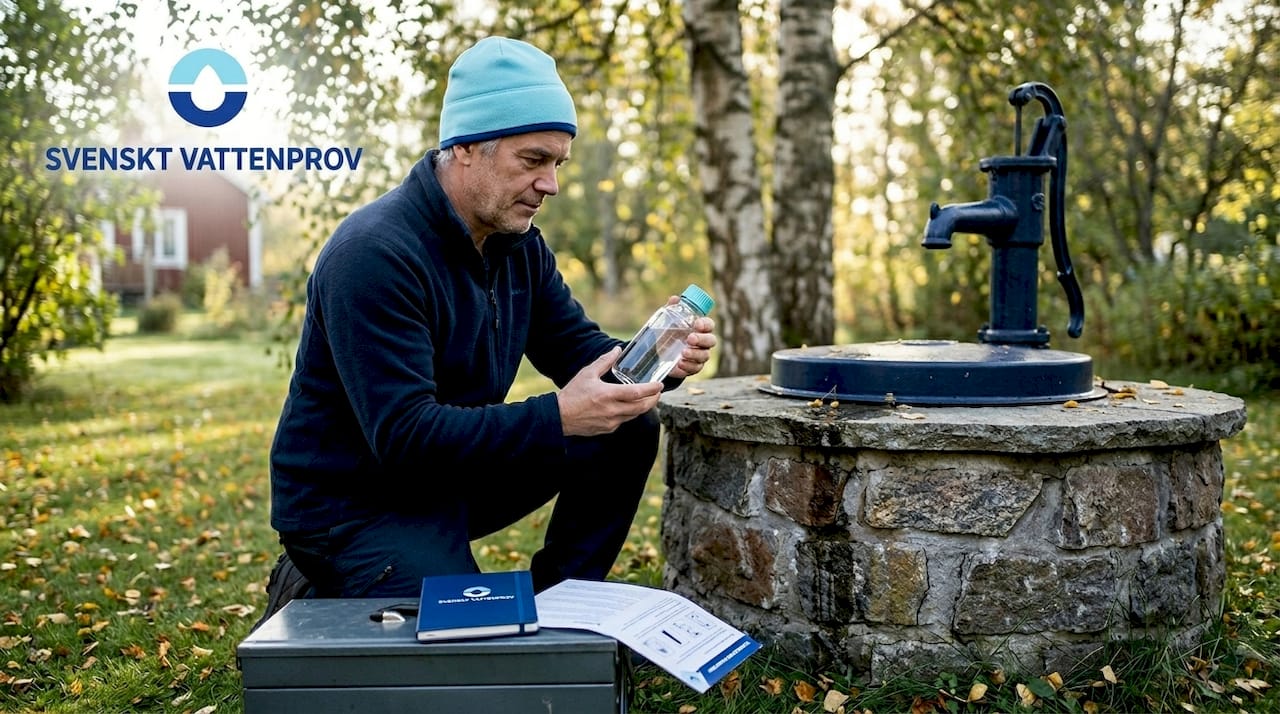
When sampling happens infrequently or not at all, problems accumulate silently. Consider a household that last tested in 2019. In 2021, a neighbor installed a new drainage ditch that subtly redirected surface water toward your well. By 2023, bacterial counts in your water crept above safe limits. You never knew. Your children were drinking that water for school lunches. You used it for cooking. Irregular sampling creates exactly these kinds of invisible exposure windows.
Here are the specific risks tied to infrequent testing that Swedish well owners should understand:
- Bacterial growth after heavy rainfall. Intense rain events can flush surface contaminants into shallow wells rapidly, especially in areas with sandy or gravelly soil.
- Seasonal nitrate spikes. Agricultural regions see elevated nitrate levels in spring following fertilizer application. Nitrates are particularly dangerous for infants under six months.
- Chemical buildup from old pipes. Lead and copper can leach into water from older distribution pipes inside your home. These levels change as pipes corrode further over time.
- Radon accumulation in granite-heavy regions. Radon, a naturally occurring radioactive gas, is commonly elevated in bedrock wells across regions like Värmland and Dalarna. Levels can shift as you pump more or less water seasonally.
- PFAS migration from nearby industrial sites. These persistent chemicals move through groundwater slowly but steadily.
“Waiting for visible signs of contamination before testing is like waiting for chest pain before getting a heart checkup. By then, the exposure has already happened.”
Good guidance on managing well water risks covers the full range of threats Swedish well owners face, but the single most effective defense against all of them is consistent, structured sampling at appropriate intervals. You cannot manage what you do not measure.
How water sampling frequency protects your family’s health
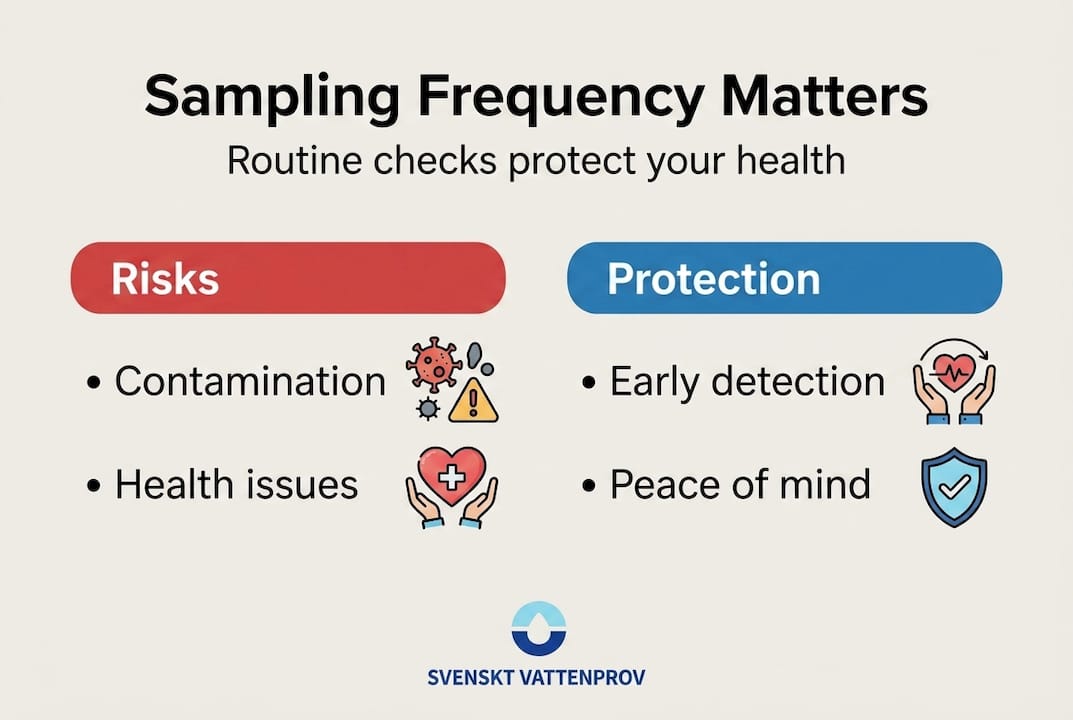
Routine sampling does more than generate a report. It creates a living record of your water’s behavior over time. When you sample consistently, each new result can be compared against prior results. You start to see patterns: a slight increase in iron levels each autumn, for example, or a recurring bacterial detection in early spring following snowmelt. These patterns give you the power to act before a minor issue becomes a serious one.
Private well owners can secure safe drinking water with routine testing protocols that combine both chemical and microbiological analysis. Here is how that process works in practice:
- Schedule your sample. Plan sampling at consistent times each year, ideally after a period of normal water use. Avoid sampling immediately after disinfecting your well.
- Collect the sample correctly. Use sterile containers, flush your tap for two minutes before collection, and follow proper handling procedures to avoid contamination during collection.
- Send it to an accredited lab. An accredited laboratory follows standardized procedures, so results are reliable and legally defensible. This matters if you ever need to present results to municipal authorities or for a property sale.
- Read your results against Swedish drinking water standards. Each parameter is measured against thresholds set by Livsmedelsverket (the Swedish Food Agency) and EU directives.
- Act on deviations. If a parameter exceeds safe limits, you receive specific guidance on next steps, whether that means shock chlorination, installing a filter, or drilling a new well.
- Repeat and compare. File each report and compare against prior years. A single result is useful; a series of results is powerful.
When you know which substances to analyze for your specific well type and region, you can also select the right test package rather than a generic panel that might miss region-specific concerns.
Pro Tip: Combine a full chemical panel with a microbiological analysis every time you test. Chemical issues like pH imbalance or elevated iron can actually encourage bacterial growth by affecting the effectiveness of natural disinfection in groundwater. Testing one without the other gives you only half the picture.
The health outcomes of consistent sampling are tangible. Families who test annually catch problems in early stages, when solutions are simpler and cheaper. Those who test only after noticing an issue often face more serious contamination events that require more intensive and costly remediation.
Recommended sampling intervals and what influences frequency
Effective water quality monitoring for private wells in Sweden depends on regular testing, but “regular” means different things depending on your specific situation. There is no universal answer that fits every well and every household. Folkhälsomyndigheten (the Swedish Public Health Agency) and Livsmedelsverket recommend testing at minimum every three years, but many experts and well-informed owners test annually or more often.
The right frequency for your well depends on several key factors:
- Age and condition of the well. Older wells, especially those drilled or dug before modern standards were established, are more vulnerable to structural degradation and contamination. They benefit from annual testing.
- Well type. Shallow dug wells are far more susceptible to surface water intrusion than deep bedrock wells. A dug well in an agricultural area should be tested at minimum once a year.
- Recent repairs or changes. Any time you have work done on your well, pump, or distribution pipes, test immediately afterward. Work can introduce contaminants or disturb sediment.
- Household vulnerability. Families with infants, pregnant women, elderly members, or immunocompromised individuals should test more frequently, at minimum once a year.
- Local environmental activity. New construction nearby, changes in agricultural practices, or industrial activity within your groundwater catchment area are all triggers for immediate testing.
- Prior test results. If a past result showed elevated bacteria or chemical levels, increase your sampling frequency until two consecutive clean results confirm stability.
The table below gives a practical starting point for deciding your sampling interval:
| Situation | Recommended frequency |
|---|---|
| New well, first year of use | Test immediately, then at 6 months |
| Established bedrock well, healthy adults only | Every 2 years minimum |
| Established dug well | Every year |
| Household with infants or pregnant women | Every year, minimum |
| Well near agricultural land | Every year, ideally spring and autumn |
| Well with prior contamination history | Every 6 months until stable |
| Following well repairs or pump replacement | Immediately after work |
Using a structured approach to monitoring water quality over time ensures you never fall into a false sense of security simply because your last test was clean. Water quality is dynamic, not static. And checking environmental quality in your surrounding area adds valuable context to your lab results.
Turning results into practical actions
Getting your results back can feel overwhelming if you are not used to reading water analysis reports. Numbers, units, and parameter names stack up quickly. But understanding the basics puts you in control of your next steps.
Results typically fall into three categories: within safe limits, slightly elevated but below action thresholds, or above safe limits. Each category calls for a different response. The table below maps common findings to practical actions:
| Result | What it means | What to do |
|---|---|---|
| E. coli detected | Fecal contamination present | Stop drinking untreated water; shock chlorinate the well; retest in 2 weeks |
| Coliform bacteria elevated | Possible surface intrusion | Inspect well casing; retest after repairs |
| Nitrate above 50 mg/L | Exceeds EU drinking water limit | Do not give to infants; investigate sources; install nitrate filter |
| Iron above 0.2 mg/L | Staining, taste issues | Install iron filter; retest after installation |
| pH below 6.5 | Corrosive water, pipe leaching risk | Install neutralization filter; retest |
| PFAS detected | Persistent chemical contamination | Contact municipality; consider alternative water source |
| Radon above 100 Bq/L | Elevated radiation risk | Install aeration system; retest |
| All parameters within limits | Water is currently safe | File report; schedule next test per your interval |
Following the correct water sampling instructions before you even collect your sample ensures the results you receive are accurate and actionable. An incorrectly collected sample can show false positives or miss real contamination, sending you in the wrong direction entirely.
When you receive results showing a deviation, act promptly. Contact your municipality’s environmental health office (miljö- och hälsoskyddsnämnd) to report serious contamination. They can advise on local resources and whether your issue may be affecting neighboring wells. Document every action you take.
Pro Tip: Keep a dedicated folder, physical or digital, where you store every water analysis report you receive. Note the date, the well conditions at the time, any recent activity in the area, and what actions you took. Over three or four testing cycles, this log becomes an incredibly valuable tool for spotting slow-developing trends that no single report would reveal on its own.
The real value of consistent water sampling: what most guides miss
Most resources on well water testing focus on the technical side: which parameters to test, what thresholds mean, how to collect a sample properly. All of that matters. But there is something these guides consistently leave out, and it is the reason we believe so strongly in testing more often than the minimum.
Consistent sampling builds a relationship with your water. It transforms your well from an unknown underground source into something you actually understand. You know how your water behaves after a dry summer. You know that your iron levels drift slightly in winter. You know that your bacterial results have been clean for six consecutive years, which tells you your well casing is intact and your surroundings are stable. That knowledge is genuinely powerful.
The peace of mind this brings is not trivial. It changes how you interact with your home. You stop wondering if the occasional stomach ache might be the water. You stop feeling uncertain when guests visit or when your children come home from school thirsty. Families who test regularly tell us the results are almost always good news, and even when they are not, early detection means the fix is far simpler.
Explore a broader water quality control perspective for the long-term view. Going beyond the minimum recommended interval is not excessive; it is an investment in certainty, in health, and in the long-term reliability of your most essential household resource.
Get expert help to protect your well water quality
If reading through this guide has made you realize your last water test was longer ago than it should have been, now is a good time to take the next step.
Svenskt Vattenprov offers accredited water analysis tailored specifically for Swedish private well owners. Every sample is analyzed by SGS Analytics and Eurofins, a Swedac-accredited laboratory, against Swedish and EU drinking water standards. Whether you need a targeted bacteria testing package for a quick microbiological check or a full-spectrum analysis covering dozens of parameters, you will find the right solution among our water analysis packages. The process is straightforward: we send you everything you need, you collect your sample, and we handle the rest. Clear results, plain-language explanations, and concrete recommendations follow every report.
Frequently asked questions
How often should I sample my private well water in Sweden?
Most experts recommend annual or biannual testing, but newer wells and homes with small children may require more frequent checks, as effective monitoring depends on your specific well conditions and household situation.
What contaminants are most important to test for?
Microbiological contaminants and key chemicals such as nitrates and metals are crucial to monitor regularly, since microbiological contamination alone affects roughly one in five Swedish private wells.
Can I take water samples myself, or do I need a professional?
You can take samples yourself by following proper sampling instructions, but using an accredited laboratory for analysis ensures your results are reliable, standardized, and legally defensible.
What should I do if my test shows contamination?
Stop consuming untreated water immediately, consult an expert for corrective action, and increase your sampling frequency until at least two consecutive results confirm the water is safe, following guidance for well owners on remediation steps.