

Why Water Sampling is Important for Private Wells
Did you know that 20% of private wells in Sweden have undrinkable water? Many well owners drink water daily without knowing that it contains bacteria, arsenic, radon, or PFAS. Water testing is not just a recommendation but a vital measure to protect your family's health and your installations. This guide explains why regular testing is crucial, how often you should test your well water, and which methods ensure reliable results. You will receive concrete advice to take control of your water quality.
Table of Contents
- Key points about water testing
- Why water testing is vital for private wells
- Recommended frequency and special cases for water testing
- Correct methods for water testing and analysis
- Specific risks depending on well type and environmental factors
- How Svenskt Vattenprov helps you secure your well water
- Frequently asked questions about water testing for private wells
Key Insights
| Point | Details |
|---|---|
| Purpose of testing | Regular water testing protects health and installations and enables early action to protect the environment. |
| Recommended frequency | The Swedish Food Agency recommends testing every three years for stable wells without known issues. |
| Different wells, different focus | Different wells require varying tests and frequencies depending on local risks and sources. |
| Accurate testing methods followed | Methods must follow strict protocols to ensure accuracy. |
Key points about water testing
To quickly understand why water testing is necessary, we summarize the most important insights:
| Key point | Explanation |
|---|---|
| Prevents health risks | Water testing identifies harmful substances before they affect your health |
| Recommended frequency | The Swedish Food Agency recommends testing at least every three years |
| Requires correct methodology | Testing must follow strict protocols for accurate results |
| Different needs per well type | Dug and drilled wells require different test parameters |
| Protects more than health | Early detection preserves installations, environment, and property value |
Why water testing is vital for private wells
When you own a private well, you are responsible for the water's quality. Unlike municipal water, which is checked daily, well water lacks this oversight. 20% of private wells contain undrinkable water with bacteria, arsenic, radon, or PFAS. A 2008 study showed that 20% of Swedish wells had undrinkable water. These figures are concerning because most contaminants are invisible and tasteless.
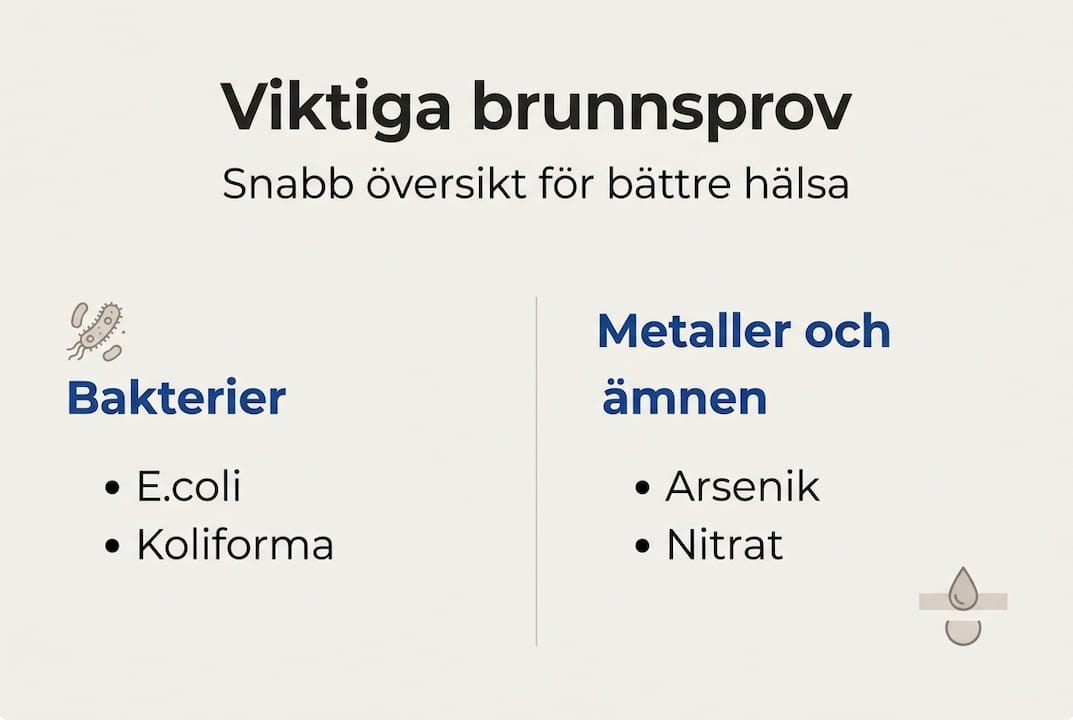
Bacteria such as E.coli and coliform bacteria can cause stomach illnesses and more severe infections. Arsenic increases the risk of cancer with long-term exposure. Radon in drinking water contributes to indoor radon gas, which is the second most common cause of lung cancer after smoking. PFAS are persistent chemicals that accumulate in the body and can affect the immune system and hormonal balance.
In addition to health risks, poor water quality damages your installations. High iron and manganese levels discolor porcelain and laundry. Low pH values cause corrosion in pipes and faucets. Hard water with high calcium levels creates limescale deposits that damage heating elements and reduce water flow. These damages cost thousands of SEK to remedy.
Contaminants come from both natural and human sources:
- Natural minerals and metals from bedrock leach into groundwater
- Bacteria from surface water penetrate through leaky well pipes or covers
- Fertilizers and pesticides from agriculture seep into groundwater
- Industrial chemicals and PFAS from nearby activities spread via groundwater currents
- Old sewage systems and leaking septic tanks contaminate the surrounding soil
Well water statistics show that problems vary geographically. Granite areas in Värmland and Dalarna have higher radon levels. Coastal areas can suffer from saltwater intrusion. Agricultural areas in Skåne often have elevated nitrate levels. Without regular testing, you won't detect these problems until it's too late.
Water quality changes over time. A well that had clean water five years ago may today contain dangerous levels of contaminants due to environmental changes, aging well construction, or new sources of pollution in the area.
Regular water testing gives you control. You detect problems early before they harm health or property. You can take preventive measures that are cheaper than addressing established problems. You get documentation needed for property sales. Above all, you get peace of mind knowing your water is safe.
Recommended frequency and special cases for water testing
Knowing when to test your well water is as important as doing it. The Swedish Food Agency recommends testing at least every three years for stable wells without known issues. This frequency catches slow changes in water quality that can occur gradually.
For certain situations, more frequent checks are required:
- Annual testing if small children live in the household, as they are more sensitive to contaminants
- Annual check if the water's odor, taste, color, or clarity changes noticeably
- Immediate testing after a flood that may have introduced bacteria and contaminants
- Test after major construction or groundwork within 100 meters of the well
- Check if new businesses are established in the vicinity that could affect groundwater
- Testing after repairs or changes to the well or water system
New wells require special attention. Test your new well immediately after installation to establish a baseline. Repeat the test after six months and then annually for the first three years. This pattern catches early problems and confirms that the well is stable before you switch to three-year intervals.
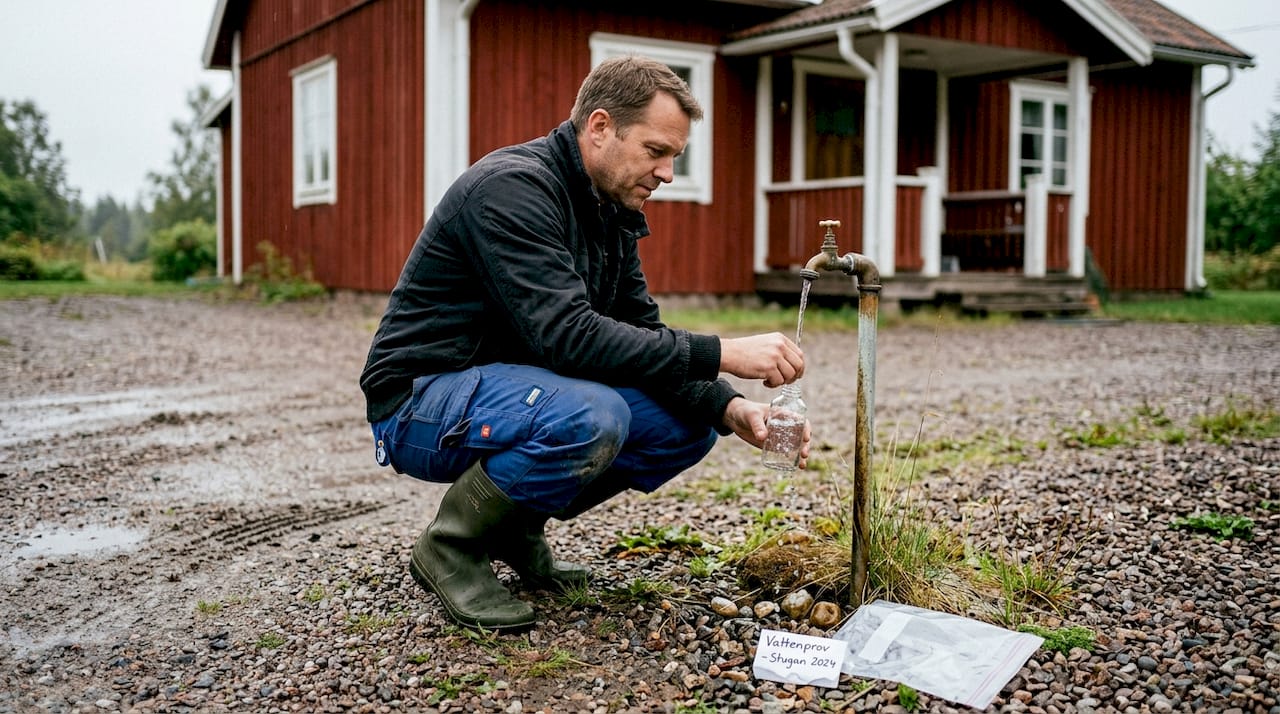
Seasonal residences with wells that are unused part of the year need testing every spring before the season begins. Stagnant water in pipes can develop bacterial growth. Additionally, changes during winter can affect water quality.
Pro tip: Set a reminder in your calendar for the next test as soon as you receive your analysis results. Many well owners forget to check and let five to ten years pass between tests. A simple calendar system ensures you adhere to recommended intervals and avoid unnecessary risks.
Document each test with date and results. This creates a history that helps you detect trends. If iron levels gradually increase over several tests, you can act before it becomes a problem. The history is also valuable for property sales as it shows buyers that the well is managed responsibly.
When planning testing, avoid periods immediately after heavy rain or snowmelt. Wait a few days for groundwater to stabilize. Testing during extreme weather conditions can yield misleading results that do not represent normal water quality. For instructions on water testing, you can find detailed guidance on the correct timing and method.
Correct methods for water testing and analysis
How you take the water sample determines whether the results will be reliable. Incorrect sampling leads to false positives that cause unnecessary worry, or worse, false negatives that miss real problems. Sampling requires sterile bottles from Swedac-accredited laboratories, thorough flushing, and quick transport.
Start by choosing the correct sampling point. Take the sample from a faucet directly connected to the well without filters or softeners in between. Kitchen or bathroom faucets work well. Avoid outdoor faucets that may have been unused and collected bacteria.
Follow this step-by-step method:
- Clean the outside of the faucet with disinfectant or alcohol to avoid external contamination
- Open the faucet fully and let the water run for at least 10 minutes to flush out stagnant water
- Reduce the water flow to a steady stream without completely closing the faucet
- Open the sample bottle without touching the inside of the lid or the bottle's mouth
- Fill the bottle according to the laboratory's instructions, usually to the indicated fill line
- Close the bottle immediately and label it with the date, time, and sampling location
- Chill the sample immediately and send it the same day or no later than the next morning
Timing is critical for microbiological samples. Bacteria continue to grow or die in the sample bottle depending on temperature and time. Samples left warm for several days yield completely unreliable results. Use a cooler bag or ice packs for transport during warm months.
Pro tip: Never take a sample immediately after returning from vacation or after the water has been stagnant for a long time. Flush the well thoroughly for at least 30 minutes before sampling to get a representative sample of the groundwater, not the stagnant water in the pipes.
Laboratory analysis covers several important parameters:
| Parameter | What it shows | Limit value |
|---|---|---|
| E.coli | Fresh fecal contamination | 0 per 100 ml |
| Coliform bacteria | General bacterial contamination | 0 per 100 ml |
| pH value | Acidity, affects corrosion | 6.5-9.5 |
| Iron | Discoloration and taste impact | 0.2 mg/l |
| Nitrate | Fertilizers and sewage leakage | 50 mg/l |
| Arsenic | Natural toxin from bedrock | 10 µg/l |
| Radon | Radioactive gas from bedrock | 100 Bq/l |
| Turbidity | Cloudiness from particles | 4 FNU |
Each parameter has specific limit values based on health risks and technical problems. The laboratory compares your results against these limit values and clearly marks deviations. You will receive a report explaining what each value means and what actions are recommended.
To deepen your understanding of water quality and testing, you can visit the knowledge center for water testing where you will find detailed guides and explanations of various parameters.
Specific risks depending on well type and environmental factors
Not all wells are alike. Dug and drilled wells have fundamentally different risk patterns that affect which parameters you should prioritize when testing. Environmental factors around the well also play a crucial role in what contaminants may arise.
Dug wells are typically shallow, often 3-10 meters deep, and constructed by sinking concrete rings into the ground. Their greatest weakness is their proximity to the ground surface. Dug wells have a higher microbiological risk because surface water can more easily penetrate through leaky joints or around the well casing. Snowmelt and heavy rains can quickly carry bacteria from the ground surface down to the well.
Common problems in dug wells:
- Coliform bacteria and E.coli from surface water, animals, or leaking sewage
- Elevated nitrate levels from fertilizers seeping down from the surface
- Turbidity and sediment from soil particles
- Seasonal variations in water quality depending on precipitation
Drilled wells go deeper, often 50-150 meters into the bedrock, and are better protected from surface influence. Their risks are instead linked to bedrock chemistry and geological conditions. Drilled wells have a higher chemical risk with substances like arsenic and radon leaching from the bedrock.
Common problems in drilled wells:
- Arsenic from granite rocks and sulfide minerals
- Radon from uranium in bedrock, especially in Värmland, Dalarna, and Småland
- Iron and manganese leaching from bedrock at low pH
- Fluoride in certain geological formations
Comparison between well types:
| Factor | Dug well | Drilled well |
|---|---|---|
| Depth | 3-10 meters | 50-150 meters |
| Main risk | Bacteria and surface water | Chemicals from bedrock |
| Prioritized tests | E.coli, coliforms, nitrate | Arsenic, radon, metals |
| Weather impact | High, especially with rain | Low, more stable quality |
| Recommended frequency | Annually with small children | Every three years if stable |
Environmental factors around the well affect both types of wells. Drought concentrates contaminants as groundwater levels drop. Flooding introduces new contaminants. Nearby construction can disrupt groundwater flows and dislodge sediment. New roads with winter road salting can increase chloride levels in groundwater.
Pro tip: Adapt your testing plan dynamically based on changes in the surroundings. If a neighbor installs a new sewage system within 50 meters of your well, take an extra sample after six months. If new construction is happening in the area, increase testing frequency until you see that the water quality is stable.
Regional differences in Sweden create various challenges. Coastal areas risk saltwater intrusion with over-extraction. Areas near airports may have PFAS in drinking water from firefighting foam. Forest areas with acid rain often experience low pH, which increases metal leaching. Agricultural areas have elevated nitrate and pesticide levels.
By understanding your specific well type and local environmental factors, you can tailor your testing to capture the most relevant risks. This provides better protection at a lower cost than running standard tests that might miss what is actually a problem in your specific area.
How Svenskt Vattenprov helps you secure your well water
Now that you understand the importance of water testing, you can take the next step to protect your family's health. Svenskt Vattenprov offers complete solutions that make the process easy and reliable from start to finish.
We provide Swedac-accredited analysis packages tailored to your well type and needs. Water analysis for private wells includes everything you need: sterile sample bottles, clear instructions, pre-paid shipping, and laboratory analysis. You don't need to worry about which parameters are important; we have already compiled the most relevant tests based on Swedish conditions and the Swedish Food Agency's recommendations.
Our complete water analysis package covers 71 parameters for maximum peace of mind. It includes microbiological, chemical, and physical analyses that give you a complete picture of your water quality. All analyses are performed by SGS Analytics, a leading Swedac-accredited laboratory that adheres to the same standards as municipal waterworks.
The results are presented in easy-to-understand reports where each parameter is clearly explained. You receive concrete recommendations for any necessary actions and can always contact our support for advice. Visit our knowledge center for water testing to learn more about water quality and how to interpret your results. Take control of your water quality today.
Frequently asked questions about water testing for private wells
How often should I test my well water?
The Swedish Food Agency recommends testing at least every three years for stable wells. Test annually if small children live at home, if the water's odor or taste changes, or after floods and construction work nearby. New wells should be tested immediately upon installation, after six months, and then annually for three years.
Which contaminants are most important to test for?
Prioritize E.coli and coliform bacteria, which indicate fecal contamination. Also test for nitrate, arsenic, radon, iron, and pH value. For dug wells, bacteria and nitrate are most important. For drilled wells, focus on arsenic, radon, and metals from the bedrock. PFAS testing is recommended near airports and industries.
Can I do the water test myself without a laboratory?
You can take the sample yourself at home with kits from accredited suppliers, but the analysis must be performed by a Swedac-accredited laboratory for reliable results. Home tests from stores only provide approximate values and are not accurate enough to assess drinking water quality according to Swedish standards.
What do I do if my water test shows contamination?
Stop drinking the water until the problem is resolved. For bacteria, boil the water for at least five minutes before use. Contact your municipality's environmental office for advice on measures. Depending on the contamination, you may need disinfection, installation of water filters, UV light, or in the worst case, a new well. Take a follow-up sample after remediation.
Are there legal requirements for water testing for private wells?
There is no general legal requirement for private well owners to test their water regularly. However, the municipality may require testing if they suspect a health risk. For property sales, a current water analysis is required according to good real estate practice. The Swedish Food Agency's recommendation for testing every three years is strong guidance, even if it is not legally binding.
How does the season affect when I should take water samples?
Avoid sampling immediately after heavy rain or snowmelt, as temporary surface water intrusion can yield misleading results. Spring and autumn are often best as groundwater levels are stable. For seasonal residences, take samples every spring before the season begins. Visit questions and answers about water testing for more detailed information on timing and methodology.