

The Importance of Water Quality Control in 2026: Securing Your Drinking Water
As a well owner, you bear sole responsibility for your household's drinking water. In 2026, stricter legal requirements and climate change will pose new challenges for water quality. Droughts and floods are affecting groundwater more than ever before. Regular water analyses are no longer just a recommendation but a necessity to protect your family's health. This article provides concrete guidance on choosing the right analyses, understanding the differences between well types, and making informed decisions about long-term effective measures.
Table of Contents
- Key Points
- Criteria for Effective Water Monitoring 2026
- Different Types of Water Analyses and Their Significance
- Comparison Between Dug and Drilled Wells from a Water Quality Perspective
- Decision-Making: How to Choose the Right Water Monitoring and Measures 2026
- Ensure Your Drinking Water with Professional Water Analysis
- Frequently Asked Questions About the Importance of Water Monitoring 2026
Key Points
| Point | Details |
|---|---|
| Regular sampling | Well owners must analyze water at least every three years according to current recommendations. |
| Well type determines risks | Dug wells risk bacteria, while drilled wells more often contain chemical substances like radon. |
| Correct analysis is critical | Selection of analysis package is based on well type, geographical location, and specific risk factors. |
| Address the root cause first | Prioritize well maintenance and sealing before installing filters for a sustainable solution. |
Criteria for Effective Water Monitoring 2026
Understanding the criteria that govern water monitoring helps you plan correctly. Well owners in Sweden are solely responsible for the quality of their drinking water through regular analyses at least every three years, annually for households with small children or multiple properties. This responsibility has been strengthened in 2026 as climate change increases pressure on our groundwater resources.
Climate impact plays an increasingly significant role. Extreme weather events such as prolonged drought or heavy rainfall change the composition of groundwater and can lead to bacterial intrusion or chemical changes. When the ground dries out, cracks can appear, allowing surface water to enter, while floods force pollutants into the groundwater.
To ensure reliable results, you should only use accredited laboratories that follow the standards of the Swedish Food Agency and the Swedish Environmental Protection Agency. This guarantees that the analysis is assessed against Swedish drinking water requirements and EU limit values. A guide for well owners can help you navigate these requirements.
Most important criteria for water monitoring 2026:
- Test at least every three years, annually under special circumstances
- Analyze after extreme weather or visible changes in the water
- Only use Swedac-accredited laboratories
- Adapt analysis choice to well type and geographical location
- Document all results for long-term follow-up
Pro tip: Book a water analysis immediately after periods of unusual weather. Heavy rainfall or drought can temporarily affect water quality, and early detection gives you time to act before the problem worsens.
Different Types of Water Analyses and Their Significance
Choosing the right analysis requires understanding what different tests actually measure. Each type of analysis reveals specific threats to your water quality and provides a basis for targeted measures.
Bacterial analyses detect microorganisms such as E. coli and coliform bacteria. These pathogens can cause severe gastrointestinal illnesses and are particularly dangerous for children, the elderly, and people with weakened immune systems. A bacterial water analysis is fundamental for all well owners because bacterial contamination can occur rapidly after rain or snowmelt.
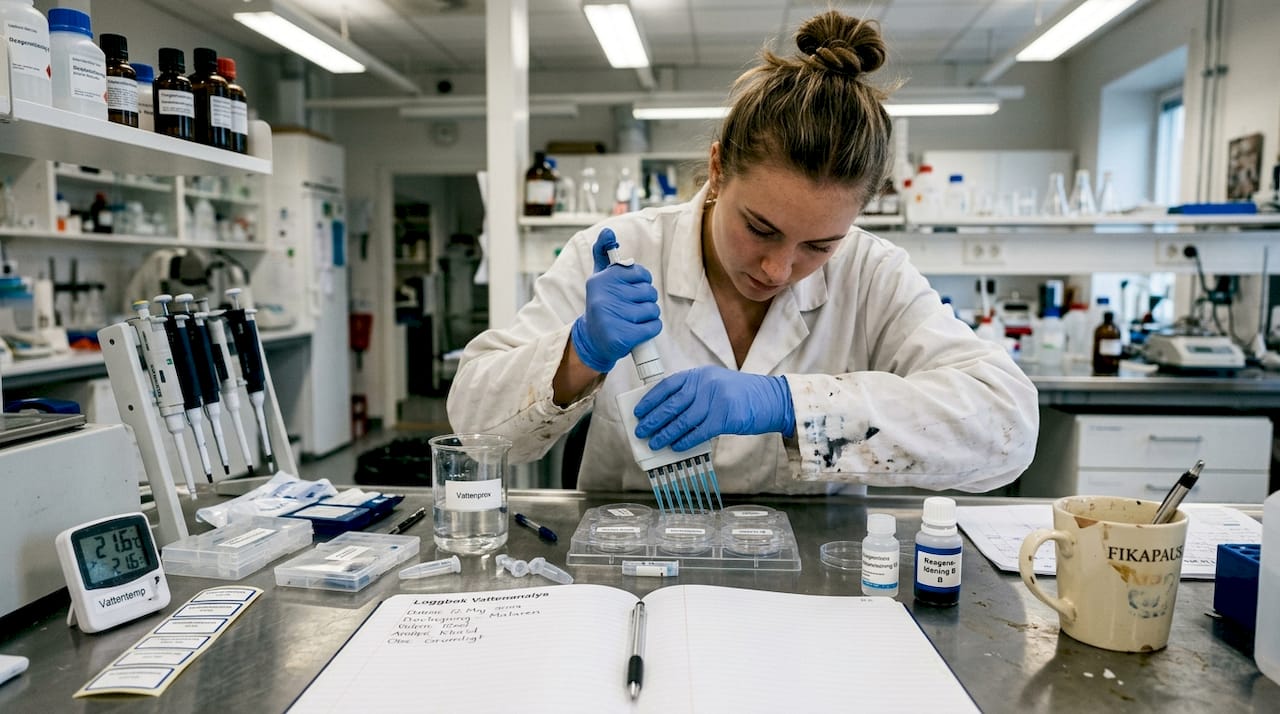
Chemical analyses identify substances such as arsenic, radon, nitrates, and heavy metals. These substances cannot be detected by the naked eye but pose long-term health risks. Radon in drinking water increases the risk of lung cancer when released into the air during showering, while arsenic is linked to cancer and cardiovascular diseases.
20% of Swedish private wells have unfit water and 80% have remarks, including bacteria and chemical exceedances. This statistic underlines why complete analyses are important. A complete water analysis provides a comprehensive picture of both microbiological and chemical parameters.
Most common analysis types:
- Bacterial analysis: focuses on E. coli, coliform bacteria, and intestinal enterococci
- Basic chemical analysis: measures pH, hardness, iron, manganese, and nitrates
- Extended chemical analysis: includes heavy metals, arsenic, and fluoride
- Radon analysis: specific measurement of radon content in water
- PFAS analysis: tests for the presence of persistent fluorinated substances
Simple tests can provide a false sense of security. Water can be crystal clear but still contain dangerous bacteria or chemical substances. Therefore, a broad analysis is always recommended for the first sampling, followed by targeted tests based on identified risks.
Comparison Between Dug and Drilled Wells from a Water Quality Perspective
Your well type determines the risks you face and which analyses you should prioritize. The differences between dug and drilled wells are significant in terms of both construction and water quality.
Dug wells have a higher risk of bacterial contamination, while drilled wells often have chemical contamination like radon and arsenic. This is because dug wells access groundwater at shallow depths, often 3 to 10 meters, where surface water can more easily penetrate through cracks in the casing or lid. Drilled wells access deeper groundwater reservoirs in bedrock, often 50 to 150 meters, where the water has been filtered through the bedrock but may have dissolved minerals and naturally occurring substances.
A dug well water analysis focuses extra on bacteriological parameters because these wells are susceptible to surface water intrusion. Rain, snowmelt, and nearby sources of pollution such as sewage or fertilized fields pose direct threats.
Drilled wells, on the other hand, require a focus on chemical parameters. A drilled well water analysis includes tests for radon, arsenic, uranium, and other bedrock-related substances that vary depending on the geology of your area.
| Well type | Main risks | Recommended analyses | Most common measures |
|---|---|---|---|
| Dug well | Bacteria, surface water intrusion, nitrates | Bacterial analysis annually, chemical analysis every three years | Sealing of casing, new lid, distance to pollution sources |
| Drilled well | Radon, arsenic, iron, manganese, hard water | Chemical analysis including radon, bacterial test as needed | Radon aeration, chemical filter, water softener |
Pro tip: Dug wells more often require maintenance of seals and lids. Inspect your well every spring after snowmelt and after heavy rains. Drilled wells are more stable but should be tested for radon if you live in granite areas such as Småland, Värmland, or northern Sweden.
Measures differ significantly. For dug wells, it often involves physical repairs such as sealing cracks, replacing the lid, or improved drainage around the well. For drilled wells, the solution is more often technical with filters, aeration systems, or water conditioning.
Decision-Making: How to Choose the Right Water Monitoring and Measures 2026
Making the right decision requires a structured approach. Follow these steps to ensure optimal water quality:
- Analyze your well type and identify specific risk factors based on construction and geographical location
- Choose an accredited analysis package that covers relevant parameters for your situation
- Interpret the results carefully and prioritize measures based on health risk and exceedances of limit values
- Address the root cause through well maintenance before installing filters or purification equipment
The increased importance of water monitoring in 2026 is due to stricter limit values and climate impact. Addressing causes before filters leads to better sustainability and lower operating costs. A filter can temporarily mask problems but does not solve underlying deficiencies in the well's construction or placement.
The economic perspective plays a role. A thorough well renovation initially costs more than a filter but provides long-term security without ongoing maintenance. Filters require regular cartridge replacement, monitoring, and can give a false sense of security if not properly maintained.
| Measure | Cost | Durability | Advantages | Disadvantages |
|---|---|---|---|---|
| Well renovation | 30,000 - 80,000 SEK | 20-30 years | Solves the root cause, no ongoing maintenance | High initial cost |
| UV filter bacteria | 8,000 - 15,000 SEK | 5-10 years | Effective against bacteria, quick installation | Requires electricity, annual lamp replacement |
| Chemical filter iron/manganese | 15,000 - 35,000 SEK | 10-15 years | Improves taste and color | Regular filter change, takes up space |
| Radon aeration | 5,000 - 12,000 SEK | 15-20 years | Simple solution for radon | Requires space, some noise level |
| Regular testing | 1,500 - 3,000 SEK/year | Ongoing | Early warning, documentation | No direct action |
A well water statistics shows that the majority of problems could be prevented with proper maintenance and early detection. Understanding important water parameters helps you interpret analysis results and prioritize correctly.
Health benefits are immediate when you address water problems. Bacteria-free water reduces the risk of gastrointestinal illnesses. Low levels of arsenic and radon reduce long-term cancer risk. Correct pH value and low hardness protect your plumbing system and appliances from corrosion and deposits.
Ensure Your Drinking Water with Professional Water Analysis
Once you understand the importance of regular water monitoring, the next step is to choose the right partner for the analysis. Professional water analyses from accredited laboratories give you the security you need to make informed decisions about your drinking water.
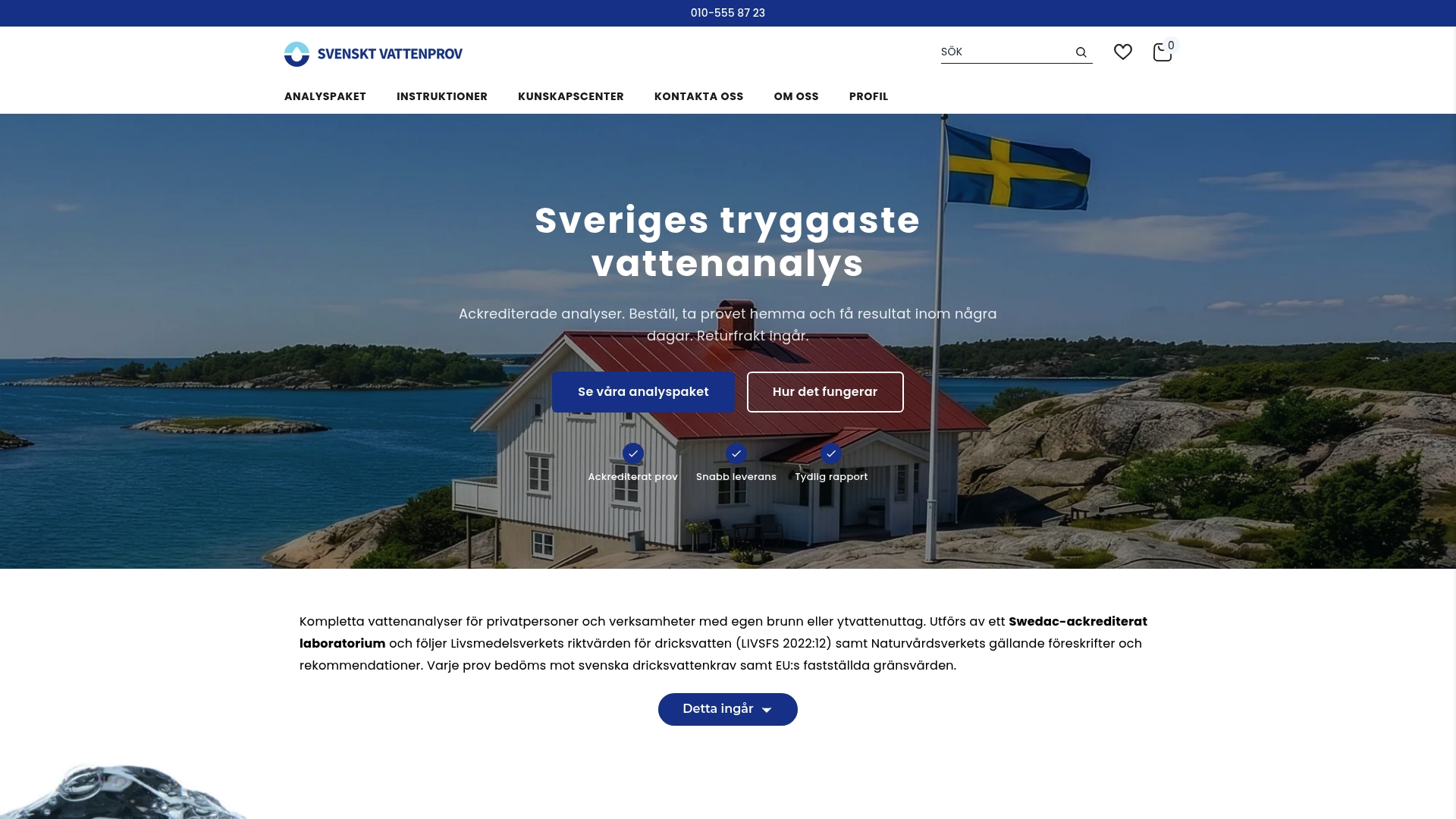
Svenskt Vattenprov offers analysis packages specifically adapted for Swedish well owners. All analyses are performed by SGS Analytics, a Swedac-accredited laboratory that follows the same standards as apply to public waterworks. You receive not only figures but clear explanations and concrete recommendations for each parameter.
Our complete water analyses cover both microbiological and chemical parameters, adapted depending on whether you have a dug or drilled well. With thousands of satisfied customers since 2018, we understand the regional differences in water quality from Skåne to Norrland. Choose the right water analysis for your private well and get expert help to interpret the results to protect your family's health in 2026.
Frequently Asked Questions About the Importance of Water Monitoring 2026
How often should I test my well water?
The Public Health Agency of Sweden recommends sampling at least every three years under normal conditions. Households with small children, pregnant women, or immunocompromised individuals should test annually. If there are visible changes in taste, smell, or color, you should analyze immediately, regardless of when the last test was conducted.
Which analysis is most important for my well?
It depends on the well type and geographical location. Dug wells primarily require bacterial analysis due to surface water risk. Drilled wells need chemical analysis including radon and arsenic. A complete analysis during the first sampling provides the best overview and identifies specific risks for your property.
What do I do if there's a remark in the water analysis?
In case of bacterial findings, you should boil the water until the problem is resolved. Contact a well expert for inspection and measures such as sealing or cleaning. For chemical exceedances, the action depends on the substance and concentration, ranging from simple filtration to more extensive well renovation. The analysis report provides specific recommendations.
Can the climate affect my well water quality?
Absolutely. Extreme weather directly affects groundwater. Prolonged drought concentrates substances and can cause cracks that allow surface water to enter. Heavy rains and floods push pollutants from the ground surface into the well. Climate change makes regular monitoring more important than ever to detect changes early.
How do I choose the right analysis package?
Start by identifying your well type and any known problems in the area. Dug wells suit packages with a focus on bacteria. Drilled wells in granite areas need radon testing. For the first time, a complete package is always recommended to map all parameters. Afterwards, you can choose targeted analyses based on identified risks and previous results.
Recommendation
- Ensuring Clean Drinking Water: A Guide for Well Owners 2026 – Svenskt Vattenprov
- What is Water Hygiene? A Guide for Homeowners with Private Wells 2026 – Svenskt Vattenprov
- Detect Signs of Contaminated Drinking Water – Protect Your Well 2026 – Svenskt Vattenprov
- The Swedish Food Agency Drinking Water: Limit and Guideline Values – Svenskt Vattenprov