

Understand water quality trends: keep your Swedish well safe
TL;DR:
- Up to 20% of Swedish private wells fail safety standards due to contamination despite appearing fine.
- Regular, ongoing water testing is essential to detect changes and prevent health risks.
- Monitoring regional patterns and parameters like bacteria, nitrates, arsenic, and radon ensures well water safety.
Up to 1 in 5 Swedish private wells have water that fails basic safety standards due to bacterial or chemical contamination. That number should stop you cold, especially if your well looks and tastes perfectly fine. Clear water is not safe water by definition. Unlike municipal systems where a utility monitors quality around the clock, private well owners carry full responsibility for what comes out of their taps. This guide walks you through the key risks, the parameters that matter most, how often to test, and how to use your results over time to catch problems before they become health emergencies.
Table of Contents
- Why water quality trends matter for Swedish well owners
- Key risks and regional trends in Swedish well water
- Which water quality parameters should you track and why?
- How to analyze, interpret, and act on water test results
- Why tracking trends, not just passing the test, matters most
- Get peace of mind with reliable water analysis and support
- Frequently asked questions
Key Takeaways
| Point | Details |
|---|---|
| Trend tracking is vital | Regularly review your well’s test history to quickly spot and fix risks. |
| Know your risks | Regional geology and well type dictate which contaminants to focus on when testing. |
| Test the right way | Follow accredited methods and sample collection protocols for reliable, actionable results. |
| Act on change signs | Immediate retesting is key if water taste, color, or smell suddenly changes. |
Why water quality trends matter for Swedish well owners
A single test tells you what your water looked like on one specific day. It does not tell you what happened last spring after the snowmelt, or what will happen next summer if a neighbor starts a new farming operation nearby. That distinction is critical. Regular water testing is not a one-time checkbox. It is an ongoing practice that builds a picture of your well’s behavior over time.
Over 15% of Swedish private wells have failed safety standards in recent years. Yet many of those owners had no idea anything was wrong. The water looked clear. It had no odor. There were no obvious signs of trouble. That is exactly what makes contamination so dangerous. Bacteria, nitrates, arsenic, and radon do not announce themselves with color or smell.
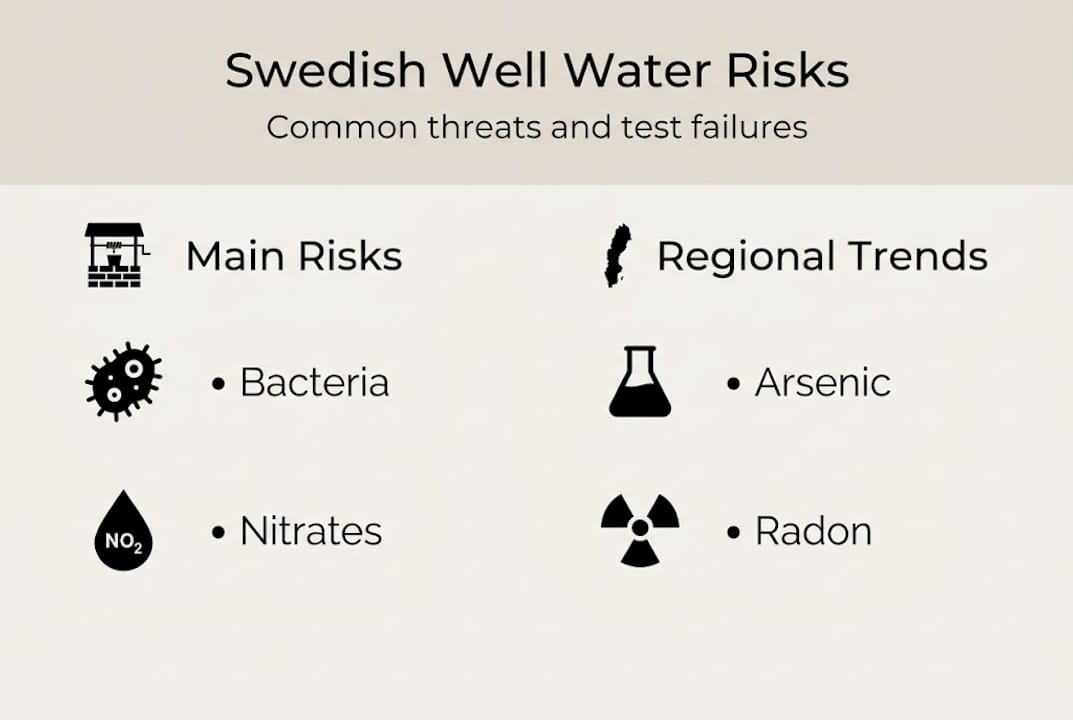
Private well owners are fully responsible for their drinking water quality in Sweden. Municipal authorities do not monitor your well, and there is no automatic alert system if something goes wrong. That responsibility sits entirely with you.
Several factors can shift your water quality without warning:
- Heavy rainfall or flooding can push surface bacteria and nitrates down into shallow wells
- Land use changes nearby, such as new agriculture or construction, can introduce chemicals into groundwater
- Aging well infrastructure can allow contaminants to seep in through cracks or a failing casing
- Seasonal variation affects groundwater levels and the concentration of dissolved minerals
- Climate shifts are making these fluctuations more frequent and less predictable
“Water quality is not a fixed condition. It is a moving target that responds to weather, land use, and time. Owners who test once and assume they are covered are taking a real risk.”
Tracking changes over time is the only reliable way to catch a new problem early. Swedish Geological Survey groundwater maps show regional patterns and can help you understand whether your well sits in a historically stable or vulnerable zone. Combine that external data with your own serial test results, and you have a genuinely useful safety picture.
Key risks and regional trends in Swedish well water
Not all wells face the same threats. Where you live in Sweden, and what type of well you have, shapes your risk profile significantly.
Dug wells (grävda brunnar) are shallow and more exposed to surface water. They are more vulnerable to bacteria and nitrate contamination, especially in agricultural areas or properties with nearby septic systems. After a heavy rain, a dug well can show a sharp spike in coliform bacteria within 24 to 48 hours.
Drilled wells (borrade brunnar) go deep into bedrock and are generally better protected from surface contamination. But they face a different set of risks. Granite and certain other rock types naturally release radon and arsenic into groundwater. These are invisible, odorless, and genuinely dangerous at elevated levels.
| Risk factor | Dug wells | Drilled wells |
|---|---|---|
| Bacteria/coliforms | High | Lower |
| Nitrates | High (near agriculture) | Moderate |
| Radon | Low | High (granite regions) |
| Arsenic | Low | Moderate to high |
| PFAS | Depends on location | Depends on location |
| Iron/manganese | Common | Common |
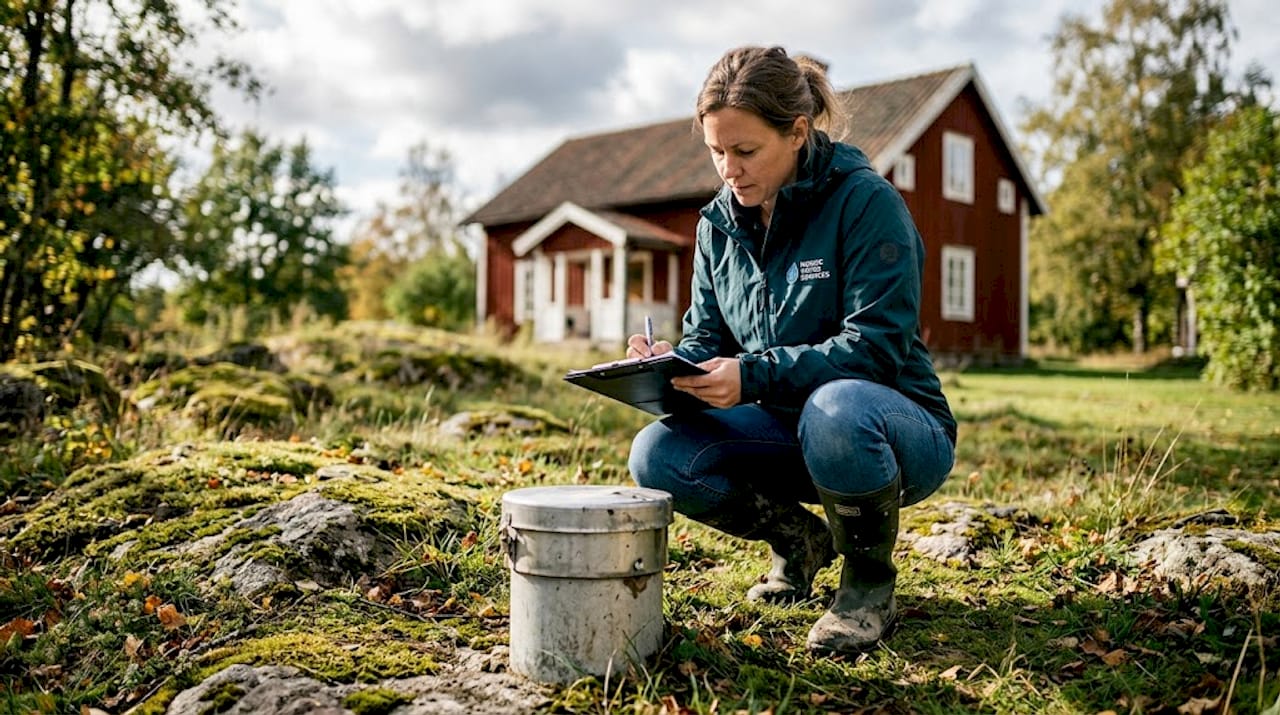
Regional patterns are well documented. Radon in granite regions, arsenic in certain geological formations, elevated nitrates near intensive farming, and PFAS contamination near airports or industrial sites are all recurring trends across Sweden. Värmland, Dalarna, and parts of Norrland see higher radon levels. Skåne and Gotland, with their agricultural intensity and limestone geology, face different challenges around nitrates and hardness.
A statistic worth noting: in some granite-heavy regions, radon levels exceeding 100 Bq/L are found in a significant share of drilled wells. The national guideline is 100 Bq/L. Many owners have never tested for it.
Knowing your region’s risk profile helps you choose the right analysis package and interpret your results in context. Well water problems by type vary considerably, and a one-size-fits-all approach to testing often misses the most relevant local threats.
Which water quality parameters should you track and why?
Now that you know the major sources of risk, here is what you should actually be measuring and watching closely.
Microbiological parameters come first. E. coli and total coliforms have zero tolerance in drinking water. Even one colony-forming unit per 100 mL is a fail. These bacteria indicate fecal contamination and can cause serious illness, particularly in children, the elderly, and anyone with a weakened immune system.
Chemical parameters cover a wide range. Key ones to monitor include:
- Nitrate: limit is 50 mg/L; infants under six months face serious risk even at lower levels
- Arsenic: the current limit is 10 µg/L, tightening to 5 µg/L in 2026 under updated Swedish regulations
- Lead: 5 to 10 µg/L depending on the standard applied; old pipes are the most common source
- PFAS: limits are becoming stricter as research on health effects expands
- Radon: guideline is 100 Bq/L for drinking water
Key water parameters and their regulatory limits are defined by Livsmedelsverket and aligned with EU directives. These are not suggestions. They are the thresholds above which health risk becomes real.
Physical parameters like pH, iron, and manganese do not always pose direct health risks at moderate levels, but they matter. Low pH corrodes pipes and can leach lead or copper into your water. High iron causes rust staining and an unpleasant metallic taste. Elevated manganese has been linked to neurological effects in children at higher concentrations. These parameters also serve as early warning signals. A sudden pH drop, for example, can indicate new contamination entering the system.
Pro Tip: Keep a simple spreadsheet with your test results going back as far as possible. Even two or three data points over five years can reveal a slow upward trend in a parameter like manganese or nitrate that would be invisible in any single report. Compare against detailed quality standards each time you test.
Certain groups face higher risk from parameters that might seem borderline acceptable. Pregnant women, infants, and immunocompromised individuals should apply stricter personal thresholds, not just wait for an official limit to be crossed. Review water testing guidelines if anyone in your household falls into a vulnerable category.
How to analyze, interpret, and act on water test results
Understanding what to test is only half the challenge. Here is how to actually use your results.
- Use an accredited lab. Testing must follow Swedish standards, including SS-EN ISO 19458 for sampling, and analysis must be performed by a Swedac-accredited lab. Results from non-accredited sources are not legally valid and may not be reliable.
- Follow the sampling instructions exactly. Let the tap run for two minutes before collecting. Use the provided sterile containers. Do not touch the inside of the lid. A single contamination error during collection can invalidate the entire sample.
- Compare results to regulatory limits. Your lab report will list each parameter alongside its measured value and the applicable limit. Any exceedance is a clear action item, not something to wait and see about.
- Compare to your own past results. This is where trend analysis begins. Is your nitrate level creeping up year over year? Has your pH dropped since your last test? These patterns are often more informative than any single result.
- Use SGU’s tools for regional context. Groundwater statistics and reporting from SGU allow you to see how your well compares to others in your region and track broader trends.
“Repeat testing after any flood, nearby construction, or change in your water system. Do not wait for the next scheduled check.”
When results show a problem, the response depends on what you found. UV disinfection or chlorination handles bacterial contamination effectively. Activated carbon filters address many chemical contaminants including PFAS. Reverse osmosis systems handle arsenic, nitrates, and lead. For radon, aeration systems are the standard solution. If multiple parameters are elevated, consult a water treatment specialist before investing in equipment. Review water analysis essentials to understand which treatment approach fits which problem.
Pro Tip: Test immediately after any significant event, such as a flood, a nearby construction project, or any change to your pump or pressure system. Do not wait for your scheduled three-year check.
Why tracking trends, not just passing the test, matters most
After years of working with Swedish well owners across the country, one pattern stands out clearly. The owners who catch problems early are almost never the ones who tested once, passed, and moved on. They are the ones who kept records, noticed a small shift, and acted before a borderline result became a serious one.
Passing a test is not the same as having safe water. It means your water met the standard on that day. Climate change, floods, and evolving land use are causing increasing water quality fluctuations across Sweden. A well that was stable for a decade can shift quickly after an unusually wet winter or a new agricultural operation in the watershed.
The most valuable thing you can do is build your own data set. Save every report. Note the date, the season, and any relevant events nearby. Over time, those records become a genuine early warning system. They also give you credibility and documentation if you ever need to report a concern to your local municipality or apply for a remediation grant.
Relying solely on pass/fail reports every three years leaves a wide window of exposure. Tracking unexpected water quality shifts over time is what separates reactive owners from proactive ones. The proactive approach is always cheaper, safer, and less stressful.
Get peace of mind with reliable water analysis and support
You now have a solid understanding of what drives water quality trends in Swedish private wells and what you need to do about it. The next step is straightforward: get a reliable, accredited analysis that gives you real answers, not just a printout of numbers.
At Svenskt Vattenprov, we offer comprehensive water analysis packages analyzed by SGS Analytics and Eurofins, a Swedac-accredited laboratory. Whether you have a dug well or a drilled one, our drilled well testing package covers 41 parameters with clear, plain-language results and concrete recommendations. You can also review well water statistics to understand how your region compares before you test. Every report we deliver comes with guidance, not just data, so you always know exactly what to do next.
Frequently asked questions
How often should I test the water from my private well in Sweden?
Stable wells should be tested every three years, but households with infants or wells in high-risk areas should test annually. After any flood, construction nearby, or change in water taste or appearance, test immediately regardless of schedule.
What are the main risks affecting Swedish well water quality?
The main risks include bacteria, nitrates, arsenic, radon, lead, and PFAS, and all vary by region and well type. Drilled wells in granite areas face higher radon risk, while shallow wells near farmland are more exposed to nitrates and bacteria.
Which parameters are most important to check in a well water test?
Focus on E. coli, total coliforms, nitrate, arsenic, lead, PFAS, radon, pH, iron, and manganese. Key parameter limits include zero coliforms, nitrate below 50 mg/L, arsenic at or below 5 µg/L from 2026, and radon below 100 Bq/L.
How can I see if water quality is improving or getting worse in my well?
Serial testing and comparing results across reports is the most direct method. You can also view regional groundwater data from SGU to understand broader trends in your area.
What should I do if my water suddenly changes taste, smell, or appearance?
Stop drinking the water immediately and test with an accredited lab right away. Sudden changes can signal bacterial contamination or a chemical intrusion that requires urgent action.