

Complete guide for Swedish well owners: water testing 2026
Ensuring safe drinking water from your private well requires more than just hoping for the best. In Sweden, approximately 1.2 million people rely on private wells for their daily water supply, yet many homeowners remain uncertain about proper testing protocols and regulatory requirements. This comprehensive guide walks you through the entire water testing process, from understanding legal obligations and conducting risk assessments to collecting samples correctly and interpreting your results. You’ll learn exactly what steps to take, which contaminants to prioritize, and how to maintain ongoing water safety for your family.
Table of Contents
- Understanding Water Testing Requirements For Private Wells In Sweden
- Preparing For Your Water Test: What You Need And Risk Assessment
- Step-By-Step Brunn Water Sampling And Testing Process
- Interpreting Your Water Test Results And Next Steps
- Reliable Water Testing Services For Your Private Well
- FAQ
Key takeaways
| Point | Details |
|---|---|
| Legal responsibility | Swedish homeowners with private wells must conduct regular water quality testing under LIVSFS 2022:12 regulations to ensure drinking water safety. |
| Proper sampling matters | Following standardized protocols like SS-EN ISO 19458 prevents contamination during collection and ensures accurate laboratory results. |
| Risk-based testing | Your well’s location, construction type, and surrounding land use determine which parameters to test and how frequently. |
| Expert interpretation | Understanding limit values and health risks helps you take appropriate action when results indicate contamination. |
| Professional support | Accredited laboratories provide guidance on sampling, analysis, and remediation strategies tailored to your specific situation. |
Understanding water testing requirements for private wells in Sweden
Swedish homeowners carry full responsibility for their private well water quality. Unlike municipal water systems with continuous oversight, your well’s safety depends entirely on your diligence. Water quality testing for private wells in Sweden is regulated by the Swedish Food Agency through LIVSFS 2022:12, which establishes mandatory testing parameters, frequencies, and reporting standards.
These regulations divide testing into distinct groups based on contamination risk and well characteristics. Provgrupp A covers fundamental parameters including microbiological indicators, pH levels, conductivity, and common metals. This basic testing applies to most wells and typically occurs annually. Provgrupp B expands the scope to include pesticides, nitrates, and additional chemical compounds, particularly relevant for wells near agricultural areas or industrial sites.
Testing frequency isn’t arbitrary. Wells showing previous contamination require more frequent monitoring until water quality stabilizes. New wells need initial comprehensive testing to establish a baseline. Changes in your property or surrounding land use, such as new construction, septic system installation, or agricultural expansion, trigger immediate retesting regardless of your regular schedule.
The official well water regulations 2026 outline specific compliance requirements:
- Mandatory annual testing for microbiological parameters in all private wells
- Chemical analysis every three years for wells without identified risks
- Immediate testing following any contamination event or system modification
- Documentation retention for inspection by environmental health authorities
- Remediation within specified timeframes when results exceed limit values
Noncompliance carries consequences beyond regulatory penalties. Contaminated water poses direct health risks to your family. Property transactions require current water analysis reports, and outdated or missing documentation can derail sales or reduce property values significantly.
Preparing for your water test: what you need and risk assessment
Successful water testing starts long before you collect your first sample. A thorough risk assessment identifies which contaminants deserve priority attention based on your well’s unique circumstances. Walk your property and note potential contamination sources within 100 meters of your well. Agricultural fields suggest pesticide and nitrate testing. Older homes may have lead or copper plumbing requiring metal analysis. Nearby roads with winter salting operations indicate chloride monitoring.
Well owners should conduct a risk assessment to identify potential contamination sources, including pesticides and local land use. Document everything you observe. Livestock operations, fuel storage tanks, industrial facilities, and waste disposal sites all influence which parameters your testing should include. Historical land use matters too. Properties with past industrial activity or intensive farming may harbor persistent contaminants in groundwater.

Your well’s construction type shapes testing priorities. Dug wells, typically shallower and more vulnerable to surface water infiltration, require extra attention to microbiological contamination. Drilled wells reaching deeper aquifers face different risks, often related to geological minerals like radon in granite regions or naturally occurring metals. Understanding these distinctions helps you select appropriate testing packages.
Gather necessary materials before sampling day. Accredited laboratories provide sterile containers designed for specific analyses. Microbiological testing requires bottles with sodium thiosulfate to neutralize any chlorine. Metal analysis needs acid-washed containers. Never reuse containers or substitute with household bottles, as residual contaminants invalidate results. You’ll also need:
- Disposable gloves to prevent sample contamination from skin contact
- Permanent markers for labeling with date, time, and sample location
- Insulated cooler with ice packs for temperature-controlled transport
- Chain of custody forms if required by your laboratory
Pro Tip: Contact your chosen laboratory at least one week before sampling to receive exact instructions and confirm container types. Some parameters require special preservation methods or maximum holding times between collection and analysis.
Consult sampling instructions from certified labs to understand timing requirements. Microbiological samples must reach the laboratory within 24 hours of collection. Chemical analyses allow longer transport times but still demand prompt delivery. Schedule your sampling for early in the week to avoid weekend delays. If you notice signs of contaminated drinking water like unusual odors, discoloration, or taste changes, expedite testing immediately rather than waiting for your regular schedule.
Step-by-step brunn water sampling and testing process
Proper sampling technique determines result accuracy. Sampling for microbiological analysis should be performed according to SS-EN ISO 19458 standard to prevent external contamination during collection. Follow these precise steps:
- Select an indoor cold water tap closest to where water enters your home, avoiding outdoor faucets or taps with aerators, filters, or hose connections.
- Clean the faucet exterior with soap and water, then disinfect with 70% alcohol or bleach solution.
- Run cold water at full pressure for two to three minutes to flush the service line and ensure you’re sampling water representative of your well.
- Reduce flow to a steady stream and fill the sterile container without touching the bottle opening to any surface.
- Leave appropriate headspace as specified by your laboratory, typically one inch from the top.
- Cap the container immediately and label with required information.
Metal testing follows different protocols. Unlike microbiological sampling, metal analysis specifically targets water that has been in contact with your plumbing system. This reveals whether pipes contribute lead, copper, nickel, or other metals to your drinking water. For metal samples, use the tap without prior flushing. The first water drawn in the morning, after eight or more hours of stagnation, provides the most accurate assessment of metal leaching from plumbing materials.
Use one-liter sterile containers for metal testing to capture sufficient volume for comprehensive analysis. Fill directly from the tap using the same sterile technique as microbiological sampling but skip the flushing step entirely. This first-draw sample represents your actual exposure when you use water for drinking or cooking.
Pro Tip: If testing for both microbiological and metal parameters, collect the metal sample first from the unflushed tap, then flush the line and collect the microbiological sample. This sequence ensures both samples meet their respective protocol requirements.
| Sample Type | Flushing Required | Container Size | Maximum Transport Time |
|---|---|---|---|
| Microbiological | Yes, 2-3 minutes | 100-250 ml | 24 hours |
| Metals (plumbing) | No, first draw | 1 liter | 48 hours |
| Chemical parameters | Yes, 2-3 minutes | 1 liter | 48-72 hours |
| Pesticides | Yes, 2-3 minutes | 1 liter | 48 hours |
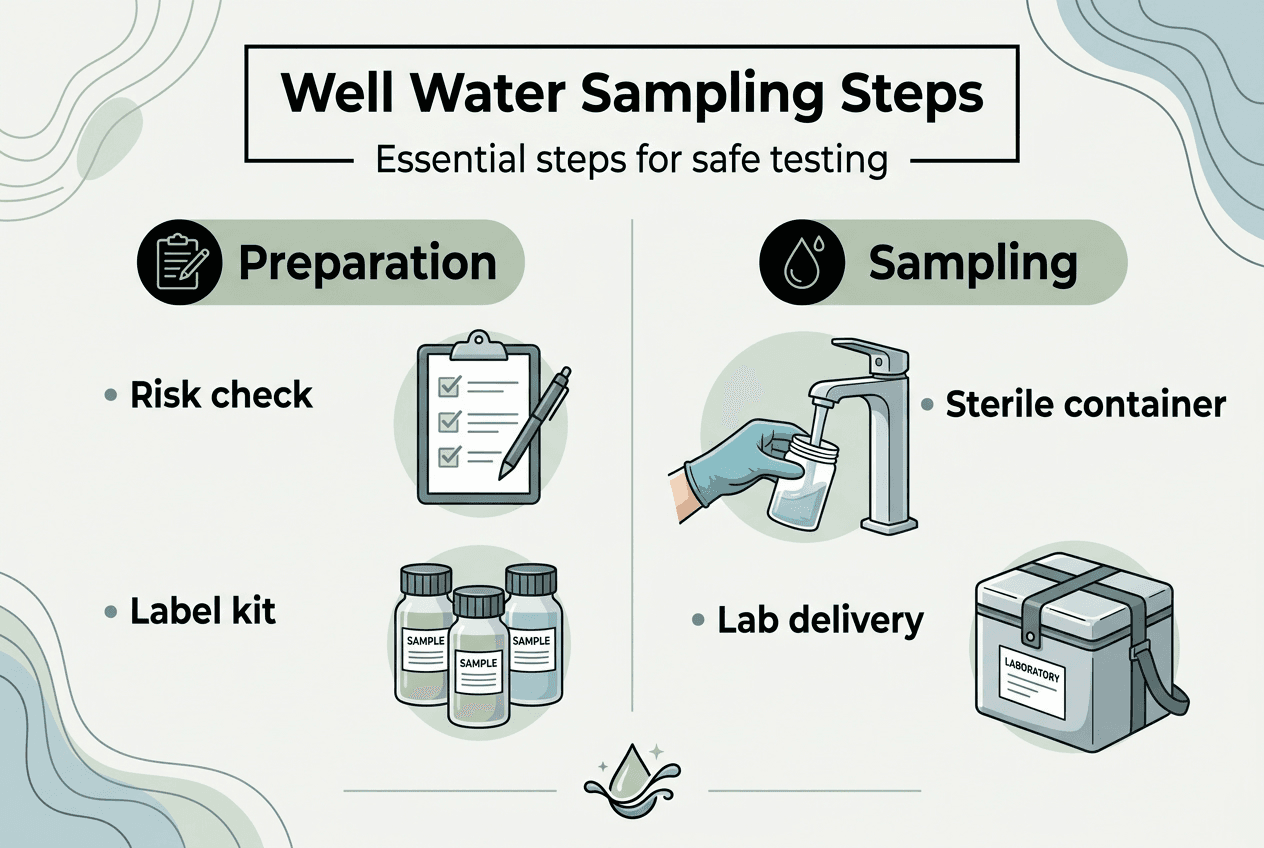
Label each container clearly with permanent marker. Include your name, property address, sample collection date and time, and specific tap location. Ambiguous labeling causes laboratory delays or rejected samples. Place labeled containers in your insulated cooler with ice packs to maintain temperature between 2-8°C during transport. Extreme temperatures compromise sample integrity and may require recollection.
Deliver samples to the laboratory according to their specific instructions. Many accredited labs offer courier pickup services or designated drop-off locations. Review official water sampling instructions for complete guidance on handling and transport. Never leave samples in hot vehicles or direct sunlight. If shipping samples, use overnight delivery with sufficient ice packs to maintain cold chain integrity throughout transit.
Interpreting your water test results and next steps
Your laboratory report arrives with columns of numbers, chemical names, and technical terminology. Understanding what these values mean transforms raw data into actionable information. Swedish Food Agency sets drinking water limit values for health and aesthetics, which private wells should follow. Each parameter on your report compares against these established thresholds.
Results fall into three categories. Values below limit thresholds indicate compliance and safe water quality for that specific parameter. Values approaching but not exceeding limits warrant monitoring through more frequent testing to catch any upward trends early. Values exceeding limits demand immediate action, with urgency depending on the specific contaminant and degree of exceedance.
Microbiological contamination requires swift response. Detection of E. coli or intestinal enterococci indicates fecal contamination and immediate health risk. Stop drinking the water until you’ve implemented disinfection and retesting confirms safety. Coliform bacteria presence, while less immediately dangerous than E. coli, still signals compromised well integrity requiring investigation and remediation.
Chemical parameters present varied risk profiles. Nitrate contamination above 50 mg/L poses acute risk to infants and pregnant women. Lead exceeding 10 μg/L demands attention due to cumulative neurotoxic effects, especially for children. Arsenic, radon, and pesticides each carry distinct health implications requiring specific remediation strategies.
Pro Tip: Don’t panic over single exceedances of aesthetic parameters like iron, manganese, or hardness. These affect water appearance and taste but rarely pose immediate health risks. Focus first on microbiological and toxic chemical parameters when prioritizing remediation efforts.
| Parameter Category | Health Risk Level | Typical Action Required | Remediation Timeline |
|---|---|---|---|
| E. coli present | Immediate | Stop consumption, disinfect well, retest | Within 48 hours |
| Lead over 10 μg/L | High | Identify source, replace plumbing, use filters | 1-3 months |
| Nitrate over 50 mg/L | Immediate (infants) | Alternative water source, well modification | Within 1 week |
| Iron over 200 μg/L | Aesthetic only | Install filtration if desired | No urgency |
Understanding Swedish drinking water limits helps you distinguish between parameters requiring urgent intervention and those allowing planned improvements. Your laboratory report should include interpretation guidance, but don’t hesitate to request clarification on unclear results.
Acceptable variations occur naturally in well water. Seasonal changes affect some parameters. Heavy rainfall may temporarily increase turbidity or bacterial counts. Drought conditions can concentrate minerals. Single anomalous results often warrant retesting before expensive remediation. Consistent patterns across multiple tests provide stronger evidence of genuine contamination requiring action.
Maintain ongoing testing schedules even after addressing contamination. Successful remediation requires verification through follow-up analysis. Wells that previously showed contamination need more frequent monitoring to ensure problems don’t recur. Keep detailed records of all test results, remediation efforts, and system modifications. This documentation proves invaluable for tracking trends, supporting insurance claims, or providing transparency during property transactions.
Reliable water testing services for your private well
Navigating water testing regulations and technical requirements feels overwhelming, but you don’t face this challenge alone. Svenskt Vattenprov specializes in making the entire process straightforward for Swedish homeowners with private wells. Since 2018, we’ve helped thousands of well owners across Sweden understand their water quality through accredited laboratory analysis and expert guidance.
Our testing packages address specific well types and contamination risks. The bacteria water analysis service focuses on microbiological safety, perfect for routine annual compliance testing. For comprehensive peace of mind, the complete water testing package examines 71 parameters including metals, pesticides, and chemical compounds. Owners of shallower wells benefit from our specialized analysis for dug wells, which emphasizes parameters most relevant to surface water vulnerability.
Every test kit includes sterile sampling containers, detailed collection instructions, prepaid laboratory shipping, and comprehensive result interpretation. Our partnership with SGS Analytics and Eurofins, two Swedac-accredited laboratories, ensures your results meet Swedish Food Agency standards and carry full regulatory validity. You receive clear explanations of each parameter, comparison against drinking water limits, and specific recommendations when results indicate action needs.
We understand regional water quality variations across Sweden. A well in granite-rich Värmland faces different challenges than one in Skåne’s agricultural landscape. Our experience with thousands of Swedish wells informs the guidance we provide, helping you understand your results within the context of local geology and land use patterns.
FAQ
How often should I test water from my private well in Sweden?
Testing frequency depends on your well’s characteristics and contamination history. Most private wells require annual microbiological testing and chemical analysis every three years under LIVSFS 2022:12. Wells with previous contamination, those near pollution sources, or serving vulnerable populations need more frequent monitoring. Consult your local environmental health authority for personalized scheduling recommendations based on your specific risk factors.
What is the correct method for collecting a water sample from my well?
Microbiological samples require flushing the tap for two to three minutes before collection using sterile containers according to SS-EN ISO 19458 standard. Metal testing uses unflushed first-draw water to assess plumbing contributions. Always use laboratory-provided sterile containers, avoid touching bottle openings, and maintain cold chain during transport. Different parameters require specific protocols, so follow your laboratory’s exact instructions for each sample type.
Which contaminants should I be most concerned about testing in my well water?
Prioritize microbiological indicators like E. coli and coliform bacteria, which signal immediate health risks. Test for metals including lead, copper, and arsenic, especially in older homes or specific geological areas. Wells near agriculture require pesticide and nitrate analysis. Radon testing matters in granite regions. Your risk assessment based on well location, construction, and surrounding land use determines which parameters deserve attention beyond basic regulatory requirements.
What should I do if my water test results exceed safe limits?
Immediate action depends on which parameter exceeds limits. Stop drinking water showing E. coli contamination until disinfection and retesting confirm safety. Contact local environmental health authorities for guidance on remediation strategies. High lead levels may require plumbing replacement or point-of-use filters. Nitrate contamination might need well modification or alternative water sources. Engage qualified well contractors and water treatment specialists to address specific contamination issues professionally and verify success through follow-up testing.