

Discover signs of contaminated drinking water – protect your well in 2026
When you want to protect your family's health, it's crucial to recognize signs that indicate possible contamination in your well water. The water quality in private wells can change over time due to natural processes, environmental impact, or age. Some changes are directly visible through discolouration or smell, while other contaminants like arsenic or PFAS are invisible but dangerous. By learning to identify warning signs early, you can take action before health risks arise. This guide will help you understand which signs to look out for and when you need to act.
Table of Contents
- Signs of Contaminated Drinking Water to Watch Out For
- Common Contaminants and Their Effects on Drinking Water
- Specific Contaminants: PFAS and Their Spread in Groundwater
- Comparison of Signs and Contaminants for Effective Assessment
- Protect Your Well – Analyze and Improve Your Drinking Water
- Questions and Answers
Key Points
| Point | Details |
|---|---|
| Visible Changes | Discoloured, cloudy, or foul-smelling water often signals contamination requiring sampling |
| Invisible Dangers | PFAS, arsenic, and bacteria can be present without visible signs but pose serious health risks |
| Regular Testing | The Public Health Agency recommends testing every three years to ensure water quality |
| Different Contaminants | Iron causes aesthetic problems while arsenic requires immediate action due to cancer risk |
| Early Detection | Recognizing warning signs helps you prioritize appropriate actions and protect your family |
Signs of Contaminated Drinking Water to Watch Out For
Your well water can show several clear signals when its quality deteriorates. Recognizing these early gives you the opportunity to act before problems worsen.
Discolouration is often the first sign you notice. Brown or yellowish water usually indicates high levels of iron or manganese. These metals are leached from bedrock or old pipes, giving the water a rusty tint. Greenish water can indicate copper corrosion from pipes.
Taste and smell change when contaminants are present. A metallic taste suggests high iron levels, while a rotten egg smell signals hydrogen sulfide from bacterial activity. Chemical odours can indicate industrial contamination or fuel leaks in the vicinity. Poor water quality can cause corrosion, deposits, and taste changes that affect usability.
Physical signs on fixtures and taps reveal a lot about the water's condition:
- Rust-coloured stains on porcelain indicate iron or manganese
- Green discolouration around taps signals copper corrosion from acidic water
- White deposits indicate high lime content
- Slime or deposits in the toilet bowl can be iron bacteria
Cloudy water with visible particles points to sediment, clay, or sand that has infiltrated the well. This often happens after heavy rain or snowmelt when surface water infiltrates. Sudden changes in water pressure or flow can also signal problems with the well's construction that allow contaminants to enter.
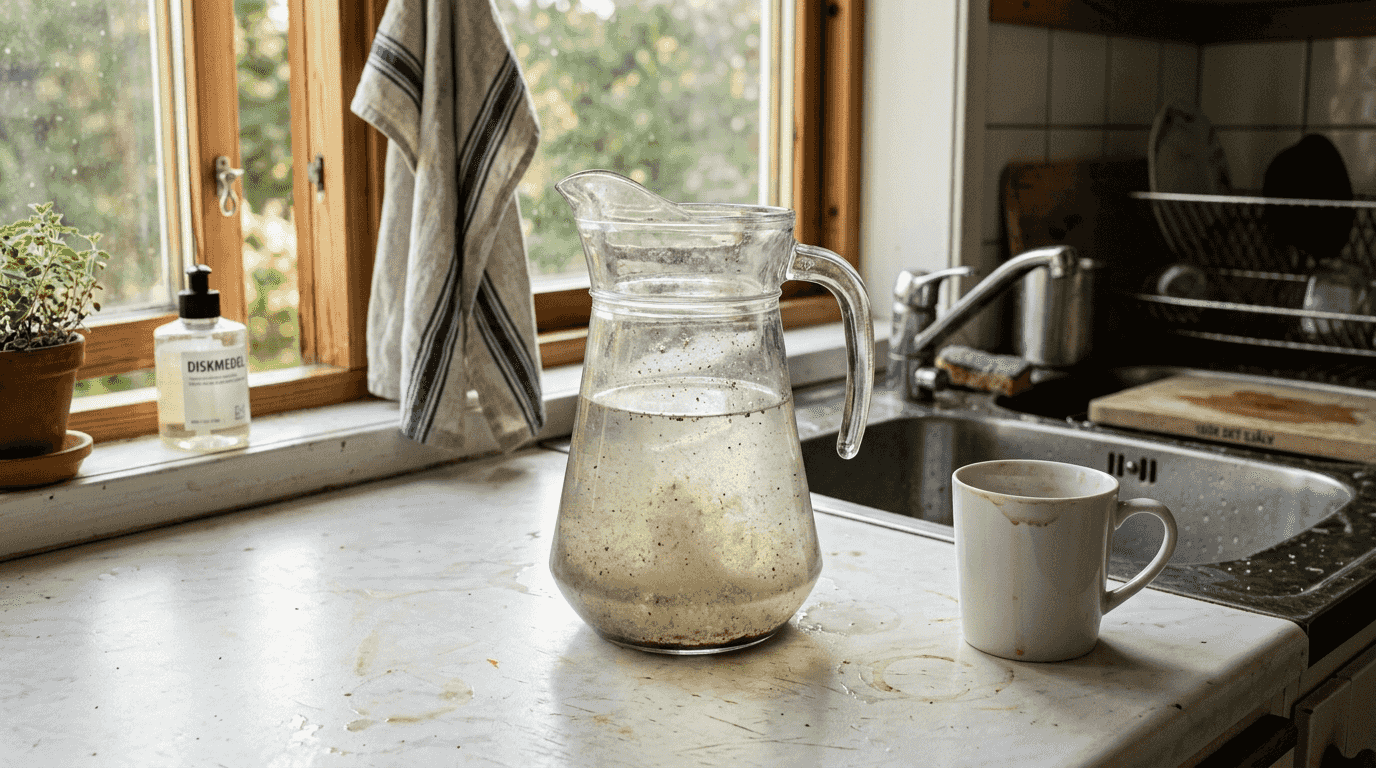
Pro Tip: Photograph your water regularly in a white container under the same lighting conditions. Compare the images over time to detect gradual changes that may be difficult to notice daily. Swedish well water statistics show that many wells have quality problems that require attention.
Common Contaminants and Their Effects on Drinking Water
Different contaminants produce specific symptoms and health risks that vary greatly in severity. Understanding these differences helps you assess when you need to act quickly.
Iron and manganese are the most common metals in Swedish well water. They cause bothersome taste, discolouration, and stains on laundry and porcelain. Levels above 0.2 mg/l of iron or 0.05 mg/l of manganese negatively affect daily life. However, health risks are limited compared to other metals, although high levels can affect digestion.
Fluoride in moderation strengthens teeth, but excessive levels cause dental damage and skeletal changes. The limit is 1.5 mg/l according to Swedish standards. Fluoride occurs naturally in some rock types and can vary greatly between different wells in the same area.
Arsenic poses a serious health risk as a carcinogen. Long-term exposure dramatically increases the risk of skin, lung, and bladder cancer. The limit is 10 micrograms per litre. Arsenic contamination in well water can occur after blasting work that releases arsenic from the bedrock.
PFAS compounds are particularly problematic because they do not break down naturally. These "forever chemicals" accumulate in the body and are linked to cancer, reproductive problems, and immune system disorders. They spread from fire training sites, airports, and industrial areas. Read more about what PFAS in drinking water means for your health.
Here is an overview of common contaminants:
| Contaminant | Limit Value | Main Source | Health Effect |
|---|---|---|---|
| Iron | 200 µg/l | Bedrock, pipes | Taste, discolouration |
| Manganese | 50 µg/l | Bedrock | Taste, neurological effects at high levels |
| Arsenic | 10 µg/l | Bedrock, blasting | Cancer, skin changes |
| Fluoride | 1.5 mg/l | Bedrock | Dental damage, skeletal changes |
| PFAS | 4-100 ng/l | Industry, fire training | Cancer, hormonal disorders |
Bacteria such as coliform bacteria and E. coli indicate faecal contamination from sewage or animals. They cause stomach illnesses and can be life-threatening for sensitive groups. Bacterial contamination requires immediate action through boiling or disinfection.
Specific Contaminants: PFAS and Their Spread in Groundwater
PFAS compounds behave differently in groundwater compared to other contaminants, which affects how quickly they spread and which wells are at risk of being affected.
Different PFAS substances move at varying speeds through the ground. PFHxS spreads faster in groundwater than PFOS and PFOA due to its chemical properties. This means that wells further from the contamination source may have high levels of certain PFAS types while others are completely absent.
The spread rate depends on several factors:
- Molecular size and chemical structure affect how easily the substance moves through soil and rock
- Groundwater flow rate and direction control transport pathways and dilution
- Soil composition determines how much PFAS is bound to particles versus dissolved in water
- Distance from the contamination source and exposure time determine concentration levels
This variation makes risk assessment complex. One well may have high levels of short-chain PFAS while a neighbouring well has more long-chain variants. Both pose health risks but require different remediation strategies.
Monitoring PFAS requires regular testing because levels can change as the contaminant plume moves through the groundwater. What is clean today may show elevated values in a few years when the contamination reaches the well. Conversely, levels may decrease if the contamination source has been stopped and the plume has passed.
Pro Tip: PFAS analysis should include at least 20-30 different substances to provide an accurate picture. A PFAS water analysis that only tests a few variants can miss significant contamination of other types.
Remediation efforts are prioritized based on spread data. Fast-moving substances require broader protective measures, while slower PFAS types can be managed more locally. Understanding spread patterns helps authorities and property owners make informed decisions about water supply and treatment measures.
Comparison of Signs and Contaminants for Effective Assessment
Being able to compare the signs and risk levels of different contaminants helps you prioritize when and how quickly to act.
Here's a practical comparison:
| Contaminant | Visible Signs | Health Risk | Action Priority | Typical Source |
|---|---|---|---|---|
| Iron/Manganese | Brown water, stains | Low | Medium | Bedrock |
| Arsenic | None | Very high | Urgent | Bedrock, blasting |
| PFAS | None | High | High | Industry, fire training |
| Bacteria | Sometimes cloudy | High | Urgent | Sewage, surface water |
| Nitrate | None | Medium to high | High | Fertilizer, sewage |
| Radon | None | High (long-term) | Medium | Granite bedrock |
Iron and manganese are immediately noticeable through discolouration and taste. Although they disrupt daily life, the health risk is limited. You can often wait to take action until you plan other improvements, unless the levels are extremely high.
Arsenic and PFAS are invisible enemies. The water can look crystal clear and taste normal despite dangerous levels. This makes regular testing critical, especially if you live near risk areas such as airports, industries, or areas with blasting work. If elevated levels are detected, immediate action is required through an alternative water source or advanced purification.
Bacterial contamination requires the fastest response. Symptoms such as stomach pain or diarrhoea after water use should be taken seriously. Boil all drinking water until testing confirms that the problem has been resolved. Bacteria often enter after floods, well work, or damage to the well cover.
Important action signals:
- Sudden changes in taste or smell: test within a week
- Stomach problems in several household members: boil water and test immediately
- Live near a risk area: test for PFAS and arsenic annually
- New construction or activity in the area: extra sampling recommended
- Three years since the last test: time for a new analysis according to the Public Health Agency's guidelines
By understanding these differences, you can make informed decisions about testing and protective measures. Consult the National Food Agency's drinking water limits to properly evaluate your analysis results.
Protect Your Well – Analyze and Improve Your Drinking Water
Now that you understand which signs signal problems, the next step is to ensure your water quality through professional testing.
Regular water analysis is your most important insurance against health risks. By testing the water every three years according to the authorities' recommendations, you catch changes before they become serious. If you suspect problems, you should, of course, test immediately.
Svenskt Vattenprov offers tailor-made analysis packages for well owners who want full control over their water quality. Our analyses are performed by Swedac-accredited SGS Analytics and follow the same strict standards that apply to municipal waterworks. You don't just get numbers, but clear explanations and concrete recommendations on what actions are needed.
Choose the right water analysis for you with a private well based on your well type and local conditions. For suspected metal contamination, we recommend water analysis metals which covers all relevant substances. Our knowledge center provides in-depth information on water quality and how to interpret your results.
Act today to protect your family's health tomorrow. Clean water is not a luxury but a fundamental right that you can ensure through proper knowledge and regular control.
Questions and Answers
How often should I test my well water?
The Public Health Agency recommends sampling every three years for normal conditions. Test more often if you live near risk areas, after environmental changes, or if there are visible signs of problems. When selling a property, a current water analysis is required.
What should I do if the water suddenly smells or tastes strange?
Stop drinking the water immediately and order a water analysis the same day. Use bottled water until the results show it is safe. Sudden changes can indicate bacterial contamination or chemical leaks that require quick action.
How do I deal with bacterial contamination in the well?
Boil all drinking water for at least one minute until the problem is resolved. Contact a well driller for disinfection of the well and check the well cover for damage. Test the water again after two weeks to confirm that the bacteria have disappeared.
What signs specifically indicate arsenic or PFAS in the water?
Arsenic and PFAS show no visible signs, smell, or taste. You can only detect them through laboratory analysis. If you live near industries, airports, or areas with blasting work, you should specifically test for these substances annually.
When should I contact an expert about my well water?
Consult an expert if analysis results show exceeded limit values, if you are unsure how to interpret the results, or if you need help choosing a purification solution. Visit our questions and answers for more guidance on specific water problems.