

How to test well water in 2026 – complete guide
Owning your own well means taking responsibility for your family's water supply. Many well owners feel uncertain if their water is truly safe to drink. Bacteria, heavy metals, and chemicals can be present without you noticing. This guide shows you exactly how to properly test your well water, interpret the results, and take action if needed. You'll get a clear, step-by-step process that protects your family's health and gives you peace of mind about your water supply.
Table of Contents
- Preparation: what you need to know before testing
- How to collect your well water sample step by step
- Interpreting test results and taking action on discrepancies
- Common mistakes and tips for reliable well water testing
- Discover Svenskt Vattenprov for reliable well water analysis
Key Points
| Point | Details |
|---|---|
| Regular testing determines safety | Well water should be checked at least every three years to identify changes in water quality |
| Adjust testing intervals based on risk | Families with young children or wells near agriculture need more frequent checks |
| Analyze multiple parameter types | Chemical, microbiological, and physical parameters provide a complete picture of water quality |
| Use certified laboratories | Swedac-accredited laboratories guarantee reliable results according to Swedish standards |
| Act quickly on discrepancies | Exceeded limit values require immediate action to protect health |
Preparation: what you need to know before testing
Regular water testing is crucial to identify contaminants and protect health. The Swedish National Food Agency and the Public Health Agency of Sweden recommend testing at least every three years. Families with young children, the elderly, or people with weakened immune systems should test more often. If several properties share the same water source, the risk of contamination and the need for more frequent checks increase.
Testing is also needed immediately if there are changes in the water. Abnormal odor, taste, color, or cloudiness signals that something is wrong. New activities in the vicinity, such as agriculture, construction, or industrial operations, can affect groundwater. After floods, long periods of inactivity, or well repairs, you should always take a new sample.
The analysis requires that chemical, physical, and microbiological parameters be assessed according to the Swedish National Food Agency. Chemical parameters include metals such as iron, manganese, lead, and arsenic, as well as nutrients like nitrate and nitrite. Microbiological tests look for bacteria, especially coliform bacteria and E. coli, which indicate fecal contamination. Physical parameters include pH value, hardness, color, and odor.
Your well's location and history determine which substances should be prioritized. Wells near agricultural land require extra focus on pesticides and nitrate. In granite areas, radon is common. Wells near the coast risk saltwater intrusion. Old wells can have problems with bacterial growth or leakage from surrounding soil.
Pro tip: Document your well's age, depth, and construction, as well as any previous problems. This information will help you and the laboratory choose the right analysis package and interpret the results correctly.
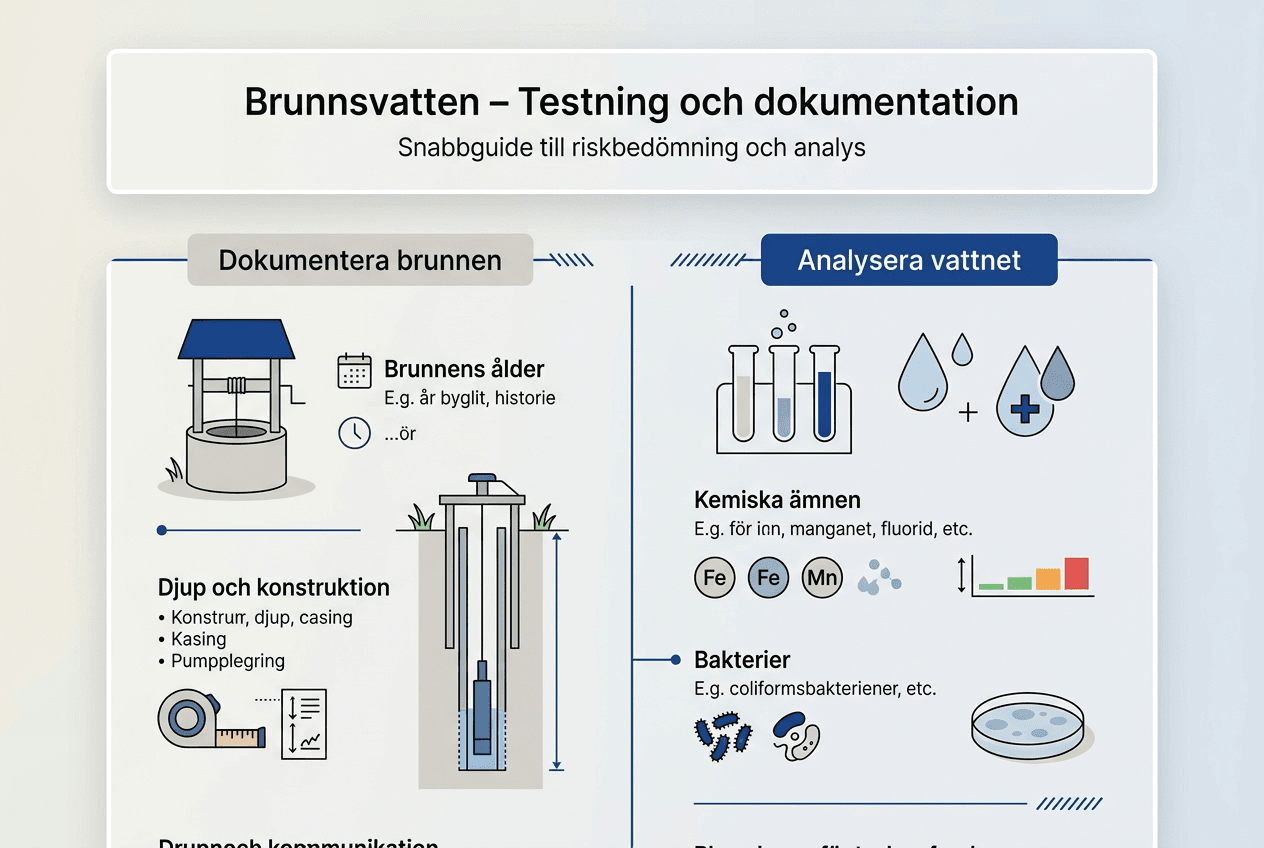
A thorough risk assessment before testing saves both time and money. Check for known sources of contamination in your area by contacting your municipality's environmental office. They can tell you about local challenges such as PFAS from fire training sites, old landfills, or industrial areas. With this knowledge, you can choose an analysis package that truly meets your specific needs.
For practical guidance on how to prepare for your sampling, we recommend reading our water testing instructions and our guide for clean drinking water.
How to collect your well water sample step by step
Correct sampling is crucial for reliable results. Water samples must be taken in a way that avoids contamination and provides a representative picture of water quality. Follow these steps carefully for the best results.
-
Prepare yourself and the equipment. Wash your hands thoroughly with soap and warm water. Only use the sample containers provided by the laboratory; do not open them in advance. Sterile containers for bacterial samples must never be rinsed or touched inside.
-
Choose the right sampling location. Always take the sample from a tap directly connected to the well, preferably before any filters or purification equipment. Outdoor taps or taps in the basement usually work best. Avoid taps with aerators or mixers if possible, as they can affect the sample.
-
Let the water run thoroughly. Open the tap completely and let the water run for at least 3 to 5 minutes. This ensures you get water directly from the well, not stagnant water from the pipes. For bacterial samples, this is particularly important.
-
Take the sample methodically. Reduce the water flow to a steady stream. Open the sample container just before filling it. Hold the container at the bottom, not by the opening. Fill to the specified level according to the laboratory's instructions, usually just below the rim. Close immediately and tightly.
-
Label and document. Write your name, address, and sampling date on the container. Note the time of sampling. If you take multiple samples, clearly label which sample is which.
-
Send the sample quickly. Bacterial samples must be analyzed within 24 hours for reliable results. Store the sample in a cool place, preferably in a cooler bag with ice packs, but do not freeze. Send the same day if possible, otherwise early the next morning.
Pro tip: Take the sample on a weekday morning so it reaches the laboratory the same day or the next. Avoid Fridays and days before holidays when samples risk sitting over the weekend.
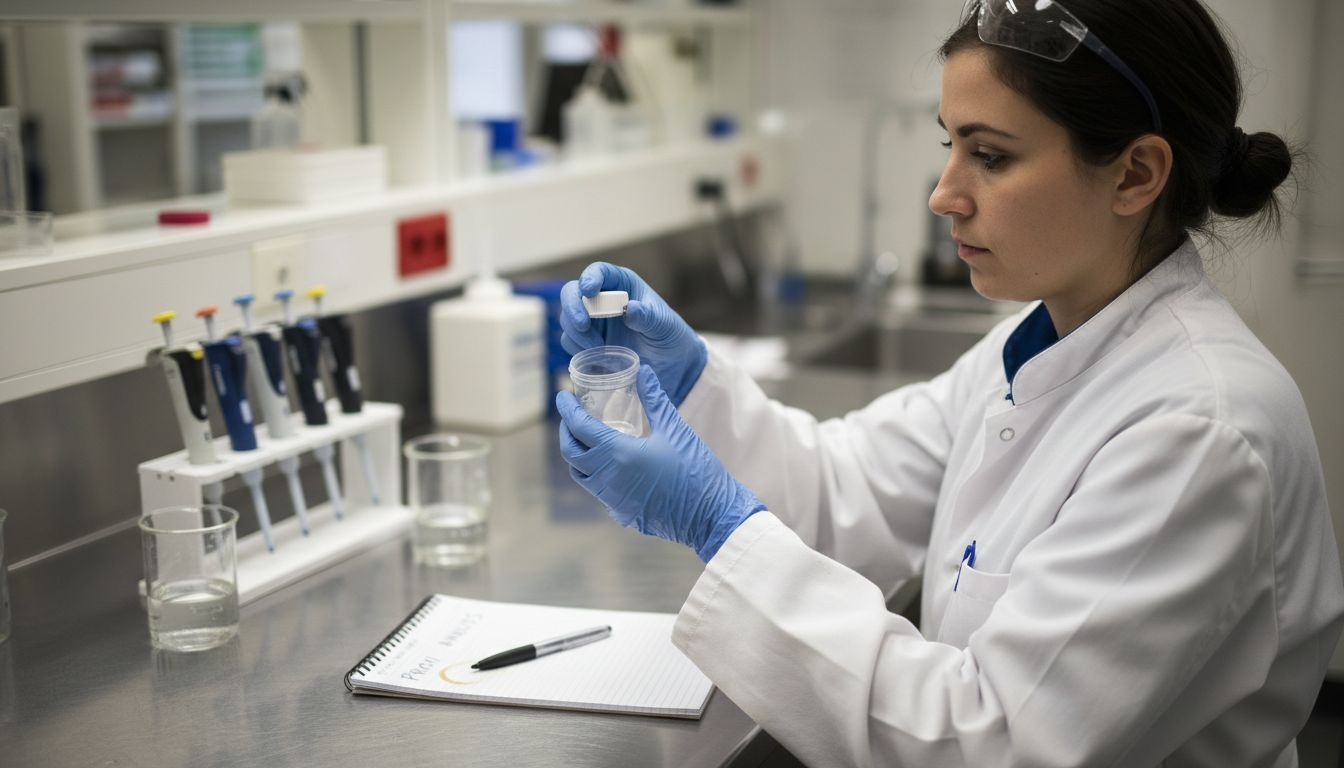
For bacterial samples, extra caution is required. Never touch the inside of the lid or container. Do not let anything come into contact with the opening. If you accidentally contaminate the container, use a new one and start over. A contaminated sample will give false results that could lead to unnecessary actions or missed danger.
Chemical samples are less time-sensitive but should still be sent within a few days. Some parameters such as iron and manganese can change if the sample sits for too long. Always follow the laboratory's specific instructions for your chosen analysis package.
More detailed information on sampling can be found in our water sample instructions. You can also register your well and receive reminders for when it's time for the next test via our well water registration.
Interpreting test results and taking action on discrepancies
Once the analysis is complete, you will receive a report comparing your values against the Swedish National Food Agency's limit values. The purpose of the analysis is to identify health risks and compare them against the Swedish National Food Agency's limit values. The report shows each parameter, your measured value, the limit value, and whether the sample is approved or rejected.
Microbiological deviations are the most serious. Coliform bacteria or E. coli in your water indicate fecal contamination and an acute health risk. The water should be boiled before use until the problem is solved. The cause can be cracks in the well casing, a faulty lid, surface water intrusion, or a nearby sewage leak. The well needs to be cleaned, disinfected, and possibly repaired.
Chemical parameters vary in severity. High levels of nitrate can be dangerous for infants and pregnant women. Nitrate often comes from fertilizer or sewage and signals that surface water is affecting the well. Heavy metals such as lead, arsenic, and cadmium are toxic with long-term exposure. They can come from bedrock, old pipes, or industrial pollution.
Iron and manganese are common in Swedish well water. They are not directly harmful to health but cause discolored water, metallic taste, and stains on porcelain and laundry. Filters with oxidation and filtration usually solve the problem. Low pH can make the water corrosive and leach metals from pipes.
Prohibited pesticides may remain and should be considered when interpreting and taking action. Even substances banned decades ago can still be found in groundwater. BAM, a degradation product from older pesticides, is still found in many wells. PFAS is a group of synthetic chemicals that do not break down naturally and are spread from fire training sites, landfills, and industries.
| Parameter | What it indicates | Common action |
|---|---|---|
| Coliform bacteria | Fecal contamination, acute risk | Disinfection, repair, boiling |
| Nitrate | Influence from fertilizer/sewage | New well or advanced purification |
| Iron/Manganese | Naturally occurring metals | Oxidation and sand filters |
| Low pH | Acidic, corrosive water | pH adjustment, lime filter |
| Radon | Radioactive gas from bedrock | Aeration tower, carbon filter |
For minor deviations, simpler measures may suffice. Bacterial problems after long periods of inactivity can be solved by cleaning and disinfection. High iron levels are managed with filters. Acidic water is neutralized with lime filters. More serious problems require more extensive solutions. A new well in another location may be necessary if the source of contamination cannot be eliminated.
Some contaminants require specialized purification systems. PFAS requires activated carbon or reverse osmosis. Radon is removed by aeration towers or granulated activated carbon. Arsenic requires special arsenic filters. Always consult a well driller or water expert to choose the right solution.
After taking action, you should always take a new sample to verify that the problem has been solved. Follow up with regular tests according to the recommended frequency. Document all tests and actions, as this facilitates future problems and is valuable when selling property.
Explore our well water statistics to see common problems in different regions. Also read about concrete improvement measures for well water to plan your next steps.
Common mistakes and tips for reliable well water testing
Many well owners make mistakes that affect the reliability of test results. Knowing these pitfalls will help you avoid them and get accurate results from the first attempt.
Common mistakes to avoid:
- Too short running time before sampling. Taking the sample immediately after opening the tap provides a sample of stagnant tap water, not well water. Always let the water run for at least 3 to 5 minutes.
- Contamination during sampling. Touching the inside of the sample container or lid destroys the bacterial sample. Keep everything sterile and work quickly.
- Delayed transport to the laboratory. Bacteria change quickly in the sample. Send the same day, preferably with cooling.
- Wrong sampling location. Taking the sample after filters or purification equipment does not test the actual quality of your well. Always take the sample before treatment.
- Lack of risk assessment. Choosing a too limited analysis package can miss critical contaminants. Adapt the test to your well's location and local risks.
Pro tip: Call the laboratory if you are unsure about any step. They can provide specific advice for your analysis package and situation. Better to ask than to get inaccurate results.
Test frequency and choice of parameters should be based on risk assessment and local conditions. The Swedish National Food Agency divides tests into group A and group B, where group A includes basic microbiological and chemical parameters tested more frequently, while group B includes more comprehensive analyses performed less often.
| Test Type | Frequency | Scope | Best For |
|---|---|---|---|
| Group A | Every 1-3 years | Bacteria, pH, nitrate, basic metals | Regular monitoring |
| Group B | Every 3-6 years | Extended chemical analysis, pesticides | Deeper mapping |
| Special Test | As needed | PFAS, radon, specific substances | Known local risks |
Document each sampling carefully. Note the date, time, weather conditions, and any observations about the water. If you test regularly, you can see trends over time. Rising nitrate levels or deteriorating bacterial quality can provide early warning of problems.
Store all analysis reports in a safe place. They are important for property sales and may be needed when contacting authorities. Digital copies are good for backup. Some municipalities require you to report test results, especially in case of deviations.
Always use certified laboratories. Swedac accreditation guarantees that the laboratory complies with international standards and that the results are legally sound. Cheap rapid tests from hardware stores often yield unreliable results and can miss dangerous contaminants.
Plan the sampling strategically. Avoid taking samples immediately after heavy rain when surface water may have temporarily infiltrated. Wait a few days to get a more representative sample. However, take a sample immediately if you suspect acute contamination.
Read more about official well water requirements and get more water testing instruction tips to optimize your sampling.
Discover Svenskt Vattenprov for reliable well water analysis
Now that you know how to correctly test your well water, Svenskt Vattenprov can help you with the entire process. We offer tailored analysis packages for all types of wells, from basic checks to comprehensive analyses.
Our analysis packages are analyzed by SGS Analytics, a Swedac-accredited laboratory that complies with the regulations of the Swedish National Food Agency and the Swedish Environmental Protection Agency. The results are legally sound and can be used when contacting authorities or selling property. You receive clear reports with explanations and concrete recommendations.
Choose from our popular packages for water analysis for private wells, including specific tests for drilled and dug wells. For maximum security, we offer complete water analysis covering 71 parameters. We send sampling equipment directly to your home with clear instructions, and you receive your results digitally within a few days.
Since 2018, we have helped thousands of Swedish well owners ensure their water quality. Our team is here to answer your questions and guide you through the entire process, from choosing an analysis package to interpreting results and planning any necessary actions.
Frequently Asked Questions about Well Water Testing
How often should well water be tested?
Water samples should be taken at least every three years, more often if children live in the house or if several properties share a water source. Families with infants or people with weakened immune systems are recommended to test annually. In case of changes in water quality or new activities in the surrounding area, you should test immediately. After repairs or prolonged inactivity, extra checks are also important.
Which substances are most important to test in well water?
Important parameters include coliform bacteria and E. coli for microbiological safety. Chemically, you should check nitrate, nitrite, iron, manganese, and pH value. Analyses should include chemical, microbiological, and physical parameters, as well as pesticides depending on the location. In some areas, PFAS, radon, arsenic, or lead are particularly important to monitor.
How can you protect your well from contamination?
Keep the area around the well clean and avoid storing chemicals, fertilizers, or fuel within 50 meters of the well. Ensure that the well cap is tight and waterproof to prevent surface water and insects from entering. Regularly check that drainage works and that the ground slopes away from the well. Avoid using pesticides or fertilizers near the well. Inspect the well annually for cracks or damage.
What does well water testing cost?
The cost varies depending on the scope of the analysis. A basic analysis with the most important parameters usually costs between 1500 and 2500 SEK. More comprehensive analyses with more parameters can cost 3000 to 5000 SEK. Special tests for PFAS, radon, or pesticides are often added as extra. Certified laboratories are more expensive but provide legally sound results that are accepted by authorities.
Can you drink well water while waiting for test results?
If the water looks, smells, and tastes normal, you can usually continue to use it while waiting for results. At the slightest suspicion of contamination, for example, after a flood or if the water has changed, you should boil the water for at least one minute before use. Boiling kills bacteria but does not remove chemicals. For maximum safety, you can use bottled water until you receive your results.
What do you do if the test result shows bacteria in the water?
If bacteria are found, you should immediately start boiling all drinking water for at least one minute. Contact a well driller to inspect and clean the well. The well needs to be disinfected, often with chlorination, and any leaks or damage must be repaired. After remediation, wait at least one week, flush the system thoroughly, and take a new sample to verify that the problem is solved. Repeat if necessary until the sample is clean.