

How to document water quality changes in your well
One morning, you fill a glass of water from your kitchen tap and notice something is off. The taste is slightly bitter, or maybe there’s a faint smell you’ve never noticed before. For a family relying on a private well, that moment of uncertainty can be deeply unsettling. Is it a temporary issue, or a sign of something more serious developing underground? The truth is, water quality in private wells can change quietly over time, and without a clear record of what’s normal, you have no reliable baseline to compare against. This guide walks you through exactly how to document those changes, step by step, so you’re never left guessing.
Table of Contents
- Understanding water quality changes in private wells
- What you need to document water quality changes
- How to systematically document water quality changes: Step-by-step process
- Common mistakes and how to avoid them
- What to do with your documentation: Verification and next steps
- Why most well owners underestimate the power of documentation
- Professional help for Swedish well water quality tracking
- Frequently asked questions
Key Takeaways
| Point | Details |
|---|---|
| Routine checks matter | Regular water quality documentation helps you spot problems early and protects your household. |
| Use the right tools | Rely on accredited test kits, thorough logs, and clear instructions to ensure accurate documentation. |
| Follow a stepwise process | A systematic approach to testing and recording keeps your water quality history reliable and actionable. |
| Act on findings quickly | Responding promptly to changes or abnormal test results can prevent costly property or health damage. |
Understanding water quality changes in private wells
Water quality in a private well is not static. It shifts with the seasons, with rainfall patterns, with changes in the surrounding land, and with the natural aging of the well itself. Understanding what kinds of changes can happen is the first step toward protecting your household.
Changes generally fall into three categories:
- Biological changes: The appearance of bacteria such as E. coli or coliform bacteria, or other microorganisms that enter through surface water infiltration or cracks in the well casing.
- Chemical changes: Elevated levels of iron, manganese, nitrates, radon, PFAS (per- and polyfluoroalkyl substances), or heavy metals, which may shift due to nearby agricultural activity, industrial pollution, or geological processes.
- Physical changes: Visible cloudiness or turbidity, unusual color (yellowish or brownish tones), sediment, or foam on the water surface.
Signs of altered water quality in wells most commonly include changes in taste, smell, and color, and these warning signs should never be dismissed as minor inconveniences. A rotten egg smell, for example, often points to hydrogen sulfide or bacterial activity. An earthy or musty odor may indicate organic matter entering the well. Metallic taste frequently suggests elevated iron or manganese levels.
The health risks are real. Contaminated water can cause gastrointestinal illness, skin problems, and long-term exposure to certain chemicals has been linked to more serious conditions. Beyond health, poor water quality affects appliances, staining laundry and damaging water heaters. Swedish drinking water limit values exist precisely to protect households from these risks.
Documentation is your first line of defense. Without a written record of what your water looks like, smells like, and tests as under normal conditions, you cannot effectively identify when something goes wrong.
What you need to document water quality changes
Once you know what to look for, you need the right tools and knowledge to accurately document any changes.
Step-by-step well monitoring consistently relies on testing kits and accurate logs, and these two elements form the backbone of any reliable documentation system.
Here is a checklist of essentials you will need:
- Certified water test kits: Choose kits approved for use in Sweden that can test for bacterial contamination, pH, nitrates, iron, hardness, and other key parameters relevant to your well type.
- A water quality logbook: This can be a dedicated paper notebook or a digital spreadsheet. Consistency matters more than format.
- Sample bottles: Clean, sterile containers that come with your test kit or are available from accredited labs.
- Protective gloves: Prevent cross-contamination when collecting samples, which is especially important for microbiological testing.
- A reliable thermometer: Water temperature affects some test readings and can indicate seasonal changes in your groundwater source.
Follow the water sampling instructions carefully when preparing your materials, since incorrect sample collection is one of the most common reasons for unreliable results.
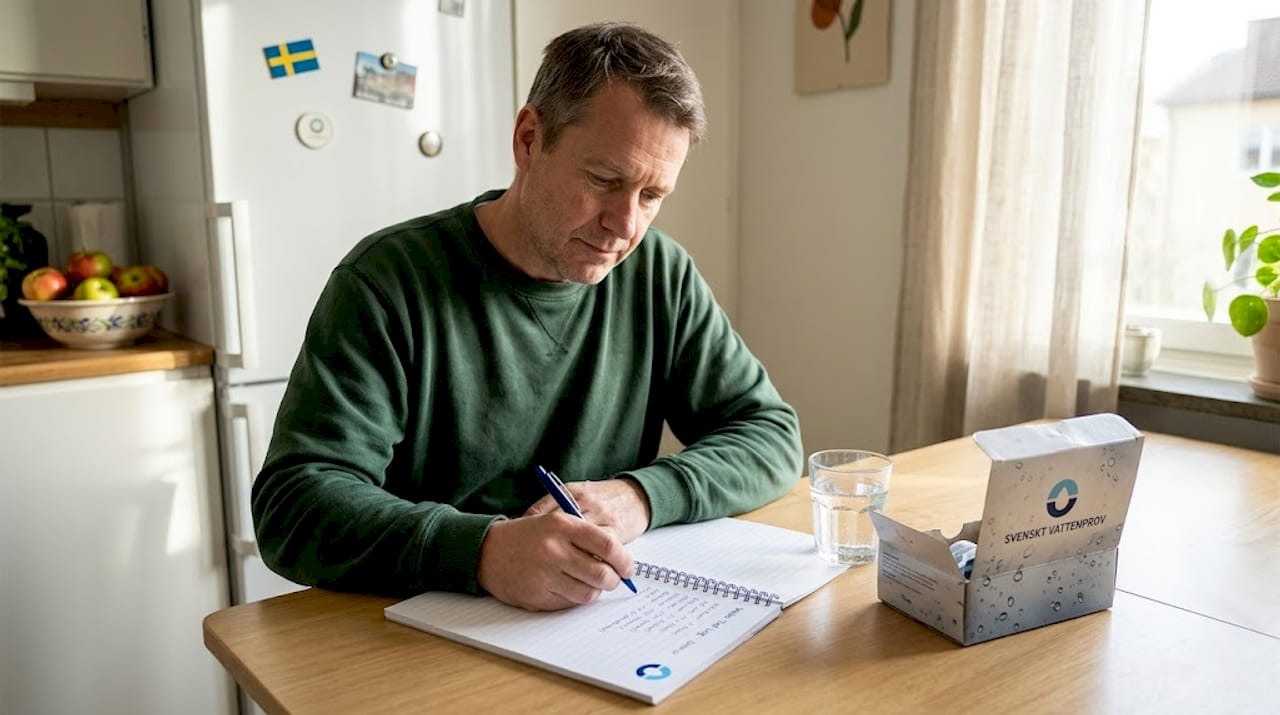
When recording information in your log, capture the following for every test event:
| Field | What to record |
|---|---|
| Date and time | Exact date and time of sampling |
| Sampling point | Which tap or location the sample was taken from |
| Water appearance | Clear, cloudy, colored, or unusual |
| Odor and taste | Note any changes from normal |
| Test results | Numerical values for each parameter tested |
| Weather conditions | Recent heavy rain, drought, or snowmelt |
| Maintenance notes | Any recent work done on the well or pipes |
Pro Tip: Store your logbook near your water treatment area or on your phone as a shared digital document. The easier it is to access, the more consistently you will update it.
How to systematically document water quality changes: Step-by-step process
With your materials ready, it’s time to follow a reliable, easy-to-repeat procedure for documenting every water quality change in your well.
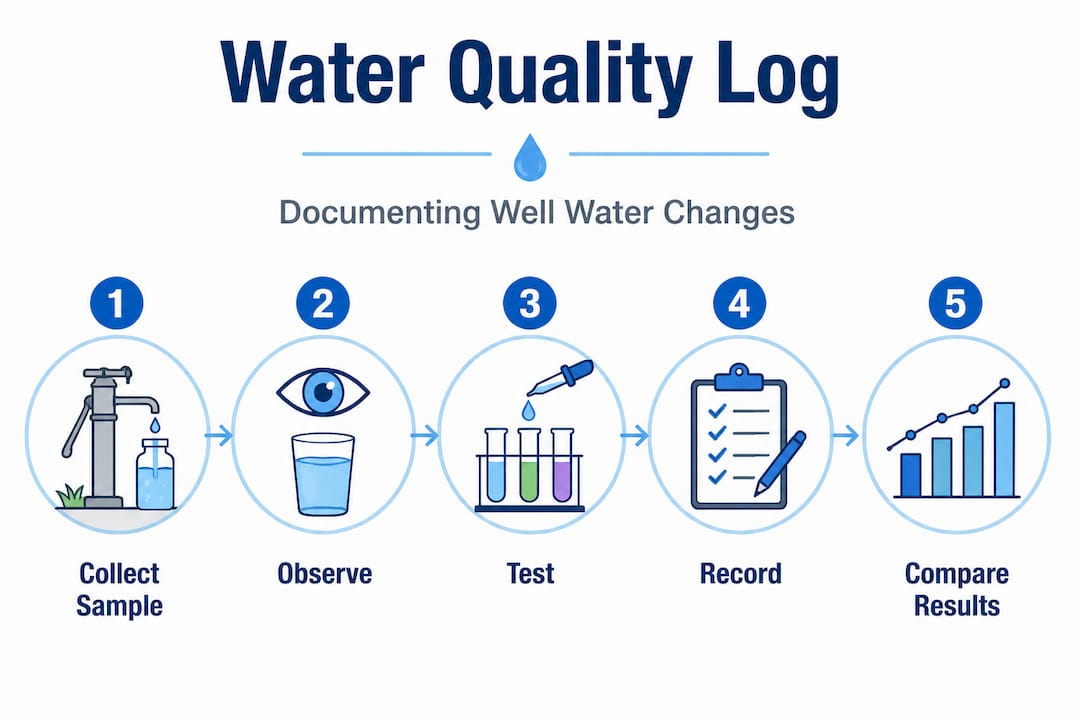
A clean drinking water guide for well owners confirms that standardized logbooks help spot trends in water quality and support proactive intervention before small issues become expensive problems.
Follow these steps every time you conduct a water quality check:
-
Set a testing schedule. Test at minimum once a year, ideally in spring after snowmelt and in early fall. Test immediately after any noticeable change, after heavy flooding, after any work on the well, or if a new potential contamination source appears nearby such as new construction or a spill.
-
Flush the tap before sampling. Run the water for two to three minutes before collecting a sample. This clears any stagnant water sitting in the pipes and gives you a representative reading from the actual groundwater source.
-
Collect samples correctly. Follow the sampling technique instructions precisely. Fill sample bottles without letting them overflow, avoid touching the inside of the cap, and label each bottle clearly with the date and sampling point. Proper techniques ensure accurate results and compliance with Swedish guidelines.
-
Record your observations immediately. Before you even send your sample to a lab, note what you saw, smelled, and tasted at the time of collection. These real-time observations are valuable data points that lab numbers alone cannot replace.
-
Log your test results promptly. When results arrive, enter every value into your logbook alongside the corresponding observations. Do not let results sit in an email. Delayed logging often means lost context.
-
Compare results to your previous entries. Look for trends. Is iron creeping up over several tests? Has turbidity increased after rainy periods? Trends are more telling than a single result.
| Documentation method | Advantages | Disadvantages |
|---|---|---|
| Paper logbook | No technology needed, always accessible | Risk of loss or damage, harder to analyze trends |
| Digital spreadsheet | Easy to filter, back up, and share | Requires device access, possible data loss without backup |
| Dedicated app | Automated reminders, trend graphs | Subscription costs, learning curve |
Pro Tip: Take a photo of your well and surrounding area every time you test. Visual records of seasonal flooding, nearby construction, or visible algae growth add context that numbers alone cannot capture.
Common mistakes and how to avoid them
Even with the right process, many well owners fall into common traps. Here’s how to avoid them.
- Incomplete records. Logging only test results without dates, conditions, or observations makes trends impossible to detect. Every entry needs full context.
- Testing too infrequently. Missed test intervals can delay detection of water quality problems by months, meaning a family drinks contaminated water far longer than necessary.
- Improper sampling techniques. Collecting water before flushing the tap, using unsterile bottles, or touching the inside of sample containers introduces errors that make your results unreliable. This is especially critical for microbiological testing.
- Ignoring minor changes. A slight new taste or a hint of discoloration can feel too small to act on. But small warning signs are often early indicators of developing problems. Reviewing your water quality parameters against your logged results helps you decide whether a change is within normal variation or a real red flag.
- Not acting on negative findings. Documentation is only useful if you respond to it. Finding elevated nitrates or coliform bacteria and waiting to see if they resolve on their own puts your household at risk.
A well owner who keeps thorough records is rarely caught off guard. When a problem is found, you already have the historical data to understand how long it has been developing and what might have caused it. That information is valuable both for fixing the problem and for any interactions with local authorities.
Pro Tip: Set a recurring digital reminder every three to six months to review your log, not just to add new results but to compare them against older entries and look for gradual shifts.
What to do with your documentation: Verification and next steps
After careful documentation, it’s important to know how to interpret and act on your findings.
Your records will eventually tell one of three stories: everything is stable and within safe limits, one or more parameters are approaching concerning levels, or a clear problem exists that requires immediate action. Knowing how to read your own data makes you a more confident and prepared well owner.
-
Review trends, not just individual results. A single high iron reading might not be alarming. Five consecutive readings showing a steady climb is a different story entirely. Look at your data across time, not in isolation.
-
Compare your results to Swedish guidelines. Swedish water guidelines for private wells set clear acceptable ranges for dozens of parameters. If any of your values consistently approach or exceed those limits, it is time to act.
-
Consult an accredited laboratory when results are abnormal. Home test kits are a useful first screen, but they are not definitive. Consulting professionals for abnormal readings ensures safety and regulatory compliance. An accredited lab provides legally valid results that can be used in discussions with your local municipality or environmental board.
-
Bring your documentation when seeking help. When you contact a professional or lab, your logbook is your most valuable asset. It shows what has changed, when it changed, and under what conditions, which helps experts diagnose the root cause faster and more accurately.
Pro Tip: If you are selling your property, a complete and well-organized water quality log significantly increases buyer confidence and may be required as part of the transaction documentation in Sweden.
Why most well owners underestimate the power of documentation
There is a pattern we have noticed over years of working with Swedish well owners. When the water looks clear and tastes fine, documentation falls to the bottom of the to-do list. It feels unnecessary. It feels like paperwork for a problem that does not exist yet.
But that thinking carries a serious risk. Water quality problems in private wells rarely announce themselves dramatically. They creep in. Nitrate levels rise slowly over a farming season. Iron concentrations increase gradually as a well ages. PFAS from nearby sources accumulates quietly in Swedish private well parameters without any visible or tasteable warning at all. By the time a household notices something is wrong, the exposure may have been ongoing for months.
Documentation does not just catch problems. It also saves you money. When you can show a professional a clear record of when a change first appeared and how it has progressed, the diagnostic process is shorter and less expensive. Without records, you may pay for broader, more costly testing to establish a baseline that you should have had all along.
There is also a property value angle that is easy to overlook. A well-maintained, thoroughly documented well is a genuine asset when selling a home. Buyers and their agents are increasingly aware of well water risks, and a complete log of regular testing and clean results is a powerful signal of a responsibly maintained property.
The most effective mindset shift is this: treat water quality documentation the same way you treat your home’s maintenance records. You would not skip documenting a roof repair or a furnace replacement. Your water supply deserves the same level of attention, and the consequences of neglecting it are far more immediate for your family’s daily health.
Professional help for Swedish well water quality tracking
If you prefer to let experts handle the technical details, professional services are available to streamline water quality documentation and safety for well owners across Sweden.
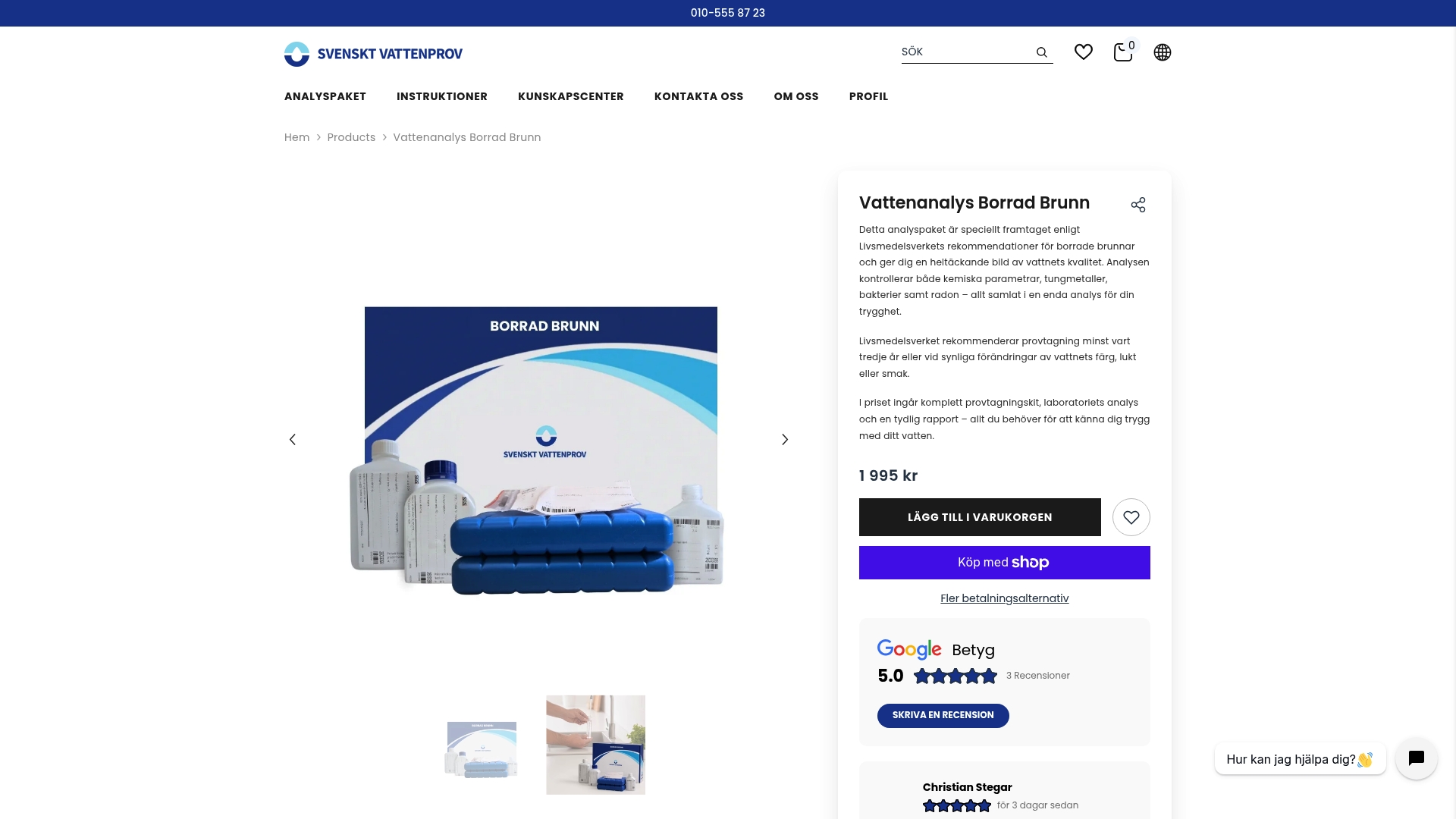
At Svenskt Vattenprov, we offer accredited water analysis carried out by SGS Analytics and Eurofins, a Swedac-accredited laboratory operating under the same standards as public water utilities. Every analysis package we provide comes with clear, plain-language results and concrete guidance on what your numbers mean and what to do next. For those with bergborrade (drilled) wells, our analysis for drilled wells tests across 41 key parameters and is our most trusted starting point. You can also browse our full range of water analysis for well owners to find the package that fits your specific well type and situation. We handle the entire process so you can focus on what matters most: keeping your family safe.
Frequently asked questions
How often should I test and document water quality in my private well?
Testing at least once yearly is recommended, along with testing after any noticeable change such as a new smell, taste, or nearby environmental event. Many Swedish well owners test twice a year, in spring and fall, to capture seasonal variation.
What records should I keep when documenting water quality changes?
Record the date, time, sampling location, your observations on appearance and odor, all test results, current weather conditions, and any recent maintenance work. Standardized logbooks help spot trends over time and support timely intervention when something shifts.
What are the signs I should immediately test my well water?
Test right away if you notice a new taste, unfamiliar odor, a change in color, or cloudiness that was not there before. Common signs of changed water quality in wells include exactly these physical changes, and acting quickly reduces the risk of prolonged exposure.
Are digital logs better than paper for tracking water quality?
Digital logs are easier to back up, search through, and share with professionals or municipal authorities, but a paper log used consistently is just as valid. The format matters less than your commitment to keeping the records current and complete.
When should I seek a professional water analysis?
Contact a professional when you find abnormal test results, when changes persist despite repairs, or when you simply want legally valid documentation for a property sale or municipal compliance. Consulting professionals for unusual readings ensures both safety and regulatory compliance under Swedish standards.
Recommended
- Instructions for water sampling – How to take the sample correctly – Svenskt Vattenprov
- Improvement measures for well water 2026: ensuring quality – Svenskt Vattenprov
- How to monitor water quality in your own well, step by step – Svenskt Vattenprov
- Drinking Water Requirements for Well Owners in Sweden 2026 – Svenskt Vattenprov