

Drinking Water Requirements for Well Owners in Sweden 2026
As a well owner with your own water source, you bear extensive responsibility for your family's health and safety. Many mistakenly believe that private wells are exempt from drinking water requirements, but the truth is more nuanced. Although small private wells are not subject to the same mandatory legislation as public waterworks, the Public Health Agency of Sweden and the Swedish Food Agency strongly recommend that you follow the same limit values and procedures. This guide provides concrete guidance on your obligations, how to correctly test your water, and what measures will protect your family from health risks associated with contaminated well water.
Table of Contents
- Key Points on Drinking Water Requirements for Well Owners
- Well Owner's Responsibility and Swedish Drinking Water Requirements
- How to Take Samples and Analyze Your Well Water
- Common Risk Factors and Environmental Impact on Well Water
- Documentation and Preparedness for Safe Drinking Water at Home
- Ensure Your Well Water Quality with Our Analyses
- Questions and Answers on the Role of Drinking Water Requirements for Well Owners
Key Insights
| Point | Details |
|---|---|
| Well owner responsibility | Private wells require individual responsibility for drinking water quality and regular testing, even if not mandated by law. |
| Frequency according to recommendations | Testing should be regular and adapted to family needs and risk factors, even if smaller wells are not subject to public regulations. |
| Accredited laboratories | Using accredited laboratories provides reliable results that form the basis for decisions on water quality. |
| Documentation of tests | All tests and maintenance are documented in a logbook so that trends can be monitored over time and actions can be tracked. |
Well Owner's Responsibility and Swedish Drinking Water Requirements
The legal situation for private well owners in Sweden is clear but requires explanation. Well owners with a private well for their own use have full individual responsibility for ensuring the quality and safety of their drinking water, including regular testing. This means you cannot rely on municipal controls or government inspections to detect problems.
Small private wells that supply less than 10 cubic meters of water per day and serve fewer than 50 people are not subject to the mandatory drinking water legislation that applies to public waterworks. This does not mean you are free from responsibility. On the contrary, the entire burden rests on you as the property owner to ensure the water is safe to drink.
The Swedish Food Agency publishes limit values for drinking water based on EU directives and Swedish research. These limit values specify maximum levels for bacteria, chemicals, and physical parameters such as pH. Although these are not legally binding for your private well, they represent the scientific consensus on what is safe to consume. Following these official well water requirements for 2026 is therefore strongly recommended.
Your practical responsibilities cover several areas:
- Regular water sampling according to recommended intervals
- Maintenance of the well and its protective equipment to prevent contamination
- Actions for abnormal analysis results to restore water quality
- Documentation of all tests and maintenance measures in a logbook
- Information to tenants or buyers about water quality when renting or selling
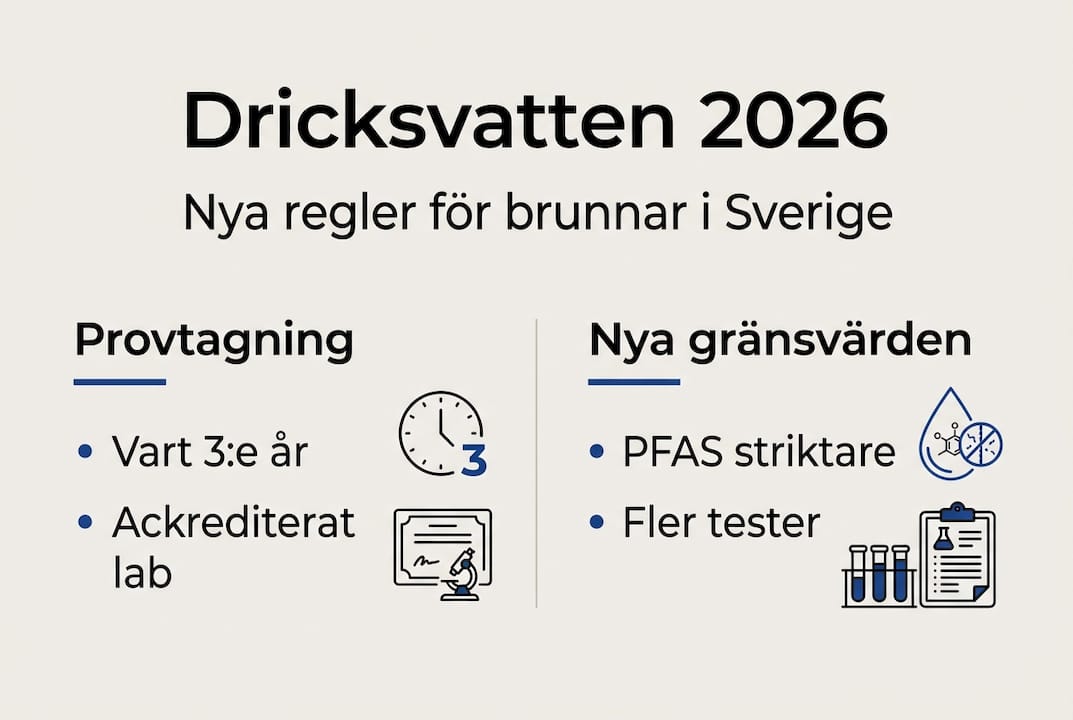
Testing frequency varies depending on your situation. The minimum standard is testing every three years for normal households. If you have small children, immunocompromised family members, or if the well supplies multiple properties, annual testing is recommended. In case of changes in water quality, such as abnormal odor, taste, or color, you should test immediately.
Pro Tip: Always prioritize tests for hazardous substances like bacteria and nitrates over aesthetic parameters like iron and manganese. Bacteria can make you acutely ill, while high iron levels primarily affect taste and discolor laundry.
How to Take Samples and Analyze Your Well Water
Correct sampling is crucial for reliable results. Even small mistakes in the process can lead to misleading data and incorrect conclusions about your water's safety.
Follow these steps for professional sampling:
- Order sampling equipment from an accredited laboratory, including sterile bottles and clear instructions.
- Choose the correct tap for sampling, preferably an indoor cold water tap without an aerator or filter that could affect the result.
- Let the water run for 2-3 minutes before sampling to flush out stagnant water from the pipes.
- Disinfect the tap by flame sterilizing with a lighter or wiping with alcohol.
- Fill the sample bottles according to the laboratory's instructions without touching the inside of the bottle or the cap.
- Label the bottles clearly with the date, time, and sampling location.
- Send the samples on the same day or store them cold if not possible.
Use an accredited lab, sterile bottles, and analyze microbiology, chemistry, and physical parameters. Swedac-accredited laboratories guarantee that analyses are performed according to international standards and that the results are legally valid. This is especially important if you need to present analysis results to authorities or during property sales.
Which parameters should you analyze? It depends on your well type and local conditions, but some basic tests are always necessary:
| Parameter | Health Risk | Limit Value | Common Cause |
|---|---|---|---|
| E.coli | Acute gastrointestinal illness | 0 cfu/100 ml | Fecal contamination from sewage or animals |
| Coliform bacteria | Indicator of contamination risk | 0 cfu/100 ml | Surface water, leaky well |
| Nitrate | Methemoglobinemia in infants | 50 mg/l | Fertilizer, sewage |
| PFAS (total) | Cancer, hormone disruption | 4 ng/l (2026) | Industry, fire training areas |
| Lead | Neurological damage | 5 µg/l | Old pipes |
| Arsenic | Cancer | 10 µg/l | Naturally occurring in bedrock |
| pH | Corrosion of pipes | 6.5-9.5 | Natural water chemistry |
The new, stricter drinking water limits from 2024 mean that the PFAS limit has been significantly lowered, which may require remedial action for more wells. Test for PFAS if you live near airports, industries, or fire training areas where these substances have historically been used.
Pro Tip: Always follow the laboratory's sampling instructions exactly. Even experienced well owners make mistakes that can contaminate the sample and yield false positive results for bacteria.
Common Risk Factors and Environmental Impact on Well Water
Your well's vulnerability to contamination depends on several factors, with well type playing a central role. Dug wells and drilled wells have entirely different risk profiles that require adapted testing strategies.
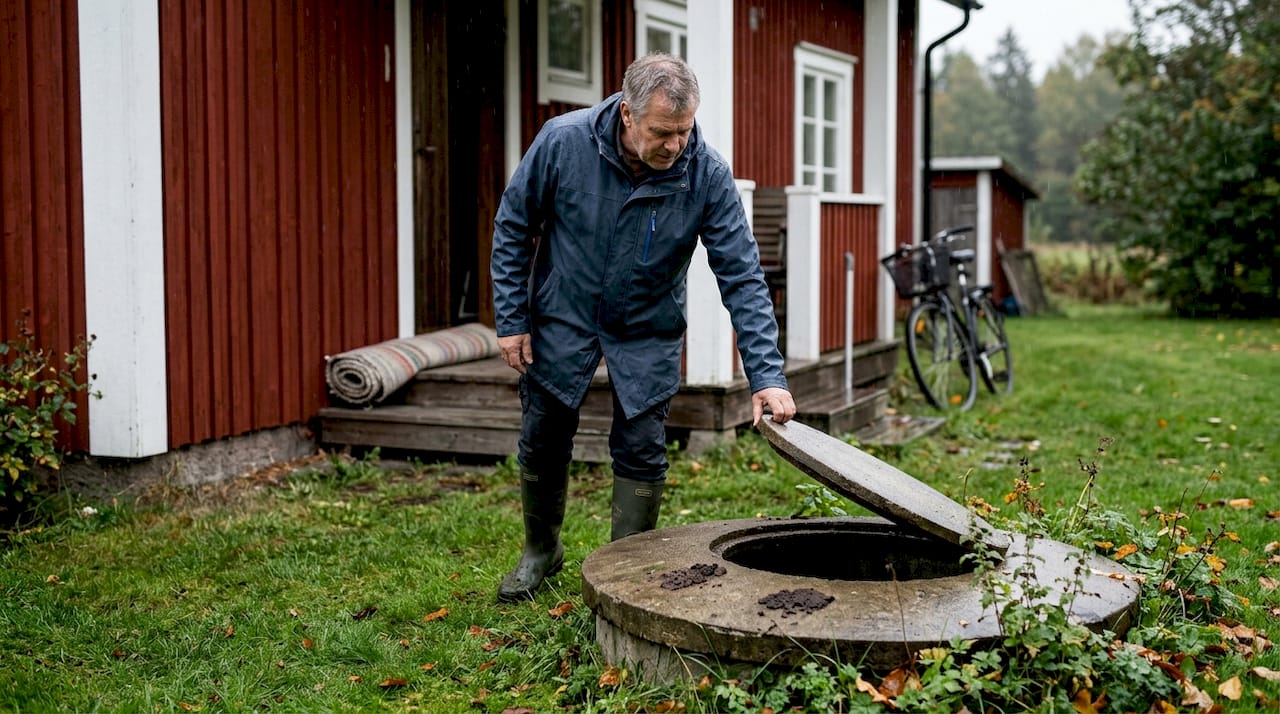
Dug wells are more susceptible to surface contamination, and climate change increases the risks of unsafe water. These wells rarely reach depths greater than 10-20 meters and draw water from soil layers easily affected by precipitation, snowmelt, and surface activities. Bacteria from sewage, fertilizer, or animal husbandry can penetrate relatively quickly.
Rock-drilled wells reach deeper groundwater aquifers and are generally better protected against surface contamination. However, they have other challenges, such as higher levels of naturally occurring substances from the bedrock. Radon, arsenic, uranium, and fluoride can occur at elevated levels depending on the geology of your area.
| Factor | Dug well | Drilled well |
|---|---|---|
| Bacterial risk | High | Low |
| Nitrate contamination | High | Medium |
| Natural metals | Low | High |
| Radon | Low | High (granite areas) |
| Impact of drought | High | Medium |
| PFAS risk | Medium | Medium |
Environmental factors around your property greatly influence which contaminants you need to be vigilant about:
- Agriculture within 100 meters increases the risk of nitrate, pesticides, and bacteria from manure.
- Nearby industries or airports can release PFAS and other chemicals that spread via groundwater.
- Dense development with individual sewage systems increases the risk of bacterial contamination, especially in areas with poorly functioning sewage systems.
- Road salting in winter can increase chloride levels in wells near heavily trafficked roads.
- Forestry with fertilization and ditching can temporarily affect water quality.
Climate change creates new challenges for well owners. Longer dry periods concentrate contaminants in groundwater and can cause shallow wells to run dry. More intense downpours increase the risk of surface water intrusion into dug wells and can wash down bacteria and chemicals faster than before.
According to well water statistics from Swedish laboratories, about 20% of all tested private wells show unsafe water in the initial analysis, while over 80% have some deviation from recommended limit values. This underscores the importance of regular monitoring.
The new stricter guidelines for PFAS and heavy metals introduced in 2024 mean that more wells are now classified as deviating. If your previous tests showed limit values close to the old recommendations, you may need to retest and possibly install purification equipment.
Documentation and Preparedness for Safe Drinking Water at Home
Systematic documentation of your well water quality over time provides valuable insight into trends and changes. A well-kept logbook serves as your well's health record and can be crucial for property sales or contact with authorities.
Your logbook should include:
- Date and results of all water analyses with a copy of the laboratory report
- Observations of changes in water quality between tests, such as odor, taste, or color
- Maintenance actions on the well, including cleaning, repairs, and component replacement
- Extreme weather events such as floods, droughts, or heavy precipitation
- Changes in the surrounding environment such as new construction, agricultural activities, or road work
- Installations of purification equipment with dates for filter changes and service
This documentation helps you detect slow changes that might otherwise be missed. If iron levels gradually increase over several years, it could indicate corrosion in the well that needs attention. Rising nitrate levels can signal leakage from sewage or altered land use in the area.
A drinking water emergency plan is as important as fire protection. In case of suspected contamination, well failure, or extreme weather, you need to be able to supply your family with safe water immediately. Well owners should document analyses in a logbook and have an emergency plan with water storage for drought or suspected contamination.
Your emergency solution should include:
- At least 15 liters of drinking water per person in sealed containers, changed every six months
- Portable water purifier or purification tablets for emergencies
- Contact details for local water suppliers who can deliver tank water
- Instructions for boiling water in case of bacterial contamination
- List of nearby wells or water sources that can be used temporarily
Pro Tip: Update your logbook immediately after each test or observation. Review your emergency plan annually and replace expired water in storage. Perform an extra water analysis if you notice sudden changes instead of waiting for the next scheduled test.
If your analysis results show contamination, quick action is crucial. In case of bacterial contamination, immediately boil all drinking water for at least one minute. Contact your municipality's environmental office for advice and plan for well disinfection. In case of chemical contamination, the actions depend on which substance exceeds the limit value, but do not use the water for drinking or cooking until the problem is resolved.
For more detailed information on how to ensure clean drinking water and handle different types of contamination, extensive resources are available. You can also find answers to common questions in our well water guide. Further practical guidance is available in this emergency preparedness guide for well owners, which covers various emergency situations.
Ensure Your Well Water Quality with Our Analyses
Taking responsibility for your well water quality does not have to be complicated or time-consuming. With the right analysis package and professional support, you can quickly determine if your water is safe to drink.
Our Swedac-accredited analyses provide legally reliable results that meet the requirements of the Swedish Food Agency. Whether you need a basic bacterial analysis or our most comprehensive complete water analysis with 71 parameters, you will receive clear answers and concrete recommendations.
We have specially adapted packages for different well types. Our dug well analysis focuses extra on the surface water-related risks that these wells are particularly exposed to. All packages include sampling equipment, shipping labels, and detailed guidance throughout the process.
Results are delivered digitally with pedagogical explanations of each parameter. You will know exactly what the values mean for your health and what actions are recommended if anything deviates. Our expert team is available to answer your questions and help you interpret the results in your specific situation.
Questions and Answers on the Role of Drinking Water Requirements for Well Owners
How often should I test my well water?
A minimum of every three years for normal households, according to the Public Health Agency's recommendations. If you have small children, immunocompromised individuals in the household, or if the well supplies multiple properties, you should test annually. In case of changes in odor, taste, or color, you should test immediately regardless of the last test date.
Which microorganisms and chemicals should I test for?
All well owners should test for E.coli and coliform bacteria at each sampling, as these indicate fecal contamination. Chemical tests should include nitrate, iron, manganese, pH, and conductivity as a basic package. Depending on your location, PFAS, heavy metals like lead and arsenic, and radon may be important additions. Dug wells require more comprehensive bacterial tests.
Are there legal requirements for private wells under 10 m³ per day?
No, small private wells serving fewer than 50 people are not subject to mandatory drinking water legislation. However, you have full individual responsibility for the water's safety and are strongly recommended to follow the Swedish Food Agency's limit values. When selling property, buyers may require a current water analysis, and some municipalities have local regulations.
How do environmental changes affect my well water safety?
Climate changes with dry periods and more intense downpours increase the risk of both water scarcity and contamination. Drought concentrates contaminants, while heavy precipitation can wash down bacteria and chemicals into dug wells. New development, agriculture, or industry nearby can introduce new sources of contamination. Monitor your surroundings and test more frequently during significant changes.
What should I do if test results show contamination?
In case of bacterial contamination, immediately boil all drinking water for at least one minute and contact your municipality's environmental office. The well will likely need disinfection and retesting after two weeks. In case of chemical contamination, the action depends on the substance, but avoid drinking the water. Contact a purification company for advice on filters or other equipment. Document everything in your logbook for future reference.