

What triggers water retesting? Essential guide for Swedish wells
TL;DR:
- Up to 20% of Swedish private wells show bacterial contamination or exceed safe water limits.
- Regular testing every three years is recommended, with more frequent tests after environmental events or for vulnerable groups.
- Signs like changes in water taste, odor, or household illnesses should trigger immediate retesting.
Up to 20% of Swedish private wells show bacterial contamination or water that falls outside safe limits. That number is striking, especially when you consider how many well owners test once and assume everything stays fine for years. The truth is that water quality shifts constantly, driven by weather, land use, and events you may not even notice at first. Knowing exactly what triggers a retest is the most practical thing you can do to protect your household. This guide walks through every major trigger, from routine schedules to sudden events and subtle sensory changes, so you always know when to act.
Table of Contents
- Understanding baseline testing intervals and why they matter
- Key events and changes that trigger immediate water retesting
- Detecting changes: Sensory clues and household incidents
- Special risk periods and ongoing monitoring after known contamination
- Our perspective: Why event-based retesting is smarter than fixed schedules
- Need help? Reliable water testing for every retesting trigger
- Frequently asked questions
Key Takeaways
| Point | Details |
|---|---|
| Routine testing essential | Test every three years, or yearly for vulnerable households, to keep your well water safe. |
| Events trigger retesting | Floods, construction, or visible changes in water are immediate signals to retest regardless of schedule. |
| Trust your senses | Any change in taste, odor, or appearance means it’s time to retest your well water. |
| Special risks require action | More frequent testing is needed after contamination or before selling your property. |
| Event-based is best | Adapting to triggers rather than just fixed intervals keeps your drinking water reliable. |
Understanding baseline testing intervals and why they matter
Before you can recognize when to retest early, you need a firm grip on what the standard schedule looks like. Livsmedelsverket recommends testing private well water at least every three years for standard households. That interval is based on how slowly most groundwater quality shifts under normal conditions. Miss that window and you could be drinking water that drifted out of compliance without any visible sign.
Not every household fits the standard three-year schedule, though. Annual testing is recommended for households with children under five, pregnant women, immunocompromised individuals, or anyone sharing a well with multiple properties. The reasoning is straightforward: these groups face greater health consequences if contamination goes undetected even briefly.
It is worth knowing that private well testing in Sweden is not legally mandated. You are responsible for your own water supply, which means no authority will remind you when your three years are up. That responsibility falls entirely on you as the well owner.
Skipping tests carries real consequences. Nitrates, coliform bacteria, arsenic, and radon can all rise gradually without changing how your water looks or tastes. By the time symptoms appear in your household, exposure may have been ongoing for months.
| Household type | Recommended interval |
|---|---|
| Standard household | Every 3 years |
| Children under 5 or pregnant women | Annually |
| Immunocompromised individuals | Annually |
| Shared or community well | Annually |
| Well with prior contamination | Every 6 months |
Key steps to stay on schedule:
- Record your last test date and set a calendar reminder for the next one
- Note your well type (drilled or dug) since dug wells generally need more frequent attention
- Review drinking water quality standards so you understand what each parameter means
- Check Livsmedelsverket guidance if your situation changes
Pro Tip: Keep a simple paper or digital log with your test date, the lab used, and a summary of results. If you ever sell the property or need to contact your municipality’s environmental health office, that log is invaluable.
Key events and changes that trigger immediate water retesting
Routine checks are not the only times testing is essential. Certain events demand quick action regardless of when you last tested. The core principle here is that any significant change in the environment surrounding your well can introduce contaminants that were not present before.
Flooding is the clearest example. When surface water enters or flows near your well, it can carry bacteria, nitrates, and chemical runoff directly into your groundwater. Immediate retesting after flooding, heavy rain, nearby construction, agricultural activity, or visible environmental changes is strongly advised. Do not wait for your next scheduled test.
Here are the most common event-based triggers ranked by urgency:
- Flooding or standing water near the well — retest within days, not weeks
- Heavy or prolonged rainfall — surface runoff can infiltrate even well-sealed systems
- Nearby agricultural spraying or fertilizer application — nitrates and pesticides can migrate quickly
- Road construction or excavation close to the well — soil disturbance changes how water filters through the ground
- Landslides or significant erosion — alters groundwater pathways dramatically
- Drought followed by sudden recharge — dry periods concentrate contaminants, and the first heavy rain flushes them into the aquifer
| Event | Risk level | Recommended response |
|---|---|---|
| Flooding | High | Retest immediately |
| Heavy rainfall | Medium-High | Retest within 1 week |
| Agricultural spraying nearby | Medium | Retest within 2 weeks |
| Construction or excavation | Medium | Retest within 2 weeks |
| Drought then heavy rain | Medium-High | Retest within 1 week |
| Landslide or erosion | High | Retest immediately |
For a deeper look at what these events can introduce into your water, the complete water testing guide covers each contaminant type in detail. You can also review common well water issues to understand which problems are most prevalent in your region of Sweden.
Important: Research consistently shows that approximately 15-20% of private wells are impacted by contamination following significant weather or land-use events. If any of the above scenarios apply to you, treat it as a trigger, not a suggestion.
Detecting changes: Sensory clues and household incidents
Besides major environmental triggers, subtle changes within your home can be just as important to catch. Your senses are actually a first-line detection tool, and you should use them actively.
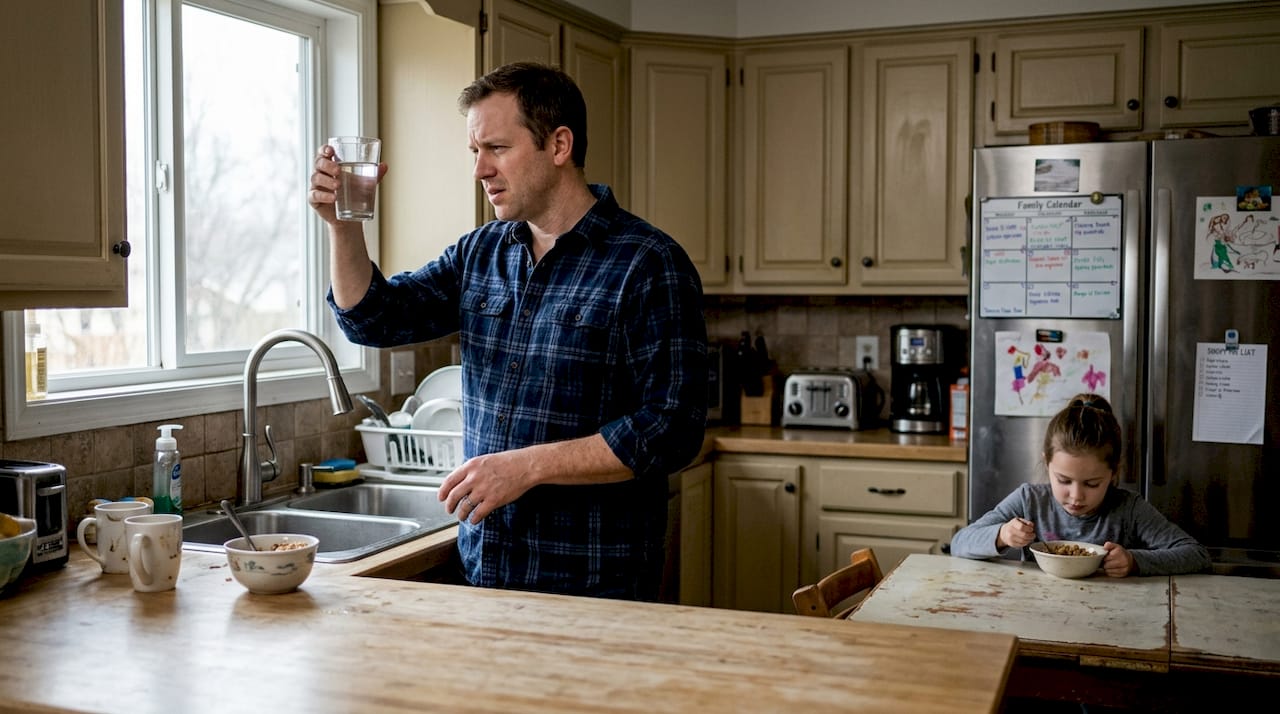
Retest upon changes in water taste, odor, color, or clarity. These shifts are your water telling you something has changed. A faint sulfur smell, a metallic taste, slight cloudiness after rain, or a yellowish tint are all signals worth taking seriously. None of them are normal, and none should be dismissed as seasonal variation without a test to confirm safety.
Sensory triggers to watch for:
- Unusual taste: metallic, bitter, or salty flavors that were not there before
- Odor changes: sulfur (rotten egg), musty, or chemical smells
- Color shifts: yellow, brown, or gray tints in the water
- Clarity issues: cloudiness, foam, or visible particles
- Staining: new rust-colored stains on sinks or laundry suggest elevated iron or manganese
Household incidents are equally important triggers. If multiple people in your home develop gastrointestinal illness around the same time with no other obvious cause, your water is a serious suspect. Unexplained plumbing corrosion, scale buildup, or appliance damage can also point to water quality issues worth investigating.
“We had a faint earthy smell for about two weeks before we tested. The results showed elevated coliform bacteria. We had no idea until we actually ran the analysis.” A well owner in Västra Götaland, speaking about the importance of acting on early sensory signals.
Pro Tip: Trust your senses without second-guessing. If something smells or tastes different, even slightly, retest now rather than waiting. The cost of a test is far smaller than the cost of treating a waterborne illness. For more context on what your results will show, essential water analysis facts is a useful starting point. You can also check water analysis guidelines for parameter-specific information.
Special risk periods and ongoing monitoring after known contamination
For some situations, waiting for a simple trigger is not enough. Proactive monitoring becomes the standard when your well has a documented history or when a major life event is approaching.
If your well has previously tested positive for contamination, more frequent testing every 6 months is the right approach until results normalize consistently. One clean test after a contamination event does not mean the problem is resolved. You need a pattern of clean results before returning to a standard schedule.
Property sales are another critical trigger. Testing before selling is expected by buyers, and a current analysis builds trust in the transaction. A test that is more than one year old is often considered insufficient by informed buyers and their advisors.
Dug wells (grävda brunnar) deserve special attention throughout. Because they draw from shallow groundwater, they are far more vulnerable to surface contamination than drilled (borrade) wells. They should be tested more frequently as a baseline practice, not just when events occur.
| Situation | Suggested testing frequency |
|---|---|
| Standard household, drilled well | Every 3 years |
| Standard household, dug well | Every 1-2 years |
| Vulnerable household members | Annually |
| Previous contamination detected | Every 6 months until clear |
| Pre-sale property check | Within 12 months of listing |
| After a major trigger event | Immediately |
Steps for managing ongoing monitoring effectively:
- Document every test result with the date and lab reference number
- Compare results over time to spot trends before they become problems
- Consult groundwater statistics to understand regional contamination patterns
- Review brunnsvatten issues specific to your area
- Increase frequency proactively if your neighborhood sees new development or land-use changes
A significant portion of property buyers in Sweden now ask for a recent water analysis as part of due diligence. Having one ready is not just reassuring; it can genuinely affect whether a sale moves forward smoothly.
Our perspective: Why event-based retesting is smarter than fixed schedules
Fixed testing intervals are a useful baseline, but relying on them alone creates a false sense of security. We have seen this pattern repeatedly: a well owner tests on schedule, gets clean results, and then a nearby field gets heavily fertilized six months later. The next scheduled test is two and a half years away. That gap is where real risk lives.
The evidence strongly supports a risk-adaptive approach. Regular well testing matters, but layering event-awareness on top of it is what actually catches problems before they affect your health. Droughts, new construction, and shifts in agricultural practices can all outpace a rigid three-year calendar.
From our experience working with well owners across Sweden, the households that stay safest are the ones who treat their schedule as a minimum, not a ceiling. They test when something changes, not just when the calendar says so. That mindset shift is small but genuinely protective.
Pro Tip: Combine your scheduled tests with a simple event checklist. After any major weather event, nearby land change, or sensory shift, ask yourself: does this warrant a test? More often than not, the answer is yes.
Need help? Reliable water testing for every retesting trigger
If you are unsure which tests match your well’s situation, reliable options are readily available.
At Svenskt Vattenprov, we offer analysis packages designed for every trigger scenario discussed in this guide. For bacterial concerns after flooding or sensory changes, our bacteria analysis kit gives you fast, clear answers. If you own a dug well with higher surface-water exposure, our dug well testing package covers the parameters most relevant to your risk profile. For comprehensive peace of mind before a property sale or after a contamination history, browse all well analysis options to find the package that fits. Every result comes with clear explanations and concrete recommendations, not just numbers.
Frequently asked questions
Is water testing for private wells mandatory in Sweden?
Private well testing is not legally required in Sweden, but Livsmedelsverket strongly recommends it for health and safety. Responsibility for water quality rests entirely with the well owner.
How soon should I retest after a flood or storm?
You should test your well water immediately after flooding or severe rain to confirm it is safe. Do not wait for your next scheduled test interval.
What are the signs that my well water needs to be retested?
Any sudden change in taste, odor, color, or clarity means you should retest, as do nearby construction activity or unexplained illness in your household.
How often should I test if my well had previous contamination?
Wells with past contamination should be tested every six months until results are consistently within safe limits across multiple consecutive tests.
Do I need to retest before selling my house?
Yes, a current water analysis is expected by buyers when you sell a property with a private well, and a test older than one year is often considered insufficient.