

Understanding brunnsvatten issues: guide for well owners
Over 1 million Swedish households rely on private wells for their drinking water, yet 15-20% have health-hazardous issues like bacteria or chemicals lurking in their supply. Many well owners assume their water is safe simply because it looks clear and tastes fine, but invisible contaminants can pose serious health risks. This guide helps you identify common brunnsvatten problems, understand testing methods for different well types, and take practical steps to protect your household water quality.
Table of Contents
- Key takeaways
- Prevalence and types of brunnsvatten issues in Sweden
- Common contaminants in brunnsvatten and their health impacts
- Testing methods for dug vs. drilled wells
- How to interpret water quality results and next steps
- Protect your well water with professional analysis services
- FAQ
Key Takeaways
| Point | Details |
|---|---|
| Regular water testing | Regular testing is the only reliable way to detect invisible contaminants such as bacteria and chemicals in private wells. |
| Different risks by well type | Dug wells more often face surface contamination while drilled wells tend to encounter deeper metals and radon, so testing strategies should match your well type. |
| Seasonal contamination cycles | Bacterial threats spike in dry months when water tables drop, and nitrates and other chemicals can accumulate over time depending on land use. |
| Know the health risks | Contaminants like coliform bacteria and nitrates pose immediate and long term health risks, with infants and pregnant women being especially vulnerable. |
Prevalence and types of brunnsvatten issues in Sweden
Sweden’s million-plus private well owners face a sobering reality. Half rely on dug wells (grävd brunn) and half on drilled wells (borrad brunn), yet approximately 15-20% have unsafe water containing bacteria or chemicals that violate health standards. These aren’t isolated incidents scattered across remote areas. Contamination affects wells throughout the country, from coastal regions to inland forests.
Bacterial contamination spikes dramatically during dry summer months when water tables drop and concentrations increase. Meanwhile, chemical issues often develop slowly over years as agricultural runoff, industrial activity, or natural geological processes alter groundwater composition. The concerning part? Most well owners don’t realize problems exist until someone gets sick or a property sale requires testing.
Research shows roughly 80% of private wells have some form of water quality remark, though not all pose immediate health threats. These remarks range from aesthetic issues like iron staining to serious concerns like pathogenic bacteria or toxic metals. Understanding which problems require urgent action versus simple monitoring makes the difference between panic and informed decision making.
“Regular testing remains the only reliable way to detect invisible contaminants before they impact your family’s health. Visual inspection and taste tests cannot identify bacteria, nitrates, or most chemical pollutants.”
The split between dug and drilled wells creates distinct contamination patterns:
- Dug wells typically face surface water intrusion carrying bacteria, pesticides, and organic matter
- Drilled wells encounter deeper issues including naturally occurring metals, minerals, and radon gas
- Both types can develop problems from nearby septic systems, agricultural operations, or industrial sites
- Seasonal variations affect contamination levels, with spring snowmelt and summer droughts creating peak risk periods
You can explore detailed well water contamination statistics showing regional patterns and common parameter violations across Sweden. These data reveal that contamination doesn’t discriminate by geography, well age, or construction quality.
Common contaminants in brunnsvatten and their health impacts
Knowing what threatens your water supply helps prioritize testing and treatment. Swedish private wells face several categories of contaminants, each carrying distinct health implications that range from immediate illness to long-term chronic effects.
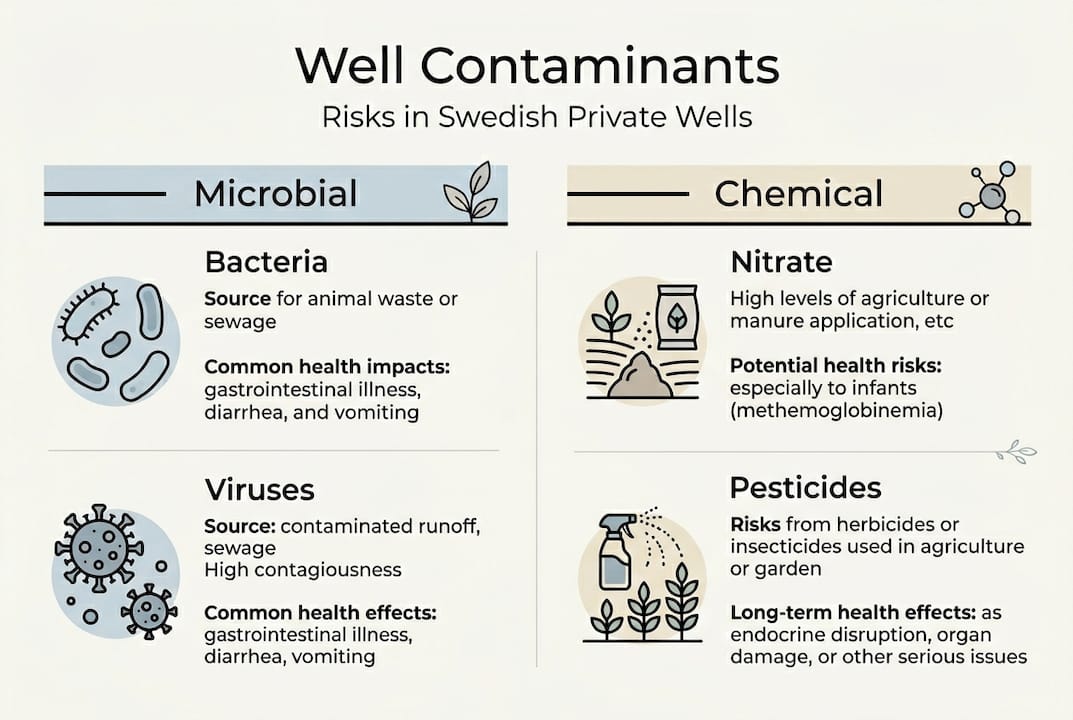
Bacterial contamination tops the concern list. Coliform bacteria indicate fecal contamination and potential presence of dangerous pathogens. E. coli specifically signals recent sewage or animal waste intrusion. These microorganisms cause gastrointestinal illness with symptoms appearing within hours or days of exposure. Young children, elderly individuals, and those with compromised immune systems face the highest risk.
Chemical contaminants operate differently. Nitrates from fertilizers or septic systems pose special danger to infants, causing a blood oxygen disorder called methemoglobinemia or “blue baby syndrome.” Adults typically tolerate higher nitrate levels, but pregnant women should avoid contaminated water entirely.
Metals present varied threats:
- Iron and manganese create aesthetic problems like staining and metallic taste, but rarely cause health issues at typical well concentrations
- Arsenic occurs naturally in certain rock formations and causes cancer, cardiovascular disease, and neurological damage with long-term exposure
- Lead leaches from old pipes and fixtures, harming brain development in children and causing high blood pressure in adults
- Manganese at elevated levels affects neurological function, particularly in developing children
Pesticides and industrial chemicals enter groundwater through agricultural runoff, improper disposal, or historical contamination. PFAS compounds, nicknamed “forever chemicals,” persist indefinitely in the environment and accumulate in human tissue. Research links PFAS exposure to immune system suppression, cancer, and reproductive problems.
Radon gas dissolves into groundwater from granite bedrock, releasing radiation when you shower or wash dishes. Long-term inhalation of radon-contaminated water vapor increases lung cancer risk, though the effect is smaller than radon entering through basement foundations.
Bacteria contamination is especially common during dry summers when wells draw from lower water table levels with higher pollutant concentrations. This seasonal pattern means your well might test clean in spring but show contamination by August.
Pro Tip: Schedule water testing in late summer or early fall when bacterial contamination peaks. This timing reveals your well’s worst-case water quality rather than seasonal best-case results.
Recognizing signs of contaminated drinking water helps you respond quickly when problems develop between scheduled tests. However, many dangerous contaminants produce no taste, odor, or visual clues.
Testing methods for dug vs. drilled wells
Your well type determines which contaminants pose the greatest risk and which tests provide meaningful results. Dug and drilled wells require different analytical approaches based on their construction and vulnerability patterns.
Dug wells, typically 3-15 meters deep, access shallow groundwater heavily influenced by surface conditions. Their wide diameter and permeable construction allow surface water, soil particles, and organisms to enter more easily. Testing priorities include:
- Coliform bacteria and E. coli to detect fecal contamination
- Nitrates indicating septic system or agricultural influence
- Turbidity measuring suspended particles from surface intrusion
- pH and basic chemistry showing recent rainfall or snowmelt impact
Drilled wells penetrate 30-200 meters into bedrock, accessing deeper aquifers isolated from surface influences. Their sealed construction protects against surface contamination but exposes water to different risks. Testing priorities shift toward:
- Metals like iron, manganese, arsenic, and uranium from geological sources
- Radon gas dissolved from granite formations
- Hardness minerals including calcium and magnesium
- pH and alkalinity reflecting bedrock chemistry
| Well Type | Primary Risks | Key Tests | Recommended Frequency |
|---|---|---|---|
| Dug (grävd) | Surface contamination, bacteria, nitrates | Bacteria, nitrates, turbidity, basic chemistry | Annually, plus after heavy rain |
| Drilled (borrad) | Metals, radon, mineral content | Metals panel, radon, hardness, pH | Annually, plus after well work |
Both well types benefit from comprehensive testing every three years, with focused annual tests on the most likely contaminants. Half of the wells are dug and half drilled, each requiring suitable testing methods that match their specific vulnerability profile.
Pro Tip: Use analysis packages designed specifically for your well type rather than generic tests. Tailored packages test the right parameters at appropriate detection limits, providing better value and more actionable results.
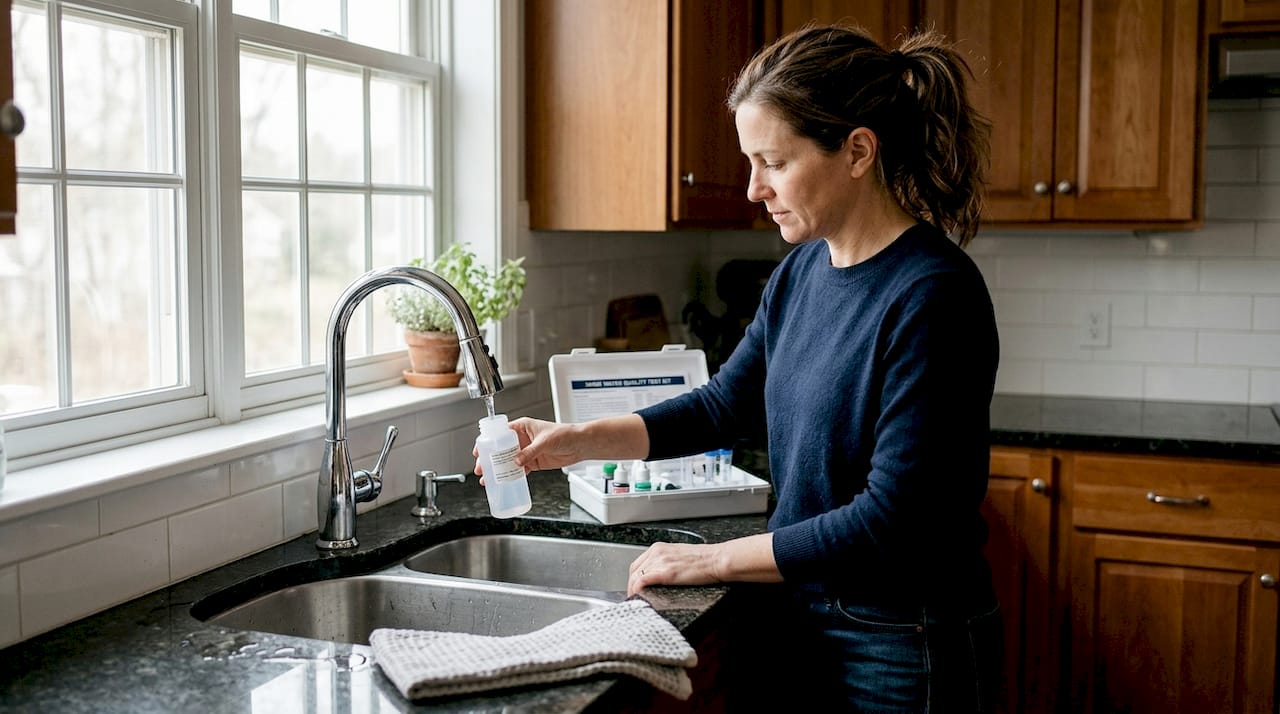
Swedish testing services offer dug well water analysis with 31 parameters focused on surface contamination indicators. For deeper sources, drilled well water analysis examines 41 parameters emphasizing geological contaminants and mineral content.
Timing matters as much as test selection. Sample after periods of heavy use when wells draw from lower reserves, and avoid testing immediately after disinfection or treatment system installation. Wait at least two weeks after well maintenance or repairs to allow normal conditions to reestablish.
How to interpret water quality results and next steps
Receiving your water analysis report is just the beginning. Understanding what those numbers mean and knowing which actions to take protects your household more effectively than testing alone. Swedish drinking water standards, established by Livsmedelsverket, provide clear thresholds for each parameter.
Results typically show three categories of findings. Parameters meeting drinking water standards require no immediate action but should be monitored in future tests. Values exceeding recommendations but below health limits suggest aesthetic or technical issues like staining or scale buildup. Readings above health-based limits demand prompt response to eliminate exposure risks.
Common parameter interpretations:
- Coliform bacteria presence at any level indicates contamination requiring disinfection and retesting
- Nitrate above 50 mg/L poses immediate risk to infants and pregnant women
- Arsenic exceeding 10 μg/L requires treatment due to cancer risk with long-term exposure
- Iron above 200 μg/L causes staining and metallic taste but rarely threatens health
- pH below 6.5 or above 9.5 indicates corrosive or scaling water needing adjustment
| Parameter | Safe Range | Health Concern Level | Common Source | Recommended Action |
|---|---|---|---|---|
| Coliform bacteria | 0 CFU/100mL | Any detection | Fecal contamination | Disinfect well, retest |
| Nitrate | <50 mg/L | >50 mg/L | Fertilizer, septic systems | Treatment system, source control |
| Arsenic | <10 μg/L | >10 μg/L | Natural geology | Reverse osmosis, oxidation filter |
| Iron | <200 μg/L | Not health-based | Natural geology, pipes | Oxidation filter if desired |
| Radon | <100 Bq/L | >1000 Bq/L | Granite bedrock | Aeration treatment |
Despite widespread contamination risks, only 20-25% test their wells regularly, delaying detection of developing hazards. This testing gap means many households consume contaminated water for years before discovering problems.
When results show contamination, prioritize based on health risk severity. Bacterial contamination demands immediate action through shock chlorination or UV disinfection installation. Chemical issues typically allow more time to research treatment options and install appropriate systems.
Treatment selection depends on specific contaminants. Bacteria require disinfection through chlorination, UV light, or ozonation. Nitrates need reverse osmosis or ion exchange. Metals respond to oxidation filters, water softeners, or reverse osmosis depending on which metals are present. Radon removal requires aeration or granular activated carbon.
Understanding the importance of regular water testing helps you establish an effective monitoring schedule. Annual testing catches most problems before they cause harm, while testing after unusual events like floods, droughts, or nearby construction provides early warning of new contamination.
Document all test results and maintain records showing water quality trends over time. Patterns revealing gradual increases in certain parameters help predict when treatment will become necessary and demonstrate water safety during property transactions.
Protect your well water with professional analysis services
Taking control of your well water quality starts with accurate testing from accredited laboratories using methods approved by Swedish authorities. Svenskt Vattenprov has analyzed thousands of private wells since 2018, building deep expertise in regional contamination patterns and effective solutions for Swedish conditions.
Our testing packages match your specific needs. Bacteria water analysis quickly identifies microbiological contamination requiring immediate attention. Complete water testing packages examine up to 71 parameters for comprehensive assessment of chemical and biological quality. Each analysis includes clear explanations of results and practical recommendations for any issues discovered.
We analyze every sample at SGS Analytics and Eurofins, two Swedac-accredited laboratories following Livsmedelsverket and Naturvårdsverket standards. Results meet legal requirements for property sales, municipal reporting, and subsidy applications for water treatment systems. You receive the same rigorous testing used by public water utilities, ensuring complete confidence in your water safety.
Register your well through well water registration to track results over time, receive testing reminders, and access expert guidance on maintaining optimal water quality. Our team understands regional differences across Sweden and provides advice tailored to your specific location and well type.
FAQ
What are the most common health risks linked to private well contamination?
Bacterial contamination causes immediate gastrointestinal illness with symptoms like diarrhea, nausea, and cramping. Chemical contaminants including nitrates, arsenic, and lead create long-term health effects such as cancer, developmental problems in children, and cardiovascular disease. Regular testing identifies these invisible threats before they harm your family.
How often should I test my brunnsvatten?
Test your well water at least annually, with comprehensive analysis every three years covering all relevant parameters. Increase testing frequency during dry summers when bacterial contamination rises due to lower water tables. Also test immediately after floods, nearby construction, well repairs, or any noticeable change in water appearance, taste, or odor. Following regular water testing guidelines helps maintain consistent monitoring.
What should I do if my water test shows contamination?
Stop using the water for drinking and cooking until you resolve the contamination. For bacterial issues, shock chlorinate your well and retest after 48 hours. Chemical contamination requires installing appropriate treatment systems like reverse osmosis, oxidation filters, or ion exchange units. Consult water treatment professionals to select effective solutions, then retest regularly to verify treatment performance. The clean drinking water guide provides detailed response steps.
Are there differences in contamination risks between dug and drilled wells?
Dug wells face higher risk of surface contamination from bacteria, nitrates, and pesticides due to their shallow depth and permeable construction. Drilled wells encounter different threats including naturally occurring metals, radon gas, and mineral content from deep geological formations. Each well type requires specific testing approaches matching its unique vulnerability profile, as detailed in the complete guide for Swedish well owners.