

Important Water Parameters for Private Wells 2026
Many well owners believe their water is automatically clean and safe to drink. The truth is that hidden contaminants like bacteria, nitrates, and heavy metals are often present in well water without being visible or having an odor. These invisible threats can seriously impact your health if not detected in time. Regular testing of the correct water parameters is your only guarantee to protect yourself and your family. In this article, you will gain concrete knowledge about which parameters are crucial to monitor, what guidelines apply, and how to act when something deviates.
Table of Contents
- Key Points to Remember
- Common Risks with Private Well Water
- Important Water Parameters and Their Guideline Values
- How to Interpret Water Analyses and Act Correctly
- Secure Your Well with Professional Water Analysis
- Frequently Asked Questions about Important Water Parameters for Private Wells
Key Points to Remember
| Point | Details |
|---|---|
| Common Contaminants | Bacteria, nitrates, and heavy metals are often found in well water and require regular monitoring. |
| Cyanotoxins Require Attention | Microcystin has specific limit values that must be followed if algal blooms are suspected. |
| Guideline Values Govern Safety | Both health-based and technical limit values exist to protect you and your water system. |
| Regular Testing is Key | Sampling every three years is recommended, more often if there are changes in water or surroundings. |
Common Risks with Private Well Water
Having your own well gives you freedom from municipal water, but it also entails personal responsibility for safety. Well water is affected by everything from natural geological processes to human activity in the vicinity. The most common threats to your water quality are bacteria, nitrates, and heavy metals.
Bacteria such as coliform bacteria and E. coli often come from surface water that penetrates the well or from faulty well construction. These microorganisms cause stomach illness and can be particularly dangerous for children, the elderly, and individuals with weakened immune systems. A murky well after heavy rain is a clear warning sign of surface water intrusion.
Nitrates are another serious problem, especially in agricultural areas. Elevated nitrate levels are dangerous for infants under six months as they can cause oxygen deprivation in the blood. Fertilizer application, sewage leaks, and intensive livestock farming are common nitrite sources that can contaminate groundwater.
Heavy metals like lead, arsenic, and cadmium occur naturally in bedrock, but can also come from industrial activity or old water pipes. Long-term exposure to heavy metals can damage the kidneys, liver, and nervous system. Since these substances have no taste or odor, regular sampling is the only way to detect them.
Regional variation plays a significant role in which risks are most relevant. Wells in calcareous areas often have problems with hard water and bacteria, while drilled wells in granite areas may have elevated levels of radon and arsenic. Well water statistics show clear patterns across Sweden.
Aging wells are particularly vulnerable. Cracks in casing, poor seals, and inadequate drainage increase the risk of contamination. If your well is older than 30 years, you should consider both structural inspection and extended water testing.
Important Water Parameters and Their Guideline Values
Understanding which parameters are measured and why is crucial for correctly interpreting your analysis results. Water parameters are divided into microbiological, chemical, and physical measurements, each with its specific limit values.
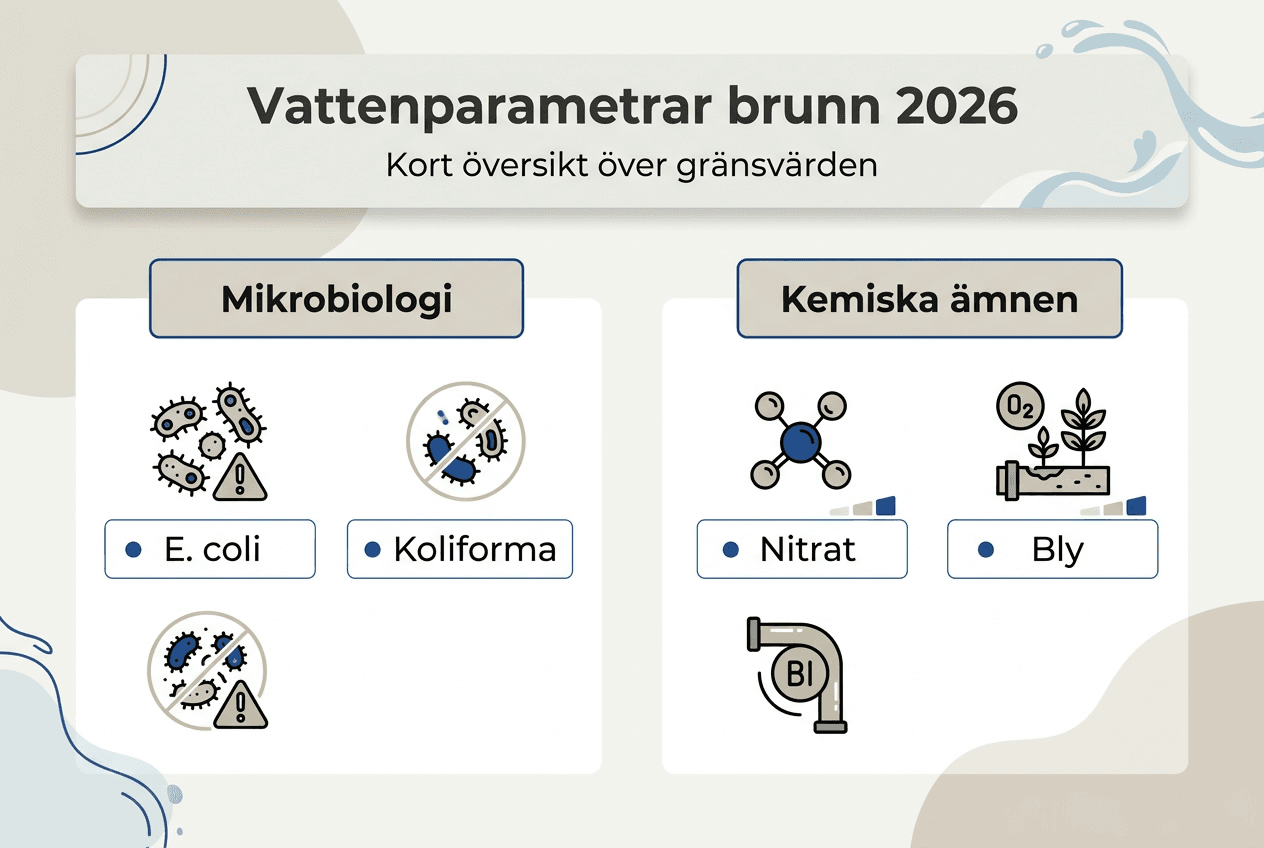
Microbiological parameters focus on bacteria and toxins. Coliform bacteria and E. coli should not be present at all in drinking water. A single positive result requires immediate action. Intestinal enterococci are another indicator organism that points to fecal contamination.
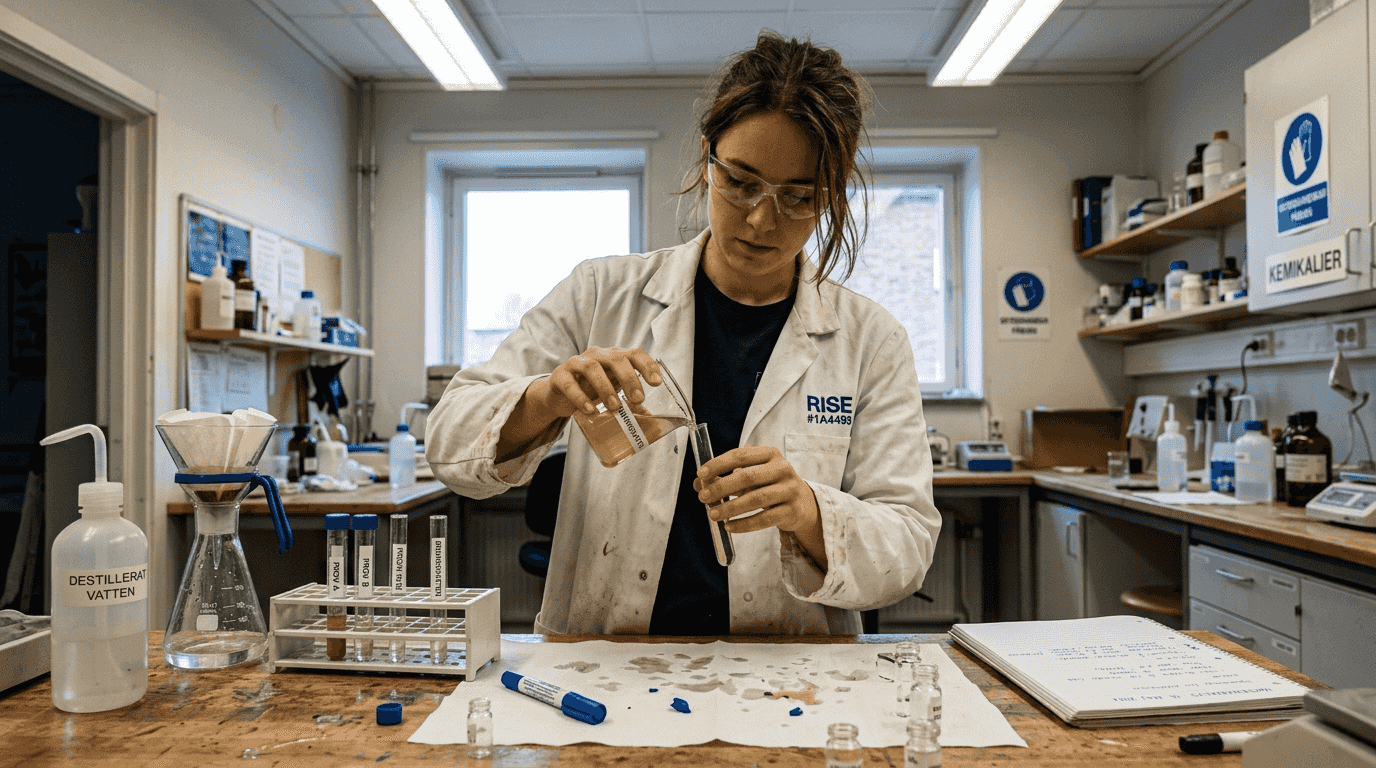
Cyanotoxins have received increased attention in recent years. Microcystin has a limit value of 1 μg/l from January 2026 and should be tested if cyanobacterial blooms are suspected in surface water-affected wells. Cylindrospermopsin and saxitoxin have action limits of 3 μg/l and 10 μg/l, respectively. These toxins can cause liver damage and neurological problems.
Chemical parameters cover a wide range of substances. Nitrate should be below 50 mg/l, while nitrite must not exceed 0.5 mg/l. Arsenic has a limit value of 10 μg/l and lead at 5 μg/l after December 2036. Fluoride should be kept below 1.5 mg/l to avoid tooth damage.
| Parameter | Limit Value | Health Effect if Exceeded |
|---|---|---|
| Nitrate | 50 mg/l | Oxygen deprivation in infants |
| Arsenic | 10 μg/l | Cancer risk, skin lesions |
| Lead | 10 μg/l | Neurological damage |
| Microcystin | 1 μg/l | Liver damage |
| Fluoride | 1.5 mg/l | Tooth damage |
Physical and corrosion-related parameters affect both health and technical systems. The pH value should be between 6.5 and 9.5 to avoid corrosion in pipes. Alkalinity acts as a buffer against pH changes and should be at least 1 mmol/l. Calcium and magnesium contribute to water hardness, where total hardness above 5°dH is classified as hard water.
Sulfate can have a laxative effect above 250 mg/l and contributes to corrosion along with chloride. Iron and manganese cause discoloration and metallic taste but are rarely harmful to health at the concentrations found in well water. Radon is a carcinogenic gas that requires special attention in granite areas, with a guideline value of 100 Bq/l.
Pro Tip: Always save your analysis reports in a binder along with dates and any actions taken. This creates a history that helps you detect trends and changes over time. When selling property, this documentation is invaluable.
Temperature and conductivity provide information about the general state of the water. High conductivity indicates high levels of dissolved salts, which may suggest saltwater intrusion in coastal areas or impact from road salting.
To get a complete picture, you need to test according to sampling instructions that ensure representative samples. Incorrect sampling can lead to misleading results and unnecessary actions or, worse, overlooked real problems. Understand drinking water limits to correctly assess your results.
How to Interpret Water Analyses and Act Correctly
When you receive your analysis report, the numbers can feel overwhelming. The key is to systematically go through each parameter and understand what the results mean for your specific situation.
Start by identifying parameters that exceed guideline values. These are often highlighted in red or with warning symbols in the report. Read the explanatory text carefully to understand what type of risk it is, whether it's an acute health risk or long-term exposure.
In case of microbiological deviations, action is urgent. Coliform bacteria or E. coli require immediate boiling of the water until the problem is resolved. Inspect the well for obvious defects such as damaged lids, cracks in casing, or poor drainage around the wellhead. Chlorine or UV treatment may be necessary for disinfection.
Action limits for cyanotoxins should be applied to both drinking water and raw water, especially in cases of suspected algal blooms. If you see greenish or bluish water, avoid using it and contact the environmental agency. Boiling does not help against toxins; on the contrary, they can become concentrated.
- Identify all parameters that deviate from normal values in your report.
- Prioritize acute health risks such as bacteria, high nitrate levels, or toxins.
- Contact the municipal environmental office for advice on actions in case of serious deviations.
- Install appropriate treatment equipment based on the contaminants detected.
- Re-test the water after measures to confirm that the problem is resolved.
In case of chemical deviations, the action depends on the parameter in question. High nitrate levels often require a new well or connection to municipal water, as nitrates are difficult to remove effectively. Iron and manganese can be removed with oxidation and filtration. Arsenic requires special filters with activated alumina or reverse osmosis.
Pro Tip: If several parameters deviate simultaneously, it may indicate a systematic problem with the well. Hire a well driller for a structural inspection before investing in expensive treatment equipment. Sometimes it is more cost-effective to drill a new well.
Corrosion problems are indicated by low pH, high chloride, or sulfate. These require pH adjustment with a lime filter or installation of corrosion-resistant pipes. Long-term corrosion can leach heavy metals from pipes into drinking water.
Document all measures you take and re-test the water after three to six months. Test well water regularly even after measures to ensure the solution works long-term. Improvement measures often require follow-up to verify their effect.
Some parameters require professional assessment. Radon above 100 Bq/l should be handled by a radon reduction specialist. PFAS contamination requires advanced filtration with activated carbon or reverse osmosis. Do not hesitate to seek expert help when results are complex or when multiple measures may be needed.
The municipal environmental and health protection committee is an important resource. They can provide advice on appropriate measures, effective treatment systems in your area, and sometimes grants for water improvement measures are available. An accredited analysis report is often necessary to obtain such support.
Secure Your Well with Professional Water Analysis
Now that you understand the importance of correct water parameters and how to interpret the results, the next step is to ensure your water is tested correctly. Svenskt Vattenprov offers complete analysis packages that cover all critical parameters for well water. Our bacterial analyses provide you with microbiological safety answers, while our complete analysis covers 71 parameters for maximum security.
All analyses are performed by SGS Analytics, a Swedac-accredited laboratory that adheres to the Swedish Food Agency's and the Swedish Environmental Protection Agency's regulations. You receive clear reports with explanations and concrete recommendations, not just numbers. Our knowledge center provides further support to help you understand your results and plan the right actions. Since 2018, we have helped thousands of well owners throughout Sweden secure their water quality.
Frequently Asked Questions about Important Water Parameters for Private Wells
What are the most common dangers in well water?
The most common threats are coliform bacteria from surface water intrusion, nitrates from agriculture or sewage, and naturally occurring heavy metals such as arsenic and radon. Bacteria often cause stomach illness, while chemical contaminants can cause long-term health problems. Regional geology and nearby activities affect which risks are most relevant for your well.
How often should I test my well water?
The Swedish Food Agency recommends sampling every three years under normal conditions. Test more often if there are changes in taste, odor, color, or if changes have occurred in the surroundings, such as new construction or agricultural activity. When selling property, an up-to-date analysis is always required. Dug wells should be tested more often than drilled wells as they are more susceptible to surface water intrusion.
Which water parameters are most important to check?
Microbiological parameters such as coliform bacteria and E. coli are most critical for immediate health. Nitrates are especially important if you have young children. Arsenic, lead, and radon require attention for long-term health. pH, iron, and manganese affect both health and technical systems. A complete analysis package provides the best overview.
What do I do if a parameter exceeds the guideline value?
For bacteria, boil the water immediately and inspect the well for defects. Contact the municipal environmental office for advice on serious deviations. Install appropriate treatment equipment based on the contaminant in question. Re-test the water after measures to confirm that the problem is resolved. Some contaminants, such as high nitrate levels, may require a new well.
Can I test my well water myself or should I hire professionals?
You can take the samples yourself with the right equipment and instructions, but the analysis must be done by an accredited laboratory for the results to be reliable and legally sound. Simpler quick tests from hardware stores only provide indications and can miss dangerous contaminants. Professional analysis packages include sampling equipment, laboratory analysis, and interpretation assistance. Visit our FAQ for more guidance on sampling.