

Understanding well water chemistry for safe wells
Clear water pouring from your tap looks safe, but appearance means nothing when it comes to well water quality. Homeowners are responsible for private well water safety; clear water can hide radon or arsenic risks that develop slowly over years. Understanding your well water chemistry protects your family from invisible threats while ensuring compliance with Swedish regulations. This guide walks you through essential testing parameters, proper sampling methods, and effective treatment solutions that address the most common well water problems across Sweden.
Table of Contents
- Key takeaways
- Why understanding your well water chemistry matters
- Essential water quality parameters to test and monitor
- Testing well water: sampling, labs, and interpreting results
- Treatment options: ensuring safe and pleasant well water
- Protect your family with expert well water testing services
- Frequently asked questions about well water chemistry
Key Takeaways
| Point | Details |
|---|---|
| Testing every 3 years | Private wells should be tested at least once every three years to detect slowly emerging contaminants. |
| Key contaminants to watch | Critical contaminants include bacteria such as E. coli, radon, and arsenic that pose serious health risks. |
| Sampling and labs | Accurate results require proper sampling procedures and analysis by accredited laboratories. |
| Treatment options | Treatment choices vary by contaminant and may involve UV disinfection for microbes or aeration for dissolved gases like radon. |
| Owner responsibility | Homeowners are the water utility and must maintain testing and treatment to stay compliant and protect family health. |
Why understanding your well water chemistry matters
Unlike municipal water users who benefit from continuous monitoring and treatment, private well owners bear complete responsibility for water safety. You are the water utility manager for your household. This responsibility extends beyond occasional testing to understanding what’s actually in your water and what those parameters mean for daily health.
Invisible contaminants present the most serious risks. Radon gas dissolved in groundwater releases into indoor air during showers and cooking, contributing to lung cancer risk over decades of exposure. Arsenic leaches from bedrock into well water, accumulating in tissues and increasing cancer risk without any taste or odor warning. Health risks include acute bacterial infections and chronic exposure to contaminants like arsenic and radon.
Bacterial contamination creates immediate risks. E. coli in well water signals fecal contamination that can cause severe gastrointestinal illness within hours of consumption. Young children, elderly family members, and anyone with compromised immunity face heightened vulnerability. These bacteria enter wells through surface water infiltration, damaged well casings, or inadequate separation from septic systems.
Clear water appearance provides zero safety assurance. Water can look perfectly clean while containing dangerous levels of radon, arsenic, bacteria, or nitrates. Taste and smell only detect a fraction of potential contaminants, typically iron, manganese, and hydrogen sulfide. The most dangerous substances remain completely undetectable without laboratory analysis.
Regular testing and informed treatment decisions protect your investment and your family. A guide for well owners helps you establish testing schedules, interpret results correctly, and implement appropriate treatment when needed. Understanding water chemistry transforms you from a passive water consumer into an active guardian of household health.
Essential water quality parameters to test and monitor
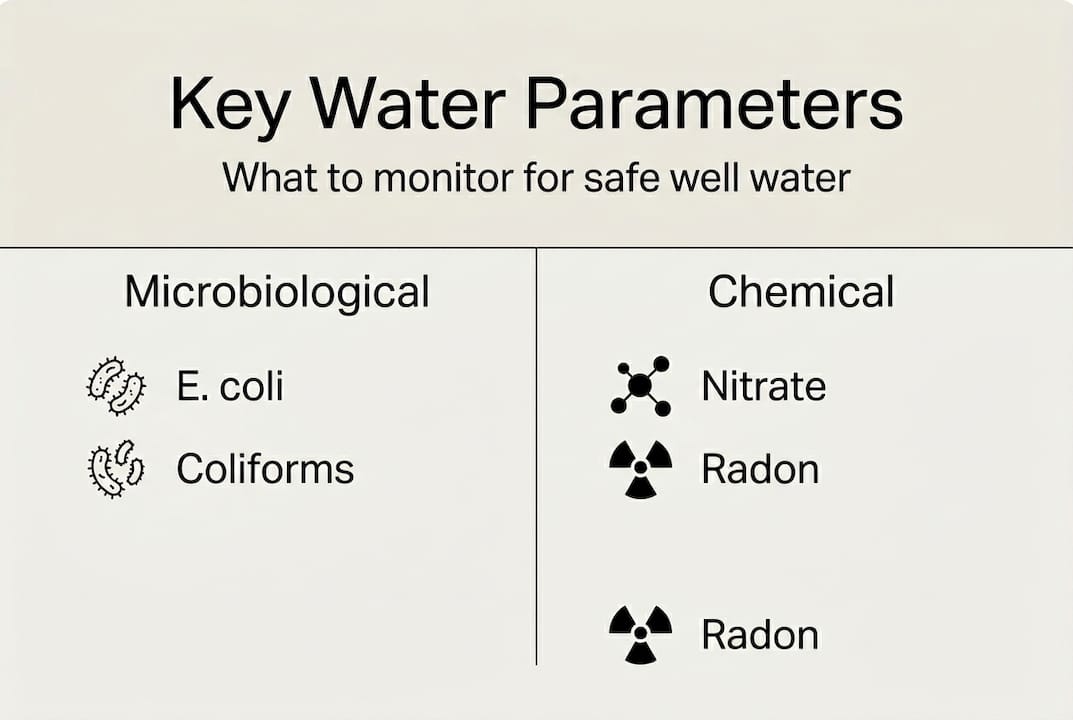
Microbiological parameters demand zero tolerance. Microbiological parameters require zero presence of E. coli and coliform bacteria; any detection is a health risk requiring immediate action. E. coli indicates recent fecal contamination and potential presence of disease-causing organisms. Coliform bacteria serve as indicator organisms, their presence suggesting conditions that allow pathogen entry.
Chemical parameters vary by well type and location. Drilled wells penetrating bedrock face elevated risks from radioactive elements. Radon occurs naturally in granite and similar formations, dissolving into groundwater as it moves through fractured rock. Uranium and radium follow similar patterns, with concentrations highest in wells drilled into uranium-bearing bedrock. Arsenic leaches from certain rock types, particularly in areas with volcanic or sedimentary geology.
Dug wells face different contamination patterns. Shallow construction makes these wells vulnerable to surface water infiltration carrying nitrates from fertilizer runoff or septic system discharge. Nitrate contamination poses severe risks to infants under six months, causing methemoglobinemia (blue baby syndrome) that prevents blood from carrying oxygen effectively.
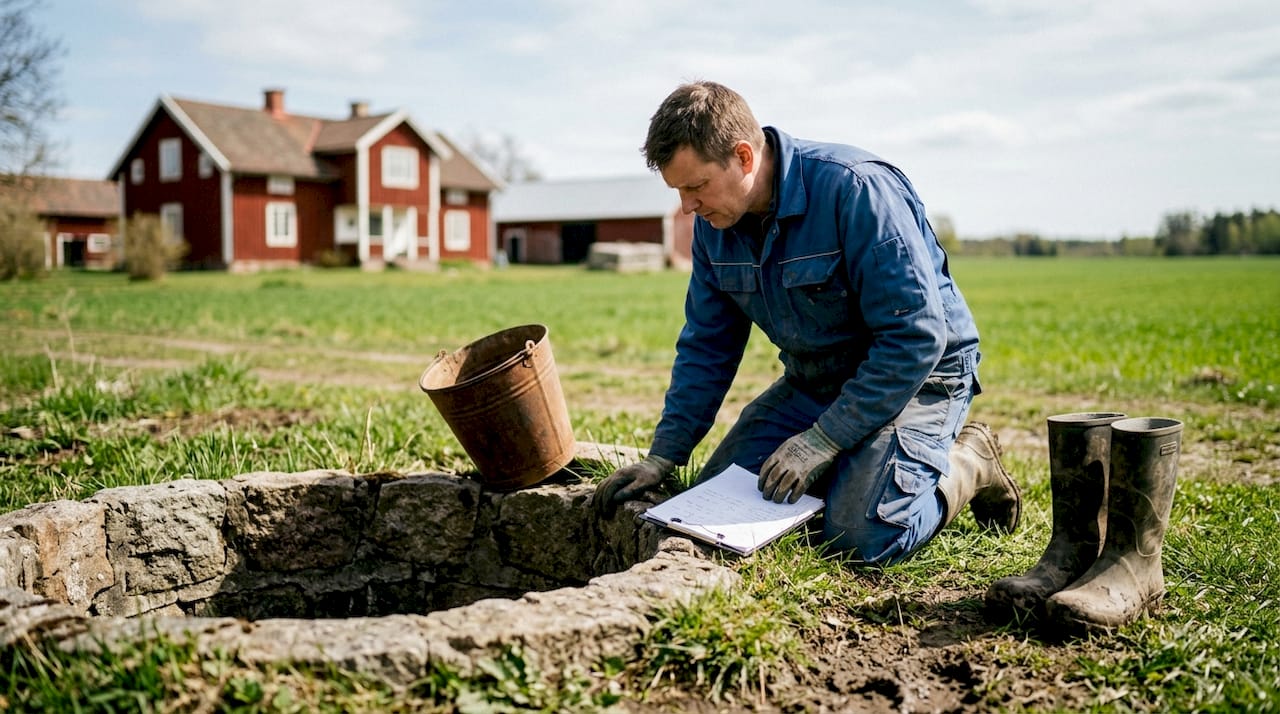
About 20% of Swedish private wells have water unfit for consumption; radon occurs in 66% of samples; uranium exceeds limits in 10-20% of drilled wells. These statistics highlight why assuming your well produces safe water without testing creates unacceptable risk.
Water hardness and pH affect both health and infrastructure. Hardness measures dissolved calcium and magnesium, creating scale buildup in pipes and appliances while increasing soap consumption. pH below 6.5 promotes metal leaching from plumbing, potentially introducing lead or copper into drinking water. pH above 8.5 contributes to scale formation and reduces disinfection effectiveness.
| Parameter | Health concern | Typical source | Action level |
|---|---|---|---|
| E. coli | Acute illness | Fecal contamination | 0 CFU/100ml |
| Radon | Lung cancer | Bedrock dissolution | 100 Bq/L |
| Arsenic | Cancer, organ damage | Bedrock leaching | 10 μg/L |
| Nitrate | Infant methemoglobinemia | Surface runoff | 50 mg/L |
| Uranium | Kidney damage | Bedrock dissolution | 30 μg/L |
Pro Tip: Request a comprehensive analysis package for your first test, then focus on problem parameters in subsequent years. Knowing your complete water profile once establishes a baseline for monitoring changes over time.
Understanding Livsmedelsverket water standards helps you interpret results correctly and prioritize treatment investments. Review well water statistics to see how your region compares to national averages for common contaminants.
Testing well water: sampling, labs, and interpreting results
Proper sampling technique determines result accuracy. Samples must be collected from cold tap after flushing; labs like SGS and Eurofins offer accredited testing packages from simple bacteria to full parameter panels. Start by removing any aerators or filters from the sampling tap. Run cold water at full flow for 5 minutes to clear the household plumbing and draw fresh water directly from the well. Reduce flow to a steady stream before filling the sterile sample bottle.
Accredited laboratories provide legally valid results. Swedac accreditation ensures the lab follows standardized methods, maintains proper quality controls, and produces results accepted by authorities. SGS Analytics, Eurofins, and ALS Scandinavia represent Sweden’s leading accredited water testing laboratories. Their analyses meet requirements for property transactions, permit applications, and health authority reporting.
Test package selection depends on well type and risk factors:
- Basic bacteria screening detects microbiological contamination requiring immediate attention
- Standard packages add common chemical parameters like pH, hardness, iron, and manganese
- Comprehensive analysis includes 40+ parameters covering health-based and esthetic concerns
- Specialized tests target specific issues like radon, PFAS, or pesticides based on local risk factors
Interpreting results requires understanding both limit values and practical implications. Health-based parameters have strict limits set to protect against disease or long-term health effects. Exceeding these limits demands prompt action. Esthetic parameters affect taste, odor, or appearance but pose no direct health threat at moderate levels. You can tolerate slight exceedances while planning treatment.
Pro Tip: Schedule testing in late summer or early fall when water tables are lowest and contaminant concentrations peak. This worst-case scenario ensures your water meets safety standards year-round.
Testing frequency adapts to your situation. New well owners should test immediately to establish baseline water quality. Annual testing makes sense if previous results showed borderline values or if nearby land use changes. Every three years satisfies regulatory recommendations for wells with consistently good results. Test immediately if you notice changes in taste, odor, color, or clarity regardless of your regular schedule.
Follow the detailed water testing guide for complete sampling protocols and result interpretation. Review sampling instructions before collecting your first sample to avoid contamination that invalidates results.
Treatment options: ensuring safe and pleasant well water
UV disinfection provides chemical-free bacteria removal. Ultraviolet light at 254 nanometers wavelength destroys bacterial DNA, preventing reproduction and rendering organisms harmless. UV systems install on the main water line after filtration, treating all water entering the household. These systems work effectively only in clear water; suspended particles shield bacteria from UV exposure, so pre-filtration removes turbidity before disinfection.
Aeration and oxidation address multiple contaminants simultaneously. UV disinfection effectively removes bacteria without chemicals if water is clear; aeration and oxidation treat iron, manganese, and radon; softeners reduce hardness. Aeration systems spray water through air or inject air into water, allowing dissolved gases like radon to escape while oxidizing dissolved iron and manganese into particles that filters can remove. A single aeration system can reduce radon by 95% while eliminating the metallic taste and staining caused by iron.
Softening systems exchange hardness minerals for sodium. Ion exchange resins capture calcium and magnesium ions while releasing sodium ions into the water. This process prevents scale formation in water heaters and plumbing while improving soap effectiveness. Softened water feels slippery and tastes slightly salty; many homeowners bypass the kitchen cold tap to preserve mineral content in drinking water.
| Contaminant | Treatment method | Effectiveness | Maintenance needs |
|---|---|---|---|
| Bacteria | UV disinfection | 99.99% | Annual lamp replacement |
| Radon | Aeration | 95%+ removal | Quarterly inspection |
| Iron/Manganese | Oxidation + filtration | 90-95% | Monthly backwash |
| Hardness | Ion exchange softener | 85-95% | Monthly salt addition |
| Arsenic | Reverse osmosis | 95%+ | Filter change every 6-12 months |
Reverse osmosis tackles dissolved contaminants that other methods miss. RO membranes filter water at the molecular level, removing arsenic, uranium, nitrates, and most dissolved solids. These systems typically install under the kitchen sink, treating only drinking and cooking water due to their slow production rate and wastewater generation. RO provides the most comprehensive treatment but requires regular membrane replacement and produces 3-4 gallons of wastewater per gallon of treated water.
Pro Tip: Install treatment systems in order of urgency. Address bacteria first with UV disinfection, then tackle radon if present, followed by esthetic issues like iron or hardness. This prioritization protects health while spreading treatment costs over time.
Maintenance determines long-term treatment effectiveness. UV lamps lose intensity over time, requiring annual replacement even if still glowing. Aeration systems need periodic cleaning to prevent biological growth in spray nozzles or air injection points. Filter media eventually exhausts its treatment capacity, demanding replacement on manufacturer-recommended schedules. Neglecting maintenance allows contaminants to pass through treatment systems, defeating your investment.
Protect your family with expert well water testing services
Regular accredited testing forms the foundation of well water safety. You cannot treat what you have not identified, and you cannot monitor improvement without baseline data. Professional laboratory analysis removes guesswork, providing precise measurements of every parameter that affects your family’s health.
Choosing the right test package matches your well type and regional risk factors. Drilled wells in granite areas need comprehensive radon and uranium screening. Dug wells near agricultural land require nitrate monitoring. Wells near airports or military installations should include PFAS testing. Starting with a complete analysis establishes your water profile, then targeted testing monitors known issues.
Swenskt Vattenprov partners with SGS Analytics to deliver Sweden’s most reliable well water testing. Every analysis follows Swedac-accredited procedures, ensuring your results meet legal standards for property transactions and authority reporting. Explore water analysis services designed specifically for Swedish well owners, from basic bacteria water test screening to our most thorough complete water test covering 71 parameters. We handle sampling supplies, laboratory coordination, and result interpretation, so you can focus on keeping your family safe.
Frequently asked questions about well water chemistry
How often should I test my private well water?
Test every three years minimum for wells with consistently good results. Annual testing makes sense if previous results showed borderline values or nearby land use changed. Test immediately if you notice any change in water taste, odor, color, or clarity. Learn more about regular water testing importance for maintaining safe well water.
What does it mean if bacteria are detected in my water?
Any bacterial detection requires immediate action. Stop drinking the water until you disinfect the well and retest with clear results. E. coli indicates fecal contamination and potential presence of disease-causing organisms. Coliform bacteria suggest conditions allowing pathogen entry. Both require well inspection, shock chlorination, and treatment system installation.
Are home test kits reliable for well water?
Home kits provide rough screening but lack the precision and legal validity of accredited laboratory analysis. Use them only for quick checks between professional tests. Property transactions, permit applications, and health authority reporting require results from Swedac-accredited laboratories. The small cost difference makes professional testing the smart choice.
What treatment is best for radon in well water?
Aeration systems provide the most effective and economical radon removal, reducing levels by 95% or more. These systems work by exposing water to air, allowing radon gas to escape before water enters household plumbing. Granular activated carbon filters also remove radon but require careful disposal as radioactive waste. Point-of-entry aeration treats all household water and reduces indoor air radon from water use.
How do I know if my water hardness needs treatment?
Hardness above 180 mg/L causes noticeable scale buildup, increases soap consumption, and may warrant treatment. Consider softening if you see white deposits on faucets and showerheads, your water heater fails prematurely, or you use excessive soap and detergent. Hardness below 100 mg/L rarely justifies treatment cost. Between 100-180 mg/L, treatment becomes a personal preference based on your tolerance for scale and soap performance.