

Why monitor well water quality: health, safety, and analysis
Most homeowners with private wells assume their water is clean. After all, it comes straight from the ground, filtered through layers of rock and soil. That assumption is reassuring but often wrong. Over 20% of Swedish wells are at risk from microbiological contamination, meaning bacteria and other harmful substances can be flowing from your tap right now without any visible warning. For families relying on well water every day, that is not a small risk. This article explains exactly why regular monitoring matters, what Swedish regulations require, and how to take practical steps to keep your water safe.
Table of Contents
- Health risks and contaminants: Why monitoring matters
- Regulatory requirements and Swedish standards
- How to monitor water quality in your own well
- Choosing accredited water analysis services
- A fresh perspective: Why proactive well monitoring is the foundation of safe, sustainable living
- Get reliable, accredited well water analysis with Svenskt Vattenprov
- Frequently asked questions
Key Takeaways
| Point | Details |
|---|---|
| Health protection | Monitoring well water reduces risk from dangerous bacteria and chemical contaminants. |
| Legal compliance | Annual testing ensures you meet Swedish standards and avoid fines or restrictions. |
| Practical steps | Homeowners can easily sample, test, and interpret results with help from accredited labs. |
| Accreditation matters | Choosing an accredited provider guarantees trustworthy results and legal validity. |
| Sustainable living | Proactive monitoring supports environmental health for future generations. |
Health risks and contaminants: Why monitoring matters
The water in your well does not exist in isolation. It is connected to the surrounding soil, nearby agricultural land, surface runoff, and the geological makeup of your property. All of those factors influence what ends up in your glass. Understanding the specific contaminants that threaten well water helps you see why testing is not optional. It is essential.
Common contaminants found in Swedish wells
The three biggest categories of concern are microbiological contamination, chemical pollutants, and naturally occurring substances like metals and radon.
| Contaminant | Common source | Primary health risk |
|---|---|---|
| Coliform bacteria | Sewage, animal waste | Gastrointestinal illness |
| Nitrate | Fertilizers, septic systems | Infant methemoglobinemia |
| Iron and manganese | Bedrock, soil | Organ stress, staining |
| PFAS | Industrial sites, airports | Cancer, immune disruption |
| Radon | Granite bedrock | Lung cancer risk |
| Arsenic | Natural geology | Long-term organ damage |
Microbiological contamination is the most immediate threat. Coliform bacteria, including E. coli, can enter groundwater through cracked well casings, surface runoff during heavy rain, or proximity to animal enclosures. As Swedish contamination studies confirm, this affects more than one in five private wells in the country.
Who faces the greatest risk
Not everyone is equally vulnerable. Children under two years old face serious danger from elevated nitrate levels, which interfere with oxygen transport in the blood. Elderly individuals and anyone with a compromised immune system can become severely ill from bacterial exposure that might only cause mild symptoms in a healthy adult. Pregnant women are also a high-risk group. If any of these people drink from your well regularly, the stakes of skipping a test are significantly higher.
Understanding the hidden nature of contamination
Here is what makes this genuinely difficult: most contamination is invisible. Water contaminated with bacteria does not smell. Water with elevated PFAS levels looks perfectly clear. Arsenic has no taste at detectable concentrations. You cannot rely on your senses to alert you to a problem. Learning about water quality parameters for Swedish wells can help you understand what parameters to prioritize based on your well type and location.
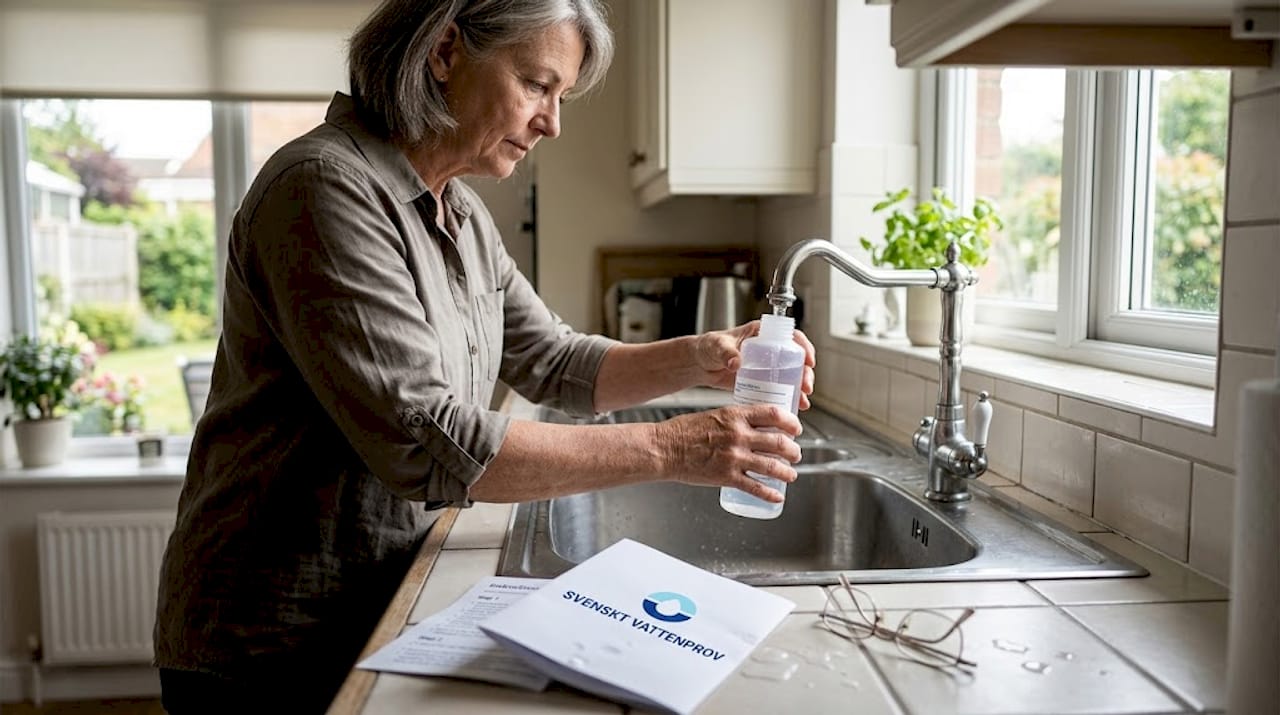
Certain events dramatically increase contamination risk. Flooding, heavy rainfall, nearby construction, a new neighbor starting agricultural activity, or repairs to your own well can all introduce new contaminants or disturb settled sediment. If any of these happen, do not wait for your next scheduled test.
Pro Tip: Test your water immediately after any flooding event or heavy rainfall, especially if your well is shallow or dug rather than drilled. Surface water can infiltrate much more easily after extreme weather.
Pay attention to signs of altered water quality such as a sulfur smell, sudden cloudiness, a metallic taste, or unexplained staining in sinks and bathtubs. These are early warnings that something has changed, even if you cannot yet identify the cause.
Regulatory requirements and Swedish standards
Sweden takes drinking water quality seriously at both the national and EU level. Private well owners operate in a distinct regulatory space compared to public water utilities, but that does not mean there are no rules or responsibilities.
What Swedish regulations say
The Swedish Food Agency (Livsmedelsverket) and the Swedish Environmental Protection Agency (Naturvårdsverket) provide guidelines that apply to private well owners. For wells serving only a single household, testing is technically recommended rather than legally mandated. However, the situation changes immediately if you sell your property, rent it out, or use the water commercially.
As detailed in official requirements for well water, a documented and current water analysis is effectively required during property transactions. Municipalities can also require testing if they have reason to suspect a risk to public health in a specific area.
Swedish vs. EU standards: A direct comparison
| Parameter | Swedish guideline | EU limit value |
|---|---|---|
| E. coli | 0 CFU/100 ml | 0 CFU/100 ml |
| Nitrate | 50 mg/L | 50 mg/L |
| Arsenic | 10 µg/L | 10 µg/L |
| PFAS (total) | 0.1 µg/L | 0.5 µg/L (sum) |
| Radon | 1000 Bq/L (action level) | Varies by country |
Sweden’s guideline for PFAS is notably stricter than the EU baseline, reflecting the country’s heightened concern about contamination near former industrial and military sites. If your well is located near an airport, a fire station, or an old industrial property, PFAS testing is especially important.
How to stay compliant as a well owner
Follow these steps to remain on the right side of both recommendations and legal requirements:
- Test your water at least every three years under normal conditions, following Livsmedelsverket’s guidance.
- Test immediately after any event that could affect water quality, such as flooding, nearby construction, or well repairs.
- Keep all test results on file. This documentation protects you during property sales and in any dispute with your municipality.
- Use an accredited laboratory, specifically one certified by Swedac (Styrelsen för ackreditering och teknisk kontroll), to ensure your results are legally valid.
- Review the water quality parameters for Swedish wells relevant to your region, since different parts of Sweden carry different geological and environmental risks.
“Regular water testing is not just best practice for private well owners. It is the cornerstone of protecting both individual health and the broader groundwater environment that communities depend on.”
Compliance is not about bureaucracy. It is about knowing that the water your family drinks every day meets standards that exist because experts have identified thresholds that matter for human health.
How to monitor water quality in your own well
Knowing you should test your water is one thing. Knowing exactly how to do it is another. The process is more straightforward than many homeowners expect, and following it correctly makes a real difference in the reliability of your results.
A practical testing schedule
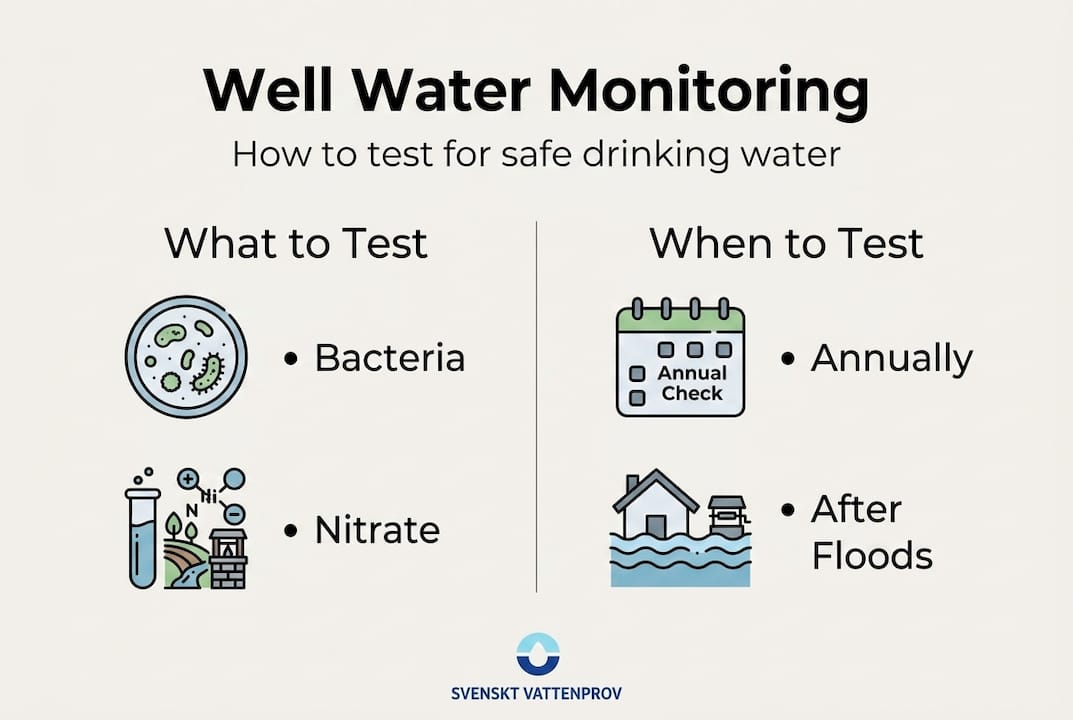
At a minimum, test your well water once per year for microbiological safety. Expand to a broader panel of parameters every three years or whenever circumstances change. Schedule your test in late spring or early summer, after snowmelt and spring rains have settled, to catch any seasonal contamination that may have entered your groundwater.
Here are the steps to follow for a proper sampling process:
- Order a sampling kit from an accredited laboratory or service provider. The kit includes sterile containers and instructions.
- Before collecting the sample, remove any filters, aerators, or attachments from the tap you plan to use. These can introduce their own bacteria.
- Flush the cold water tap for two to three minutes before filling the sample container. This draws water directly from the well rather than from your indoor plumbing.
- Fill the container exactly as instructed, avoiding any contact between the container and the tap.
- Store the sample as directed, usually refrigerated, and ship it the same day to maintain sample integrity.
- When your accredited lab results arrive, review each parameter against the Swedish guideline values included in your report.
When you should test immediately
Do not wait for your scheduled test if you notice any of the following:
- A sudden change in water taste, smell, or color
- Cloudiness or visible particles in the water
- An unusual sliminess or residue on dishes or fixtures
- Gastrointestinal illness affecting multiple household members simultaneously
- Recent heavy flooding or storm damage near the well
- New agricultural or construction activity within 200 meters of your property
- Any repair work done on the well itself
A microbiological water test can confirm or rule out bacterial contamination within a few days, giving you actionable information quickly.
Pro Tip: Keep a water log. Record your test dates, results, and any events that could affect water quality. This documentation is invaluable if you sell your property, apply for improvement grants, or need to report a contamination issue to your municipality.
Understanding what to test for is just as important as knowing when to test. A comprehensive water analysis guide can walk you through the parameters that matter most for your specific well type, whether it is drilled into bedrock or dug into shallow soil.
Choosing accredited water analysis services
Not all water tests deliver equally reliable results. The laboratory you choose, and whether it holds proper accreditation, determines whether your results are scientifically valid and legally usable.
What accreditation actually means
Accreditation from Swedac means a laboratory has been independently evaluated and confirmed to operate according to established national and international standards. Every analysis method is validated, every result is traceable, and quality controls run alongside every test batch. When a lab is Swedac-accredited, you can present its results to your municipality, your bank, a property buyer, or a government authority and know they will be accepted without question.
Non-accredited labs may offer cheaper prices or faster turnaround, but the results they produce carry no legal weight and may use unvalidated methods. That is a significant problem if you ever need your results to stand up in a formal context.
Accredited vs. non-accredited labs: What the difference means for you
| Factor | Accredited lab | Non-accredited lab |
|---|---|---|
| Legal validity | Yes | No |
| Validated methods | Yes | Not guaranteed |
| Quality controls | Mandatory | Inconsistent |
| Traceability of results | Full chain of custody | Often incomplete |
| Accepted by authorities | Yes | Not typically |
| Regulatory compliance | Confirmed | Uncertain |
Questions to ask before choosing a water analysis service
- Is the laboratory Swedac-accredited?
- Does the analysis package cover all parameters relevant to my well type and location?
- Will I receive a plain-language explanation of my results, not just raw data?
- Can I contact a specialist if my results show elevated values?
- Are the sample collection materials and instructions included?
Pro Tip: Choose a provider with transparent reporting. The best services do not just send you a spreadsheet of numbers. They explain what each result means, flag anything outside guideline values, and give you clear guidance on what to do next.
When reviewing accredited analysis options for Swedish private wells, look specifically for providers that combine laboratory accreditation with genuine customer support. Knowing your results is one step. Understanding what to do about them is what actually protects your health.
For a solid starting point, a standard water analysis covers the core parameters that Swedish authorities recommend for routine private well monitoring.
A fresh perspective: Why proactive well monitoring is the foundation of safe, sustainable living
Most guides about well water monitoring focus entirely on what you should test for and how often. That is useful, but it misses a deeper truth. The homeowners who benefit most from water monitoring are not the ones who react to problems. They are the ones who treat monitoring as a standing habit, built into how they maintain their property.
We have seen this pattern clearly since 2018. Well owners who test regularly tend to catch small problems early, before they become expensive or dangerous. They also tend to have a realistic picture of their water’s strengths and limitations, which helps them make smarter decisions about filtration and maintenance.
There is also a sustainability dimension that rarely gets discussed. Your well draws from shared groundwater. Detecting and addressing contamination on your property contributes to protecting the broader aquifer your neighbors may also rely on. Understanding the importance of water quality control is not just about your household. It is about being a responsible steward of a shared natural resource.
Waiting for something to go wrong is not a strategy. It is a gamble with your family’s health and your property’s value.
Get reliable, accredited well water analysis with Svenskt Vattenprov
You have invested in your property. Protecting the quality of your water is part of protecting that investment and your family’s wellbeing. At Svenskt Vattenprov, every analysis is performed by a Swedac-accredited laboratory operating under the same standards as Sweden’s public water utilities.
We offer accredited water analysis packages designed specifically for private well owners, from standard microbiological screening to broad-spectrum panels covering PFAS, metals, radon, and beyond. Whether you need a basic microbiological analysis or a thorough assessment across dozens of parameters, you can find the right fit among our analysis packages for private wells. Every result comes with a clear explanation and concrete recommendations, so you always know exactly where you stand.
Frequently asked questions
How often should I monitor my private well water in Sweden?
Most experts recommend testing at least once a year for bacteria, and conducting a broader analysis every three years or after any event that could affect your water quality.
What are the main contaminants to look for in well water?
Bacteria, nitrate, metals like iron and lead, and chemical pollutants such as PFAS should be checked regularly, as confirmed by Swedish contamination data showing significant risk across private wells.
Do accredited analysis services make a difference in water testing?
Yes, significantly. Accredited services ensure that testing procedures meet both Swedish national standards and EU requirements, producing results that are legally valid and accepted by authorities.
How can I tell if my water quality has changed?
Subtle shifts in taste, smell, or color are common early indicators, and as detailed in guidance on altered water quality signs, any of these changes should prompt immediate testing rather than a wait-and-see approach.
Is monitoring well water beneficial for the environment?
Regular monitoring helps detect contamination before it spreads through shared groundwater, directly supporting Sweden’s national goals for clean water and sustainable resource management.
Recommended
- How to monitor water quality in your own well, step by step – Svenskt Vattenprov
- Understanding well water chemistry for safe wells – Svenskt Vattenprov
- The Importance of Water Quality Control in 2026: Securing Your Drinkin – Svenskt Vattenprov
- What is water analysis: a guide for Swedish well owners – Svenskt Vattenprov