

Post-flood well water analysis protects your health
TL;DR:
- Floodwaters can contaminate private wells with bacteria, chemicals, and heavy metals without visible signs.
- Immediate testing and disinfection are essential after a flood to ensure water safety.
- Owners bear full responsibility for testing, interpreting results, and ensuring their well water is safe.
Your well water looks perfectly clear after the flood recedes. No odor, no discoloration, no visible signs of trouble. It feels safe to drink. But that appearance can be dangerously misleading. Floodwater introduces bacteria, pathogens, and chemicals into private wells through cracks, deteriorated seals, or surface runoff, even when no standing water ever touched your wellhead. For the roughly 1.2 million Swedish households that rely on private wells, a flood is never just a weather event. It is a direct threat to drinking water safety, and prompt analysis is the only reliable way to know where you stand.
Table of Contents
- Why floods put Swedish wells at risk
- How post-flood contamination happens
- What to do: Testing and disinfection after a flood
- Why timely analysis matters: Health and legal aspects
- A reality check from the experts: What most guides leave out
- Reliable post-flood well water analysis in Sweden
- Frequently asked questions
Key Takeaways
| Point | Details |
|---|---|
| Floods always threaten wells | Floodwater can introduce bacteria and chemicals into any well—even when the water looks clean. |
| Immediate action required | Inspect, disinfect, and analyze your well water as soon as possible after a flood event. |
| Homeowner responsibility | Swedish private well owners must ensure their water safety by using accredited labs after flooding. |
| Invisible risks persist | Clear or odorless water may still contain dangerous levels of toxins or pathogens. |
Why floods put Swedish wells at risk
With the reality of hidden well contamination after floods established, let’s examine exactly what risks Swedish well owners face.
Floodwater is not simply water. It is a mixture of soil particles, agricultural runoff, sewage overflow, industrial residues, and decayed organic matter. When it contacts your well, even briefly, it carries all of that inside. Empirical studies confirm that floods mobilize heavy metals including arsenic, chromium, nickel, and lead, along with nitrates, PFAS (per- and polyfluoroalkyl substances), and phthalates, with measurable post-flood spikes documented in drinking water sources.
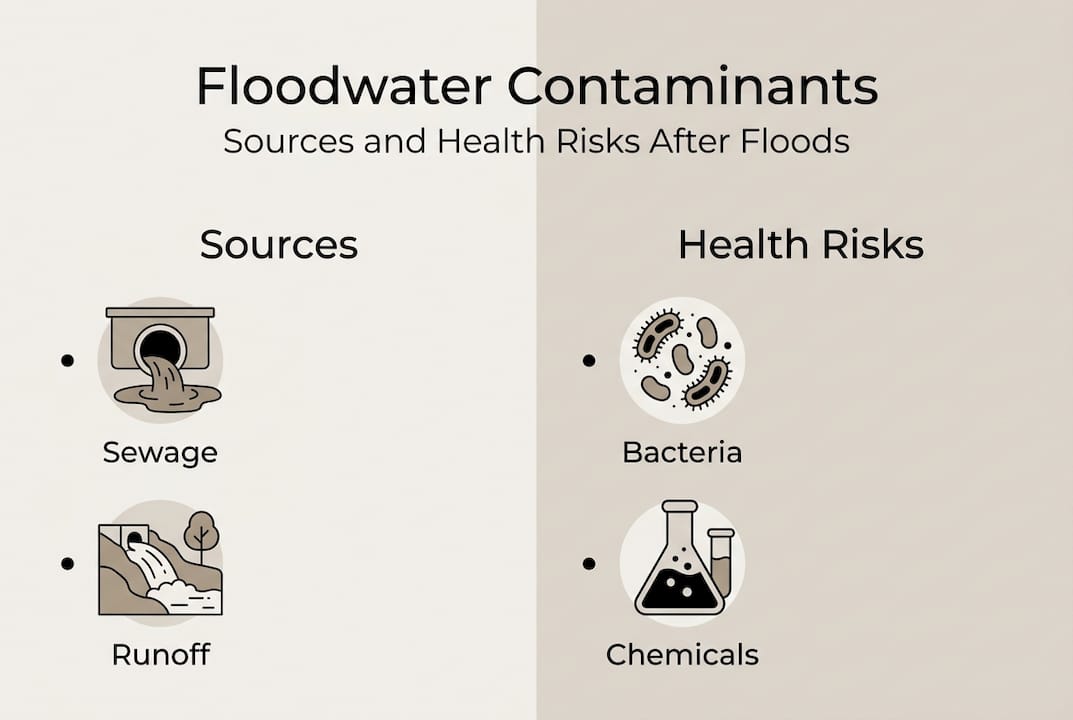
Think about what surrounds a typical Swedish property: farmland, septic systems, old fuel storage tanks, gravel roads treated with salts. Each of those is a potential contamination source that a flooding event can carry directly into your groundwater supply.
| Contaminant type | Common sources | Primary health concern |
|---|---|---|
| Coliform bacteria | Sewage, animal waste | Gastrointestinal illness |
| Nitrates | Fertilizers, septic systems | Infant methemoglobinemia |
| Heavy metals (Pb, As) | Soil, old pipes, industrial sites | Neurological and organ damage |
| PFAS | Firefighting foam, industrial sites | Cancer risk, immune disruption |
| Phthalates | Plastics, industrial runoff | Hormonal disruption |
Swedish well conditions add another layer of concern. Around 15 to 20 percent of private wells in Sweden show contamination issues including bacteria, nitrates, radon, arsenic, or PFAS, and dug wells are especially prone to surface water intrusion after floods. That is a significant share of wells that already have baseline problems before any flood occurs.
Here is what many homeowners miss: contamination does not require your well to be submerged. Saturated soil alone can create hydraulic pressure that forces surface water into even well-maintained wells. Our water testing guide outlines exactly which parameters to watch for based on your well type and location.
“After a flood, you should assume your well is contaminated until analysis proves otherwise. Appearance tells you nothing about bacterial load or chemical levels.”
For a detailed breakdown of what safe levels actually look like, our overview of water quality standards for Swedish private wells is a useful reference.
How post-flood contamination happens
Understanding the risks leads us to the question: How does this contamination reach your well in the first place?
The mechanics are more varied than most people realize. Contamination does not require a dramatic wellhead flood. Here are the four most common entry paths:
- Cracked or degraded well casing. Over time, concrete or steel casings develop cracks. Floodwater under pressure finds those gaps and pushes surface water directly into the water column.
- Loose or missing well caps. A cap that is not properly sealed is an open invitation. Debris and bacteria-laden water can enter within hours.
- Surface runoff along the casing exterior. Water traveling along the outside of a buried casing can bypass the grout seal and infiltrate the aquifer.
- Pressure-driven intrusion through saturated soil. When the soil around your well becomes fully saturated, groundwater levels rise rapidly, and surface contamination travels with that rising water table.
Shallow and older wells are particularly at risk. Wells shallower than 15 meters or more than 10 years old are significantly more vulnerable to surface water influence and post-flood contamination compared to newer, deeper drilled wells.
In Sweden, dug wells (grävda brunnar) are disproportionately affected. They sit closer to the surface, have wider casings, and are often located in low-lying areas of older rural properties. Wells in post-drought conditions are also surprisingly vulnerable. Dry soil that has cracked and shrunk creates new infiltration channels, so when a heavy rainfall or flood event follows a drought period, water moves through those channels rapidly and unpredictably.
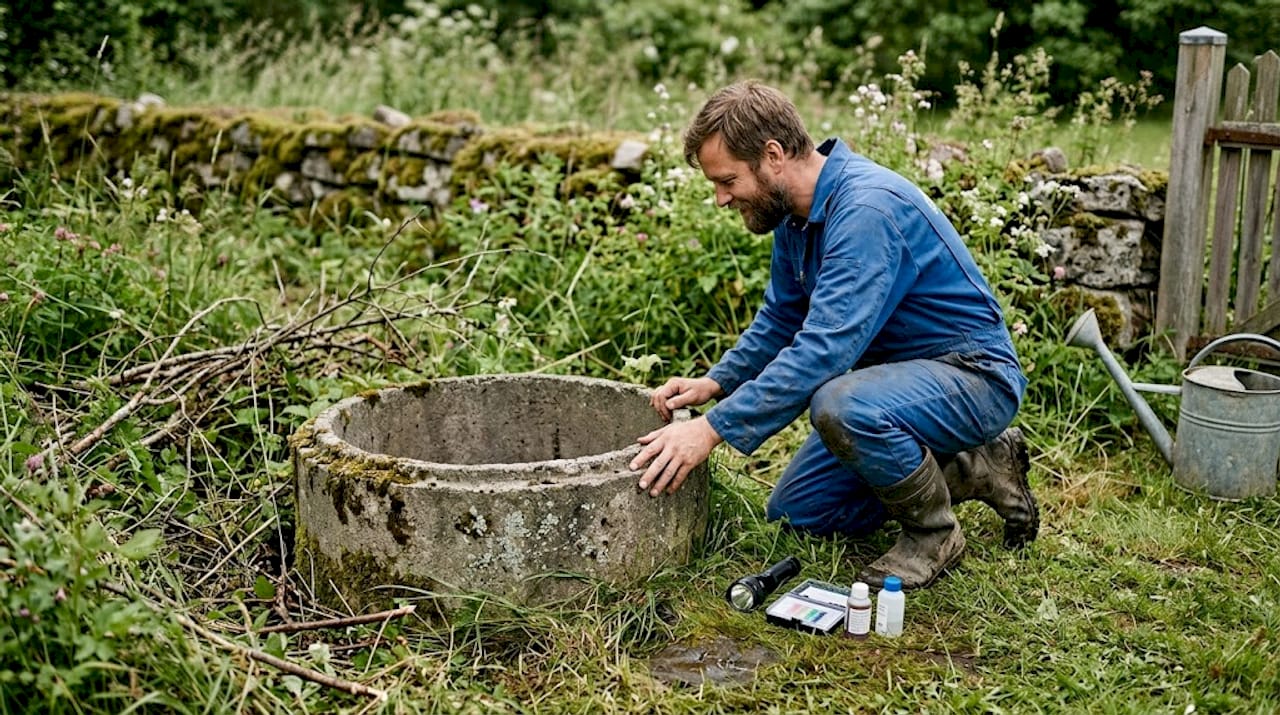
Comparison: Drilled well vs. dug well post-flood risk
| Feature | Drilled well (borrad brunn) | Dug well (grävd brunn) |
|---|---|---|
| Depth | Typically 30 to 100+ meters | Usually 3 to 10 meters |
| Casing integrity | Steel or PVC, less exposure | Concrete rings, more crack-prone |
| Surface water risk | Lower | Much higher |
| Post-flood priority | Moderate | High, test immediately |
For a broader look at what these events mean for your specific well type, the essential water analysis facts for Swedish well owners covers the most common vulnerabilities by region.
Pro Tip: Even if your well showed no visible flood contact, check whether your property sits in a watershed area or downstream from farms or industrial sites. Indirect contamination through groundwater flow is common and often overlooked.
What to do: Testing and disinfection after a flood
Knowing your risks is vital, but taking the right steps immediately after a flood is what truly protects your household.
The sequence matters enormously here. Do not skip steps or reorder them. Here is the correct post-flood response protocol based on established guidance:
- Inspect the well. Look for damage to the casing, cap, or pump. Check for sediment, debris, or signs that floodwater reached the wellhead.
- Pump out floodwater. If the well has been inundated, pump it down until the water clears visually before disinfection.
- Disinfect with shock chlorination. Add an appropriate amount of unscented household bleach to the well, let it circulate, and allow contact time of at least 24 hours before flushing.
- Test after 24 to 72 hours. Once you have flushed the disinfectant through the system and the water runs clear, collect your sample and submit it to an accredited lab.
- Retest if results are positive. A single positive test for bacteria means repeating the disinfection and testing process.
This post-flood methodology is the recognized standard: inspect, pump, disinfect, test, and retest as needed.
Never rely on taste, smell, or appearance to judge safety. Coliform bacteria, nitrates, and PFAS have no odor, no flavor, and no color. They are entirely invisible.
Important for vulnerable households: Infants, elderly individuals, pregnant women, and immunocompromised people should not drink untested well water after any flood, even if water looks clean. Use bottled water until analysis confirms safety.
Swedish authorities are clear on timing. Livsmedelsverket recommends testing private wells every three years under normal conditions, annually for households with vulnerable members, and immediately after floods, heavy rainfall, or any observed change in water quality.
Always use a Swedac-accredited laboratory for your analysis. Results from accredited labs are legally valid and can be used as documentation with your kommunens miljö office, in property sales, or for grant applications related to water improvement measures. See our guide on regular water testing for a practical schedule.
Pro Tip: Contact your local kommunens miljö office after a major flood. They can advise on known local risks in your area, including PFAS contamination near airfields or industrial zones, arsenic from bedrock geology, or agricultural nitrate pressure.
Why timely analysis matters: Health and legal aspects
Implementing best practices is crucial, but why is it so vital to act quickly after a flood? Let’s break down the reasons.
The health consequences of contaminated well water are not abstract. Bacteria cause gastrointestinal illness within days of exposure. Nitrates at elevated levels cause methemoglobinemia, commonly called blue baby syndrome, in infants under six months old. This condition reduces the blood’s ability to carry oxygen and can be fatal without treatment. Long-term exposure to heavy metals like arsenic and lead causes neurological damage, kidney failure, and elevated cancer risk.
The universal health consensus is unambiguous: assume contamination after a flood, disinfect, and test before use. Waiting to see if anyone gets sick is not a strategy. It is a gamble.
- Gastrointestinal illness from bacteria and pathogens, often beginning within 24 to 48 hours of exposure
- Methemoglobinemia in infants from nitrate levels that would cause no symptoms in adults
- Neurological and developmental effects from lead and arsenic, often accumulating silently over months
- Hormonal disruption from PFAS and phthalates, with effects appearing over years
- Increased cancer risk from PFAS exposure, now a recognized concern in parts of Sweden near airports and military sites
From a legal and responsibility standpoint, Swedish homeowners carry full responsibility for their private well water quality. There is no government agency that monitors or guarantees the safety of private well water. Advisories are strong but not mandatory. That means the burden of testing and ensuring safety sits entirely with you as the property owner.
Climate context matters too. Flood frequency in Sweden is increasing due to climate change, meaning more intense rainfall events and more frequent soil saturation. Proactive maintenance of well seals and grading around the wellhead significantly reduces post-flood vulnerability. But maintenance alone is not enough. Analysis is still the only way to confirm safety after a significant weather event.
For a clear overview of the parameters that matter most and what results mean for your household, our water analysis guidelines for Swedish well owners walks you through interpretation step by step.
A reality check from the experts: What most guides leave out
Now that you have the facts, here’s what seasoned well professionals and water analysts want you to know.
Most post-flood guidance focuses on the obvious cases: wellheads underwater, visible debris, pumps that stopped working. But the majority of contamination events we see involve none of that. The well looks fine. The pump runs. The water flows. And the family drinks it for days or weeks before a routine test, or an illness, reveals the problem.
Owner vigilance is not optional. Swedish law does not mandate immediate testing after a flood, but that absence of regulation is not permission to skip the step. It is simply a gap in oversight that places the responsibility squarely on you. We have seen cases where water analysis facts revealed bacterial contamination in wells with no visible signs of flooding whatsoever.
The other truth is this: treatment after illness is far costlier, physically and financially, than prevention through analysis. Post-flood testing should be a household routine, not a rare reaction to obvious damage. As flood events become more frequent across Sweden, that mindset shift is not optional. It is an adaptation to a new climate reality.
Reliable post-flood well water analysis in Sweden
If you’re ready to take action, here’s how to get your post-flood well water properly analyzed.
At Svenskt Vattenprov, we have offered Swedac-accredited well water analysis since 2018, and post-flood testing is one of the most critical services we provide. Our analysis for dug wells includes 31 parameters with specific attention to surface water intrusion risks, bacteria, and chemical contamination typical after flood events.
Not sure which test fits your situation? Our well water testing packages range from targeted bacterial screening to the Komplett+ package covering 71 parameters for full peace of mind. Every result comes with clear explanations and concrete recommendations, not just numbers. Visit Svenskt Vattenprov to order your test kit and get your household’s water confirmed safe.
Frequently asked questions
What contaminants can floods add to my well water?
Floods can introduce bacteria, nitrates, heavy metals, PFAS, phthalates, and other harmful chemicals into private wells. Post-flood spikes in these contaminants have been documented in empirical studies across multiple regions.
How soon after a flood should I analyze my well water?
Test your well water as soon as floodwaters recede, after inspecting and disinfecting your well. Test after disinfecting, then retest if initial results are positive before resuming normal use.
Do I need to analyze my well water if I don’t see flooding?
Yes. Contamination can happen even if floodwater was never visible, especially with saturated soil or older wells. Saturated soil allows ongoing infiltration without any visible surface flooding occurring near the wellhead.
Who is responsible for well water safety in Sweden?
The homeowner is solely responsible for private well water safety in Sweden. Owner responsibility is total, with no mandatory regulation, though Swedac-accredited lab results are required for official documentation and property transactions.
Recommended
- What is water analysis: a guide for Swedish well owners – Svenskt Vattenprov
- How to manage well water risks: A 2026 guide – Svenskt Vattenprov
- How to check environmental water quality: Swedish wells – Svenskt Vattenprov
- Discover signs of contaminated drinking water – protect your well in 2 – Svenskt Vattenprov