

Water sampling recommendations for safe wells 2026
Up to 80% of wells show deficiencies even though the water appears completely clear. This is a figure that surprises most well owners, and it shows why you cannot rely on visual impression alone. Bacteria, metals, PFAS, and radon are invisible, odorless, and tasteless, but they can cause serious health problems over time. This guide provides concrete recommendations on when to take a sample, how to do it, and which test is right for your well.
Table of Contents
- Key Criteria for Water Testing – How to Determine When it's Needed
- How to Take a Water Sample – Step-by-Step Guide
- The Most Common Water Tests for Private Wells – What is Analyzed?
- Comparison: Different Water Tests and When They Are Suitable
- Situation-Based Recommendations – How to Choose the Right Water Test
- Test Your Water Easily – Expert Help and the Right Analysis at Svenskt Vattenprov
- Frequently Asked Questions About Water Testing and Recommendations 2026
Key Insights
| Point | Details |
|---|---|
| Regular sampling required | Test at least every three years, more often with small children or uncertain water quality. |
| New limit values 2026 | From 2026, stricter rules for PFAS and fluoride in individual drinking water wells will apply. |
| Correct testing method ensures safety | Use sterile bottles from an accredited lab and follow instructions carefully. |
| All wells are unique | Well type, household size, and water history determine the best test package. |
Key Criteria for Water Testing – How to Determine When it's Needed
The most common question we get is: how often do I actually need to test my water? The answer depends on several factors, but the basic rule is clear. The Swedish Food Agency recommends at least every three years for most wells, but annually if you have children under 5 or if more than two households share the well.
Climate change means that the old rule of thumb is becoming increasingly inadequate. Heavier rains and more floods increase the risk of surface water entering the well, especially in dug wells with a lower level of protection. This is one reason why regular water testing has become more important in recent years.
Always take a new sample in these situations:
- New well or newly installed water system
- Flood or heavy rainfall near the well
- Renovation or excavation work nearby
- Someone in the household gets sick without a known cause
- Water changes smell, taste, or color
- Pregnancy in the household
- Property sale is planned
Remember: Clear water is not the same as safe water. Many of the most dangerous substances in well water are completely invisible to the naked eye.
Pro tip: Always schedule testing in the spring or autumn. Groundwater levels are most stable then, providing a more representative result than in the middle of a dry summer or after snowmelt.
For the sampling to yield correct results, you need to follow correct sampling instructions. Incorrect technique can lead to misleading results, which is as bad as not testing at all.
How to Take a Water Sample – Step-by-Step Guide
Sampling is simpler than many people think, but requires accuracy. The result is only as good as the sampling allows. Here is the process from start to finish:
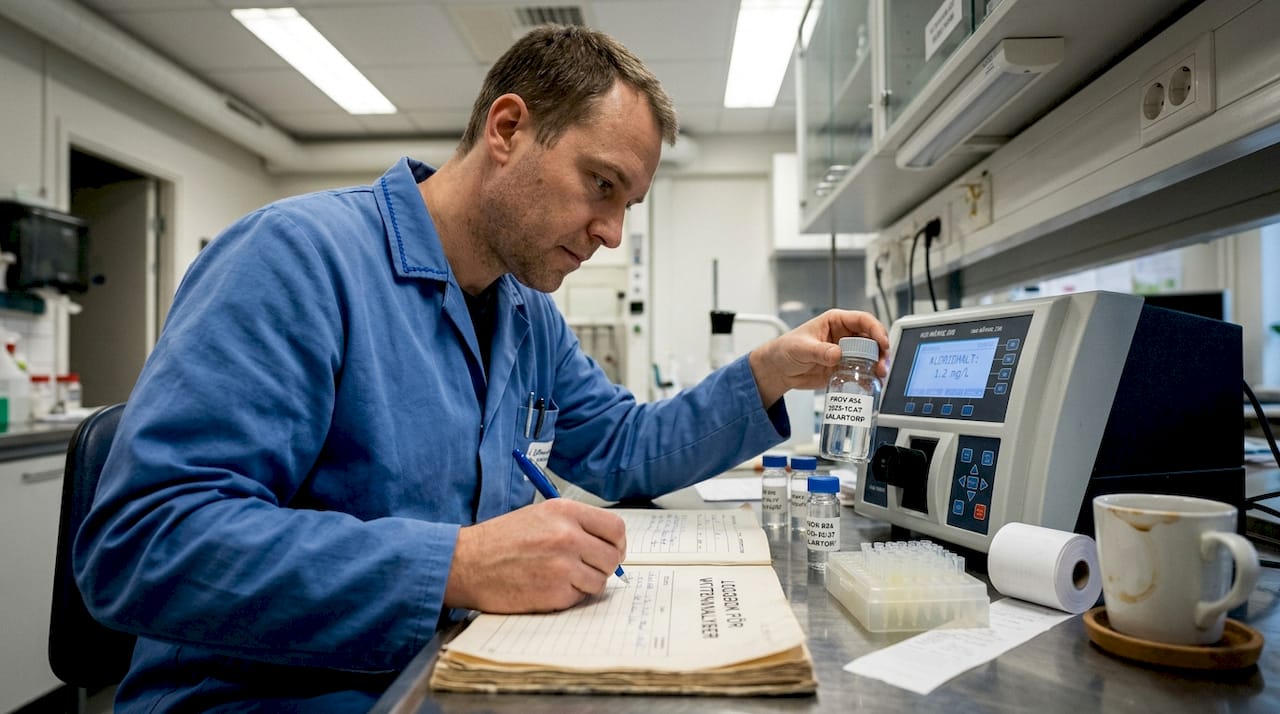
- Order a sampling kit from a Swedac-accredited laboratory. The kit contains sterile bottles adapted for different types of analysis.
- Flush the tap for at least two minutes with cold water before taking the sample. This flushes out stagnant water in the pipes.
- Fill the bottles without touching the inside or rim. Contamination from hands or the environment can ruin bacterial analysis.
- Label the bottles correctly with date, time, and sampling location.
- Send the sample directly to the laboratory, preferably the same day. Microbiological samples change rapidly at room temperature.
- Wait for the report, which normally arrives within 5 to 10 working days depending on the analysis package.
Sampling must be done with sterile bottles from an accredited laboratory. It is not optional. Bottles from pharmacies or other sources do not provide reliable bacterial results.
Pro tip: Never take the sample immediately after using the dishwasher or washing machine. Pressure variations in the pipes can draw in air and contaminants that distort the result. Wait at least an hour.
A complete sampling guide is available from us with images and detailed steps. Common parameters analyzed include E. coli, coliform bacteria, nitrate, pH, iron, manganese, fluoride, PFAS, and radon. If you want to know more about how to ensure clean water long-term, there is a complete guide for well owners.
The Most Common Water Tests for Private Wells – What is Analyzed?
The choice of analysis package determines which risks you are actually checking. A normal control covers the most common health risks but misses substances that require specific tests.
Normal control includes bacteria such as E. coli and coliform bacteria, nitrate, pH, hardness, and a number of metals. It is a good starter package for most wells. But from 2026, stricter guidelines for PFAS and fluoride will apply, meaning more well owners will need extended analysis.
| Parameter | Normal Control | Extended Analysis |
|---|---|---|
| E. coli and bacteria | Yes | Yes |
| Nitrate and Nitrite | Yes | Yes |
| pH and Hardness | Yes | Yes |
| Iron and Manganese | Yes | Yes |
| Fluoride | No | Yes |
| PFAS (30 substances) | No | Yes |
| Radon | No | Yes |
| Arsenic and Lead | Limited | Full |
| Pesticides | No | Yes |
What you should test also depends on where your well is located and how it is constructed:
- Dug well: Higher risk of bacteria and nitrates from surface water. Prioritize microbiological analysis.
- Drilled well: Higher risk of metals, radon, and fluoride from bedrock. Extended chemical analysis is recommended.
- Well near agriculture: Always test for nitrate and pesticides.
- Well in granite area (Värmland, Dalarna, parts of Norrland): Radon analysis is particularly important.
- Well near an airport or industrial area: PFAS analysis is a priority.
New from 2026: PFAS-4 may not exceed 4 ng/L and PFAS-21 not exceed 100 ng/L. Fluoride has a lowered guideline value of 1.5 mg/L. If your well has not been tested for these substances recently, it is high time.
Our well water statistics show clear regional patterns. If you want to understand PFAS risks deeper or recognize signs of contamination, there is more to read.
Comparison: Different Water Tests and When They Are Suitable
Not all wells are the same. A dug well in the agricultural landscape of Skåne carries entirely different risks than a drilled well in Dalarna. This affects which test provides the most value for money.
Stricter requirements for PFAS, fluoride, and metals apply from 2026, and 15 to 20% of wells have unsuitable water, while up to 80% have some form of remark. These figures justify a thoughtful choice of analysis.
| Analysis Type | Best Suited For | Covers |
|---|---|---|
| Normal Control | Routine test, all wells | Bacteria, nitrate, pH, basic metals |
| Drilled Well (41 parameters) | Drilled wells | Metals, fluoride, radon, bacteria |
| Dug Well (31 parameters) | Dug wells | Bacteria, surface water risks, nitrate |
| Complete+ (71 parameters) | Maximum security | All of the above plus PFAS, pesticides |
| PFAS analysis | Risk areas | 30 PFAS substances |
| Radon analysis | Granite areas | Radon specifically |
Some rules of thumb for choosing correctly:
- Do you have a dug well and haven't tested in three years? Start with a dug well analysis.
- Do you have a drilled well? Choose a drilled well analysis that covers the most common risks.
- Do you live near an airport, fire training ground, or industrial area? Add PFAS analysis regardless of well type.
- Are you planning to sell your property? Always request or order a complete current analysis to avoid disputes.
Pro tip: If you are unsure about the well type, check the property documentation or contact the municipal environmental office. The well type determines which risks are most relevant and saves you unnecessary costs.
Situation-Based Recommendations – How to Choose the Right Water Test
Theory is good, but most well owners want to know: what should I do now? Here are concrete recommendations for the most common situations.
New wells, floods, or pregnancy require more frequent testing than usual. It's not overly cautious, it's wise.
Choose analysis based on your situation:
- Routine check, no known risk: Normal control every three years is a minimum.
- New well: Test every six months for the first two years. New wells can have unstable water quality during the run-in period.
- Children under 5 or pregnancy: Test annually. Nitrate is particularly dangerous for infants and can cause methemoglobinemia (lack of oxygen in the blood).
- After flood or heavy rain: Test immediately. Do not wait for the next scheduled testing.
- Health symptoms without known cause: Test immediately and include microbiological analysis.
- Property purchase or sale: Always demand or order a current comprehensive analysis.
Important: If you notice that the water smells different, looks cloudy, or tastes strange, stop drinking it and test immediately. Do not wait.
Recognizing signs of contamination early can help you act before health problems arise. If you want to understand how Swedish water quality varies regionally, it provides good background for your own results.
Pro tip: Always save your analysis reports. If you sell the property, apply for grants for water improvement measures, or contact the municipal environmental office, documented results from an accredited laboratory are invaluable.
Test Your Water Easily – Expert Help and the Right Analysis at Svenskt Vattenprov
Now you know when to test, how it's done, and which test suits your situation. The next step is to actually order the analysis. At Svenskt Vattenprov, you get a complete kit sent home, clear instructions, and a Swedac-accredited analysis result with personal guidance.
Choose the package that suits your well: complete water analysis for maximum security with 71 parameters, dug well water analysis for dug wells focusing on bacteria and surface water risks, or drilled well water analysis for drilled wells with full coverage of metals and fluoride. All analyses are performed by SGS Analytics, and the results are legally valid. Unsure which package you need? Contact us, and we will help you choose correctly without hassle.
Frequently Asked Questions About Water Testing and Recommendations 2026
How often do I need to take water samples if I have small children?
The Swedish Food Agency recommends annual sampling in households with children under 5 years old. This is because small children are more sensitive to bacteria and nitrates in drinking water.
What new limit values apply to PFAS and fluoride in 2026?
From 2026, PFAS-4 may not exceed 4 ng/L and fluoride may not exceed 1.5 mg/L in drinking water from private wells. If you haven't tested for these substances recently, you should do so now.
How quickly must the water sample be sent to the lab?
The sample should be sent immediately after sampling, preferably on the same day. Microbiological samples change at room temperature, and delays can lead to misleading bacterial results.
Are guideline values for private wells binding?
Guideline values for private wells are recommendations, not legal requirements. However, they play a significant role in property transactions and contact with the municipal environmental office.