

What is water hygiene? A guide for homeowners with private wells 2026
Many homeowners with private wells believe their water is always clean and safe simply because it comes from deep underground. The reality is more complex. Well water can contain bacteria, chemicals, and metals that affect your health, even if the water looks clear. Water hygiene for private wells involves actively ensuring quality through regular analysis, proper maintenance, and prompt action in case of deviations. This guide provides you with concrete tools to protect your household from hidden contamination and explains the steps you need to take for a reliable water supply all year round.
Table of Contents
- Key Points to Understand About Water Hygiene
- What Does Water Hygiene for Private Wells Entail?
- Methods and Measures to Ensure Water Hygiene
- Addressing Climate Impact and Other Challenges to Water Quality
- Practical Guide for Water Analysis and Regular Maintenance
- Test and Secure Your Well Water with Svenskt Vattenprov
- Frequently Asked Questions About Water Hygiene for Private Wells
Key Points to Understand About Water Hygiene
| Point | Details |
|---|---|
| Regular analysis protects health | Test well water at least every three years to detect bacteria, metals, and chemical contaminants before they cause harm. |
| Well protection prevents external contamination | Tight lids, correct slope, and protective distances to sources of contamination dramatically reduce the risk of bacterial intrusion. |
| Climate change increases risks | Drought concentrates pollutants, while heavy rainfall can wash in bacteria, requiring extra vigilance during extreme weather. |
| Various purification methods are available | UV light, ozone, shock chlorination, and filters offer protection against specific threats depending on your water quality. |
| Accredited labs provide reliable results | Professional analysis according to Swedac standards ensures that results are accurate and legally valid. |
What Does Water Hygiene for Private Wells Entail?
Water hygiene encompasses all measures that ensure your well water is safe to drink, cook with, and use daily. It's not just about the water looking clean. Invisible threats such as coliform bacteria, E. coli, nitrates, and heavy metals can be present even in crystal-clear water. Water hygiene for private wells refers to measures to ensure that drinking water is safe and free from contamination through regular monitoring, maintenance, and analysis.
The Public Health Agency of Sweden and the Swedish Food Agency recommend testing your well water at least every three years. This frequency increases to annual checks if you have young children in the household, as their immune systems are more sensitive to waterborne diseases. Many well owners forget that water quality changes over time. The ground around the well can be affected by agriculture, new construction, or natural geological processes that release metals from the bedrock.
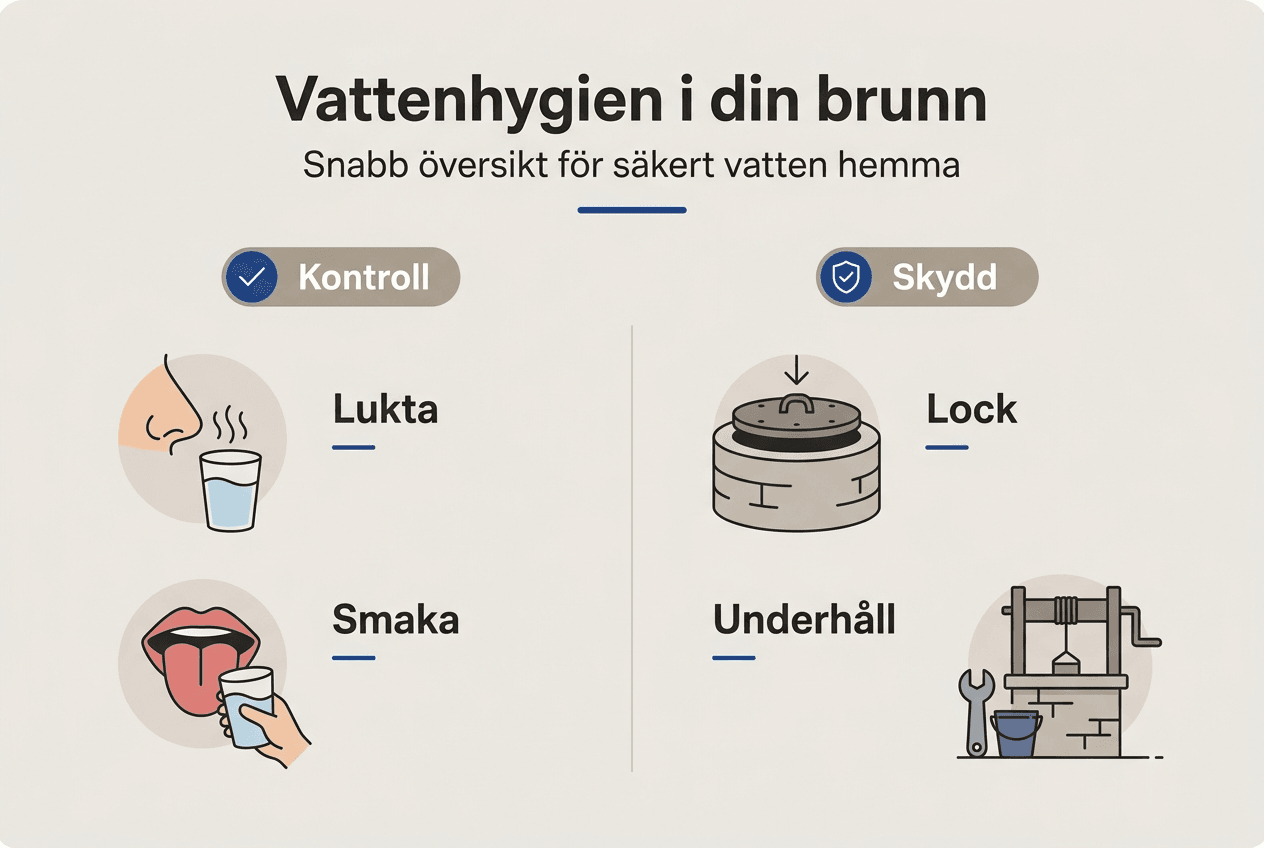
Basic water hygiene begins with physical protection of the well. A tight lid prevents small animals, insects, and surface water from entering. The ground around the wellhead should slope away from the opening so that rainwater drains away instead of collecting and potentially leaking in. Maintain a distance of at least 50 meters from sewage systems, manure piles, and other sources of contamination. These simple measures significantly reduce the risk of bacterial contamination.
Pro tip: Document every water analysis and save the results in a binder along with maintenance dates. This helps you detect slow changes in water quality and becomes invaluable when selling the property.
In addition to physical protection, water hygiene requires regular monitoring. If you notice changes in the water's smell, taste, or color, you should immediately take a sample for analysis. Cloudy water can indicate sediment or bacterial growth. A metallic taste often indicates high levels of iron or manganese. Routine testing catches problems before they become acute health risks, giving you time to take improvement measures calmly.
Methods and Measures to Ensure Water Hygiene
Protecting your water quality requires both preventive measures and emergency interventions when problems are detected. Methods and barriers for water hygiene include well protection with lids and sloping, regular inspection, sampling at accredited labs, boiling in case of suspicion, and maintenance of pumps and filters. Here are the most important methods in order of priority:
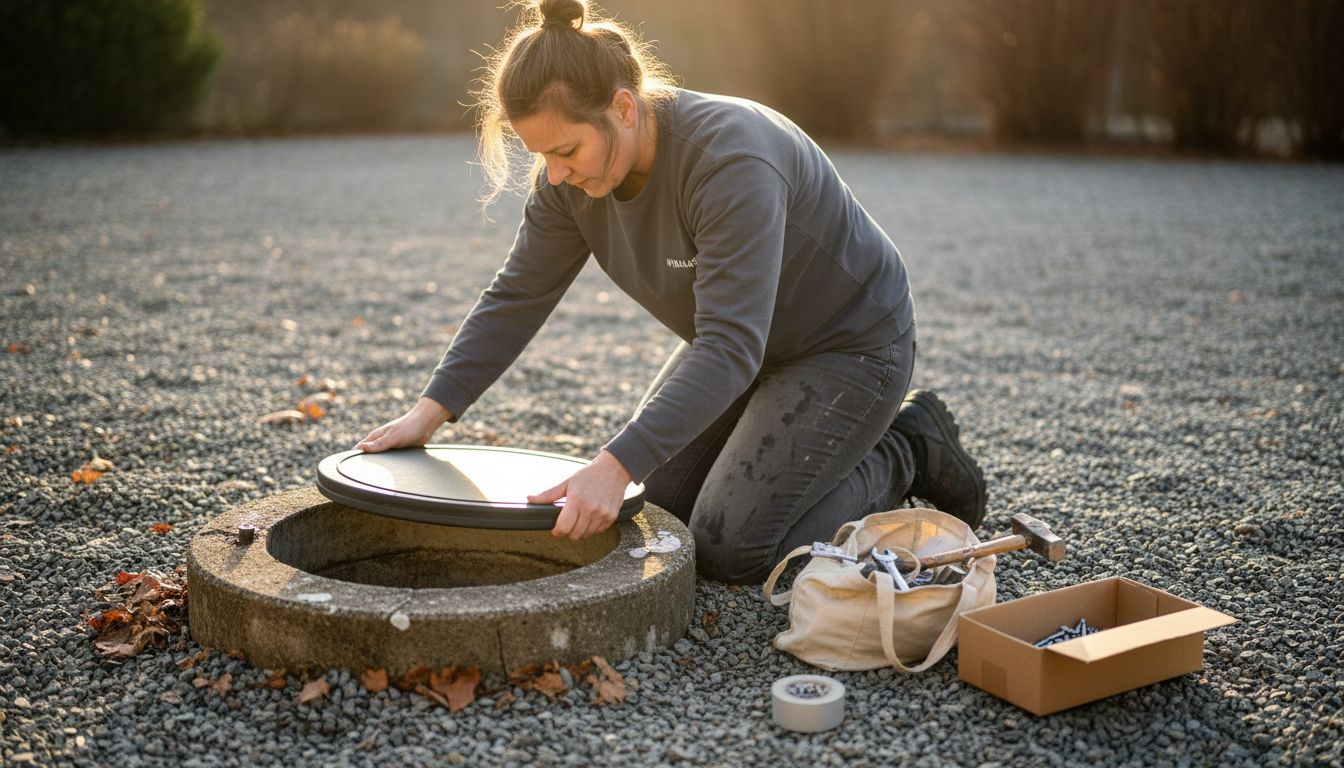
- Secure the physical protection of the well by installing a tight, lockable lid that prevents the entry of surface water, animals, and debris.
- Annually check that the ground around the well slopes away from the opening and that there are no cracks in the well casing.
- Conduct professional sampling according to instructions from an accredited laboratory to obtain legally valid results.
- Install UV light or ozone treatment if analysis shows recurring bacterial problems, which kills microorganisms without chemicals.
- Perform shock chlorination in case of acute bacterial contamination by adding chlorine concentrate and thoroughly flushing the system.
Pro tip: Replace old well lids with modern models featuring rubber seals and ventilation. Old wooden lids or concrete slabs without seals often allow contaminants to enter during heavy rain.
Maintenance of pumps and filters plays a crucial role in preventing bacterial spread in the system. Pumps that remain idle for long periods can become breeding grounds for bacterial growth. Filters that are not changed regularly accumulate organic material that feeds microorganisms. Flush the system thoroughly after prolonged periods of inactivity, especially in holiday homes that are empty during winter.
In case of suspected contamination, boiling all drinking water is recommended until analysis shows the problem is resolved. Boil the water for at least one minute at a rolling boil to kill bacteria and viruses. However, boiling does not remove chemical contaminants such as nitrates or heavy metals, which underlines the importance of accurate analysis to understand the nature of the problem.
| Purification Method | Effective Against | Cost | Maintenance |
|---|---|---|---|
| UV light | Bacteria, viruses | Medium | Annual lamp replacement |
| Ozone treatment | Bacteria, odor, taste | High | Minimal, check function |
| Shock chlorination | Acute bacterial contamination | Low | One-time measure as needed |
| Activated carbon filter | Chemicals, taste, odor | Low-medium | Replace every 6-12 months |
| Reverse osmosis | Heavy metals, salts, chemicals | High | Membrane replacement every 2-3 years |
The choice of purification method depends on the specific problems revealed by your water analysis. Bacterial problems require different solutions than high metal concentrations. Therefore, thorough analysis is always the first step before investing in purification equipment.
Addressing Climate Impact and Other Challenges to Water Quality
Climate change creates new challenges for well owners who previously didn't have to worry about water quality. Climate impacts such as drought and heavy rainfall require extra vigilance, and empirical benchmarks from the Swedish Food Agency provide practical guidelines for homeowners. Extreme weather affects groundwater in ways that can quickly compromise your water supply.
During dry periods, the groundwater level drops, which can lead to several problems. Wells that become shallower concentrate pollutants in a smaller volume of water. Mineral levels such as iron and manganese increase, causing a metallic taste and discoloration. In the worst case, the well may temporarily run dry, forcing you to conserve water or even buy drinking water. Shallow wells are worse affected than deep drilled bedrock wells, but both types are affected by prolonged drought.
Heavy rainfall creates the opposite problem by suddenly introducing large amounts of surface water. This water can carry bacteria from the ground surface, especially if the well has inadequate protection or is located in a low area where water collects. Studies show that bacterial levels in private wells often increase dramatically after intense rain, particularly if it occurs after a long dry period when the ground has become compacted and does not absorb water as effectively.
Here are the main risk factors during extreme weather:
- Drought reduces water volume and increases the concentration of naturally occurring substances such as iron, manganese, and arsenic
- Heavy rainfall can wash in bacteria from manure, sewage, or dead animals if well protection is inadequate
- Spring snowmelt often combines both effects with high water flow that can carry pollutants
- Flooding can directly contaminate wells that are submerged, requiring immediate shock chlorination
| Weather Event | Primary Risk | Recommended Action | Timeline |
|---|---|---|---|
| Prolonged drought | Concentrated minerals | Test metal levels | After 4-6 weeks of drought |
| Heavy rainfall | Bacterial intrusion | Bacterial analysis | Within 1 week after rain |
| Snowmelt | Combined contamination | Full analysis | Early spring |
| Flooding | Acute contamination | Shock chlorination, analysis | Immediately |
To protect against climate-related risks, you should follow well water statistics for your region and test the water extra after extreme weather. Modern weather forecasts allow you to plan sampling strategically. Always take samples after unusually heavy rain or after dry periods lasting more than a month. This proactive approach catches problems before they affect your family's health.
Practical Guide for Water Analysis and Regular Maintenance
Conducting accurate water analysis and maintaining your well does not have to be complicated if you follow a systematic process. Regular analysis at least every three years, annually with young children, is the recommendation for quality control. Here are the steps to ensure your water quality:
- Plan sampling during spring or autumn when the groundwater level is stable, avoiding periods immediately after heavy rain or drought.
- Order analysis kits from an accredited laboratory that follows Swedac standards and includes sterile sampling vessels and clear instructions.
- Prepare for sampling by flushing taps for 5-10 minutes to get representative water from the well, not stagnant water from the pipes.
- Take the sample according to the laboratory's instructions, typically by filling containers completely without air bubbles and labeling with date and time.
- Send the sample the same day or store it cool according to instructions, as bacteria can grow or die in the sample container, leading to inaccurate results.
- Wait for analysis results, which usually arrive within 1-2 weeks and include comparison against applicable limit values.
- Act on the results by taking recommended measures if any value deviates from the norm.
For bacterial analyses, timing is critical. The sample must reach the laboratory within 24 hours of sampling to yield accurate results. Therefore, plan sampling on weekdays when mail runs, never before weekends. Chemical analyses are less time-sensitive but should still be sent promptly for the best results.
Pro tip: Photograph your analysis results and save them digitally in cloud storage along with dates and any actions you have taken. This creates a history that helps you and future owners understand the well's development over time.
Maintenance of the well itself requires both regular inspections and emergency measures when needed. Check the well cap every spring for cracks or faulty seals. Inspect visible parts of the well casing for corrosion or damage. Listen for unusual noises from the pump that may indicate wear. Document all observations in a logbook along with maintenance and repair dates.
When you receive your analysis results, it is important to understand what the numbers mean in practice:
- Coliform bacteria above 0 CFU/100ml require immediate action, usually shock chlorination followed by new analysis
- E. coli indicates fecal contamination, and the water should absolutely not be consumed without boiling until the problem is resolved
- Iron above 0.2 mg/l gives a metallic taste and discoloration but is rarely harmful to health
- Nitrates above 10 mg/l may indicate fertilizer or sewage contamination and are particularly dangerous for infants
- Radon above 100 Bq/l should be remedied by aeration or other purification methods
In case of deviating values, always contact the laboratory or a water consultant for advice on appropriate measures. Do not attempt to solve serious problems on your own without professional guidance. A guide on how to test well water provides further details on the sampling process.
Register your well and your analysis results in well water registration to build a database of your water quality. This facilitates comparisons over time and can be valuable for future problem-solving or property sales.
Test and Secure Your Well Water with Svenskt Vattenprov
Taking control of your water quality doesn't have to be complicated or time-consuming. Svenskt Vattenprov offers complete analysis solutions that make the process easy from start to finish. All our analysis packages are analyzed by SGS Analytics, a Swedac-accredited laboratory that follows the regulations of the Swedish Food Agency and the Swedish Environmental Protection Agency. You receive legally sound results that can be used when contacting authorities or when selling property.
Since 2018, we have helped thousands of well owners ensure their water quality. Our water analyses for private wells cover everything from basic bacterial control to comprehensive chemical analyses. If you need a quick check for bacteria, we offer water analysis for bacteria that focuses on the most common microbiological threats. Each analysis comes with clear explanations and concrete recommendations so you understand what the results mean for your specific situation. We guide you through the entire process, from sampling to any necessary measures.
Frequently Asked Questions About Water Hygiene for Private Wells
How often should I test my well water?
Test your well water at least every three years according to the Public Health Agency of Sweden's recommendation. If you have small children in the household, you should test annually as their immune systems are more sensitive to waterborne diseases. Also test immediately if there are changes in odor, taste, or color, after extreme weather such as heavy rain or drought, and if there have been changes in the surroundings such as new construction or agricultural activity.
What are the most common contaminants in well water?
Coliform bacteria and E. coli are the most common microbiological contaminants, often caused by inadequate well protection or surface water intrusion. Chemically, iron and manganese are most common, causing a metallic taste and discoloration. Nitrates from fertilizer or sewage occur in agricultural areas. In some regions, radon, arsenic, or PFAS are problems depending on geological conditions or proximity to contamination sources.
What can I do if the test shows contamination?
In case of bacterial contamination, perform shock chlorination by adding chlorine concentrate to the well, letting it work for 12-24 hours, and then thoroughly flushing the system. Take a new sample after one week to confirm that the problem is resolved. For chemical contaminants, the measure depends on the type: iron and manganese require filters, nitrates may require a new well or reverse osmosis, radon is remedied by aeration. Always contact a water consultant for advice on serious deviations.
Are there legal requirements for water quality for private wells?
Private wells are not subject to the same strict legal requirements as public waterworks, but as a property owner, you are responsible for ensuring that the water is safe according to the Environmental Code. When selling property, a current water analysis is required, showing that the water meets the Swedish Food Agency's drinking water standards. The municipal environmental and health protection committee may require measures if the well poses a health risk. Official requirements for well water explain the regulations in detail.
How does climate affect water quality in my well?
Climate change with more extreme weather affects well water through both drought and heavy rainfall. Drought lowers the groundwater level, which concentrates minerals and can temporarily dry up the well. Heavy rainfall can wash in bacteria from the ground surface if the well protection is inadequate. Snowmelt often combines both effects. Flooding can directly contaminate wells. Therefore, test the water extra after extreme weather and ensure that the well cap is tight and that the ground slopes away from the well.
Can I trust that my well water is clean if it looks clear?
No, clear water does not guarantee safety because many dangerous contaminants are invisible. Bacteria, viruses, nitrates, radon, and many chemicals show no visible signs even at high concentrations. A metallic taste or discoloration indicates certain problems, but the absence of abnormal odor or taste does not mean the water is safe. Only professional analysis can confirm that your water meets drinking water standards. Regular testing is the only way to be sure.