

4 types of water analysis for Swedish private wells
TL;DR:
- Private wells in Sweden face unique microbiological, chemical, physical, and radiological risks requiring targeted testing.
- Accredited lab analysis is essential for accurate results, especially for vulnerable groups and long-term contaminants.
- Comprehensive testing provides peace of mind by detecting both immediate hazards and long-term health risks.
Sweden has over 700,000 private wells, and every single one of them carries unique risks that public water systems simply don’t face. Your well draws from local groundwater shaped by the geology beneath your property, nearby agricultural activity, and the age and condition of your well structure. Choosing the wrong type of water analysis means you could be drinking contaminated water while believing it’s perfectly safe. The main types of water analysis for private wells fall into four categories: microbiological, chemical, physical, and radiological. This guide walks you through each one, explains what it detects, and helps you decide what your household actually needs.
Table of Contents
- How to choose the right type of water analysis for your well
- Microbiological analysis: Guarding against bacteria and coliforms
- Chemical and emerging contaminant analysis: Beyond the basics
- Physical and radiological analysis: Advanced checks for specific risks
- Why comprehensive testing is often worth it (and what homeowners get wrong)
- Find a water analysis package designed for your Swedish well
- Frequently asked questions
Key Takeaways
| Point | Details |
|---|---|
| Choose analysis by risk | The right water test depends on your well type, location, and family’s health needs. |
| Bacteria isn’t the only threat | Chemical and radiological contaminants can harm health even if water looks and tastes fine. |
| Lab testing is essential | Only accredited labs provide dependable, regulation-compliant results—DIY kits aren’t enough. |
| Regular testing protects health | Re-test at recommended intervals and after any changes or contamination risks to keep water safe. |
How to choose the right type of water analysis for your well
Before you order any test, it helps to understand what you’re actually trying to protect against. Water risks aren’t one-size-fits-all. They depend on where you live, what kind of well you have, and who’s drinking the water every day.
The four main risk areas are:
- Microbiological risks: Bacteria, coliforms, and other pathogens that cause acute illness
- Chemical risks: Heavy metals, nitrates, PFAS, and other compounds with long-term health effects
- Physical risks: pH imbalance, turbidity, conductivity, and color changes that signal corrosion or contamination
- Radiological risks: Radon and uranium, which are naturally occurring in granite-rich regions of Sweden
Several factors determine which risks are most relevant for your well. If your property sits near farmland, nitrate and pesticide contamination is a real concern. A drilled well in Värmland or Dalarna faces different threats than a dug well in Skåne. Households with infants, elderly members, or anyone with a compromised immune system face higher health stakes if something goes wrong.
Swedish health authorities follow LIVSFS 2022:12, which sets the framework for drinking water quality. Private wells aren’t legally required to meet public water standards, but health authorities strongly recommend following the same annual or triannual guidelines. That’s not a technicality worth ignoring.
One thing that matters more than most people realize: the lab you use. Home test kits sold at hardware stores can give you a rough indication, but they’re not reliable enough for health decisions. Following guidelines for Swedish well analysis means using a Swedac-accredited laboratory that analyzes samples against established Swedish and EU limits. Use the water quality checklist to map your specific risk factors before deciding which test package fits your situation.
Pro Tip: If you’ve never tested your well, start with a broader panel rather than a basic bacteria-only test. You may be surprised by what’s present even when the water looks and tastes completely normal.
Microbiological analysis: Guarding against bacteria and coliforms
Bacteria testing is the foundation of any water safety program. It’s the most urgent analysis for most well owners because microbial contamination causes immediate, sometimes serious illness. Stomach cramps, vomiting, and diarrhea are the common symptoms, but for infants and elderly individuals, the consequences can be far more severe.
A standard microbiological analysis measures:
- E. coli: The clearest indicator of fecal contamination
- Total coliforms: A broader group that signals potential contamination pathways
- Enterococci: Often used to confirm fecal pollution and assess sanitary risk
Wells near agricultural areas, livestock farms, or flood-prone land are especially vulnerable. Heavy rainfall can push surface water into a dug well within hours. Even a drilled well isn’t immune if the casing is cracked or the seal around the wellhead has deteriorated.
“Annual bacteria testing is recommended, especially for vulnerable groups and after suspected contamination events.”
Annual bacteria testing is recommended, especially for households with young children or elderly residents, and immediately after any suspected contamination event like flooding or nearby construction.
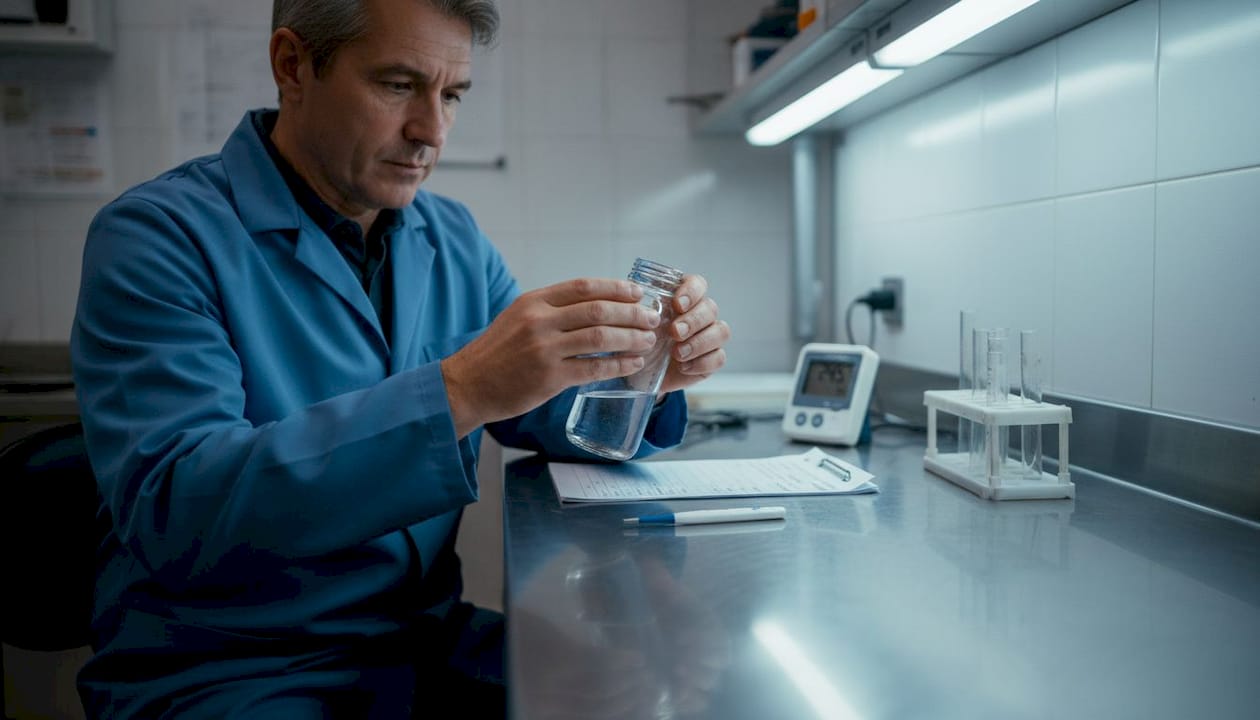
The sampling process matters as much as the lab itself. Bacteria are sensitive to contamination during collection. You need sterile bottles and a specific flushing procedure before collecting the sample. Cutting corners here can produce a false negative, meaning you get a clean result from a contaminated well. Always follow proper sampling instructions provided with your test kit.
If your results come back with elevated bacteria levels, don’t panic. The first step is to notify your local environmental health authority (miljö- och hälsoskyddsnämnd). Then retest after disinfecting the well. A single positive result doesn’t always mean permanent contamination, but it does mean you need to act immediately and stop drinking the water until it’s confirmed safe.
Pro Tip: Always test for bacteria after any work done on your well or water system, even if the work seemed minor. Disturbance of the well structure is one of the most common triggers for bacterial contamination.
Chemical and emerging contaminant analysis: Beyond the basics
Bacteria gets most of the attention, but chemical contamination is arguably the more insidious threat. You can’t taste arsenic. You can’t smell lead. Long-term exposure to these substances builds up quietly, and by the time health effects appear, significant damage may already have occurred.
Here’s a look at the key chemical parameters relevant to Swedish private wells:
| Parameter | Common source | Health effect | Swedish limit |
|---|---|---|---|
| Lead | Old pipes, solder | Neurological damage, especially in children | 5 µg/l |
| Arsenic | Granite bedrock | Cancer risk (long-term) | 5 µg/l (from 2026) |
| Nitrate | Agricultural runoff | Methemoglobinemia in infants | 50 mg/l |
| PFAS | Firefighting foam, industry | Hormone disruption, cancer risk | 0.1 µg/l (from 2026) |
| Iron | Bedrock, pipes | Staining, taste, bacterial growth | 200 µg/l |
New limits for PFAS and arsenic apply from 2026 due to increased health risk awareness, making chemical testing more important than ever for Swedish well owners. PFAS compounds, sometimes called “forever chemicals,” don’t break down in the environment or in your body. They’ve been detected in groundwater near airports, military bases, and industrial sites across Sweden.
Who should prioritize chemical testing?
- Households with infants or young children (nitrate and lead are especially dangerous)
- Wells in granite-rich regions (elevated arsenic and radon risk)
- Properties near former industrial sites or airports (PFAS risk)
- Anyone with a newly drilled well (baseline chemical data is essential)
A basic bacteria-and-nitrate panel is better than nothing, but it leaves significant gaps. Check the Swedish water quality limits to understand exactly which parameters are regulated and at what thresholds. A comprehensive chemical panel gives you a full picture rather than a partial one.
Physical and radiological analysis: Advanced checks for specific risks
Physical and radiological tests are less commonly discussed, but for certain wells and regions, they’re not optional. They reveal threats that microbiological and chemical panels simply don’t cover.
Physical parameters include pH, turbidity, conductivity, color, and odor. These might sound like secondary concerns, but they carry real consequences. A low pH (acidic water) corrodes pipes and fittings, releasing lead and copper directly into your drinking water. High turbidity (cloudiness) can shield bacteria from disinfection treatments and indicates particle contamination. Conductivity changes can signal saltwater intrusion, which is a growing problem for coastal well owners in Sweden.
Here’s a quick comparison of signs that indicate a need for physical or radiological testing:
| Sign or situation | Recommended test |
|---|---|
| Water has a metallic taste | pH and conductivity |
| Cloudy or discolored water | Turbidity and color |
| Well in Värmland, Dalarna, or other granite areas | Radon and uranium |
| Recent flooding or construction nearby | Full physical panel |
| Coastal property | Conductivity and chloride |
Radon deserves special attention. Radon is a special concern in granite regions, and pH and turbidity data are crucial for predicting corrosion and shielding bacteria. Radon is a radioactive gas that dissolves into groundwater from surrounding rock. Long-term exposure through drinking water and inhalation during showering increases cancer risk. If your well is drilled into granite bedrock, a radon test isn’t a luxury. It’s a necessary check.
Pro Tip: Test your water after any significant event: a flood, nearby road construction, a new septic system installation, or even a particularly dry summer that lowered the water table. Changes in the surrounding environment almost always affect groundwater quality. Review essential water analysis facts to understand which events should trigger immediate retesting.
Physical and radiological analyses are less common in basic packages, but they’re indispensable for at-risk wells. Don’t skip them because they seem technical or unlikely to apply to you.
Why comprehensive testing is often worth it (and what homeowners get wrong)
Here’s something most guides won’t tell you directly: a basic water test can actually make your situation worse if it gives you false confidence. We’ve seen homeowners test for bacteria, get a clean result, and conclude their water is safe. Meanwhile, arsenic, PFAS, or radon are present at levels that pose real long-term health risks.
The cost difference between a basic panel and a comprehensive one is often smaller than people expect. What’s not small is the difference in what you actually learn. DIY and home kits are unreliable for trace contaminants, and accredited lab testing is the standard that holds up legally and medically.
The most overlooked elements are physical and radiological screening. Most well owners never think about radon until they’re already in a high-risk region and someone mentions it. By then, years of exposure may have already occurred. Read through crucial analysis facts to understand what a complete picture of your water quality actually looks like.
Our honest take: the peace of mind from knowing your water is genuinely safe is worth the modest extra investment. You’re not just buying a test result. You’re buying the certainty that the water your family drinks every day isn’t quietly causing harm.
Find a water analysis package designed for your Swedish well
Knowing which type of analysis you need is only half the equation. The other half is making sure the testing is done by a lab that meets Swedish standards and provides results you can actually use.
At Svenskt Vattenprov, every analysis is handled by SGS Analytics and Eurofins, a Swedac-accredited laboratory that follows Livsmedelsverket and Naturvårdsverket guidelines. Whether you have a dug well or a drilled one, there’s a package built for your situation. Start with analysis for dug wells or analysis for drilled wells depending on your well type. For maximum coverage, the complete water analysis covers 71 parameters and leaves nothing to chance. Don’t wait for a problem to appear before you test.
Frequently asked questions
How often should I test my private well water in Sweden?
Test for bacteria annually and run a comprehensive analysis every 3 years, or immediately after flooding, repairs, or any suspected contamination event.
Which water analysis is most important for families with young children?
Testing for bacteria, nitrate, and lead is most critical, as infants and children are most vulnerable to nitrate and lead exposure, even at levels that seem low.
Can I use a home test kit instead of accredited lab testing?
Home kits are unreliable for detecting low levels of bacteria or chemicals, and only accredited lab tests meet Swedish safety standards and hold up legally.
What do the results ‘Tjänligt’, ‘Tjänligt med anmärkning’, and ‘Otjänligt’ mean?
Water analysis results are classified as ‘Tjänligt’ (safe to drink), ‘Tjänligt med anmärkning’ (safe but with noted concerns), or ‘Otjänligt’ (unsafe and not suitable for drinking).