

Water Quality for Well Owners: Health and Safety 2026
Many well owners assume that water from their private well is always clean and safe to drink. The reality is more complex. Unfit water can contain bacteria, metals, and chemicals that affect both health and the property's technical systems. This article explains why water quality is crucial for your safety, how to interpret water analysis results, and what measures protect you and your family from invisible risks in your drinking water.
Table of Contents
- Key Insights on Water Quality and Water Analysis
- What Does Water Quality Mean for Well Owners?
- How Do You Interpret Water Analysis Results?
- Common Water Problems and How They Affect Your Well
- How to Protect Your Well and Improve Water Quality
- Discover Services for Water Analysis and Safe Well Water
- Frequently Asked Questions about Water Quality for Well Owners' Drinking Water
Key Insights
| Point | Details |
|---|---|
| Importance of water quality | Water quality is crucial for health and the property's technical systems. |
| Three classifications of water | Water is classified as potable, potable with remarks, or unfit according to the Swedish Food Agency. |
| Continuous sampling | Regular water sampling protects against bacteria and harmful substances. |
| Make informed decisions | Knowledge of water quality helps well owners make informed decisions and prevent risks. |
Key Insights on Water Quality and Water Analysis
To quickly understand the importance of water quality and how to interpret your water analysis, here are the main points:
| Insight | Significance |
|---|---|
| Healthy drinking water is crucial | Protects against diseases and long-term health risks |
| Water analyses classify the water | Potable, potable with remarks, or unfit |
| Regular testing is recommended | Every three years according to the Public Health Agency of Sweden |
| Knowledge provides control | Informed decisions about well maintenance and measures |
With these basic insights, you can begin to understand how water analysis works and why it is a necessary part of a well owner's responsibility.
What Does Water Quality Mean for Well Owners?
Water quality encompasses all factors affecting the suitability of water for drinking. It involves chemical substances, biological organisms, and aesthetic properties that together determine if the water is safe and usable. The importance of water quality for well owners lies in ensuring healthy drinking water free from bacteria, chemicals, and metals.
Key parameters analyzed include:
- Bacteria such as E. coli and coliform bacteria, indicating fecal contamination
- Metals such as iron, manganese, lead, and arsenic, which can cause both health problems and technical issues
- Chemicals including nitrates, PFAS, and pesticides from agriculture and industry
- Physical properties such as pH value, color, odor, and taste, which affect usability
Unfit water creates concrete risks. Bacteria cause stomach flu and infections, especially in children and the elderly. High metal levels lead to corrosion in pipes and taps, exacerbating the problem by releasing even more metal into the water. Iron and manganese cause brown-colored water that stains textiles and porcelain. Nitrates are particularly dangerous for infants because they affect oxygen transport in the blood.
To understand your test results, you need to know about important water parameters for private wells 2026 and what each parameter means in practice. Many well owners focus solely on bacteria, but miss critical metal levels or chemical contaminants that build up over time.
Pro tip: Always compare your analysis results with previous samples. Sudden changes in parameters that were previously stable can indicate problems with the well or contamination from the surroundings, even if the values are still within the limit values.
How Do You Interpret Water Analysis Results?
Reading a water analysis requires systematic understanding of what the numbers mean in relation to limit values. Here is a step-by-step guide:
- Identify the sampling date and analysis method to ensure the sample is current and performed according to standard
- Find the classification at the top of the report stating whether the water is potable, potable with remarks, or unfit
- Review each parameter and compare the value against the limit value specified in the same row
- Read the comments from the laboratory explaining deviations and recommending actions
- Note if any values are close to the limit value even if they do not exceed it, as this can be a warning sign
Analysis results are classified according to limit values from the Swedish Food Agency into three categories. Potable water meets all requirements and is safe to drink without restrictions. Potable with remarks means that some parameters deviate but do not pose an immediate health risk, often aesthetic factors like iron or manganese. Unfit water exceeds limit values for hazardous substances and must not be used as drinking water.
| Parameter | Limit Value | Potable | Potable with Remarks | Unfit |
|---|---|---|---|---|
| E. coli | 0 per 100 ml | 0 | Not applicable | >0 |
| Coliform bacteria | 0 per 100 ml | 0 | Not applicable | >0 |
| Iron | 200 μg/l | <200 | 200-500 | >500 |
| Nitrate | 50 mg/l | <25 | 25-50 | >50 |
| pH value | 6.5-9.5 | 6.5-9.5 | 6.0-6.5 or 9.5-10 | <6.0 or >10 |
Common misunderstandings include believing that clear water is always clean, that bad taste always means unhealthy water, or that a single approved test guarantees continued good quality. Water quality changes over time. To ensure clean drinking water: guide for well owners 2026, continuous monitoring and understanding of seasonal variations and environmental impact are required.
Pro tip: If you are unsure how serious a deviation is, always contact the laboratory or a water consultant. Some parameters like bacteria require immediate action, while others like slightly elevated iron can be managed more long-term. Expert help saves both money and health risks.
Common Water Problems and How They Affect Your Well
Swedish wells face recurring challenges that vary geographically but follow clear patterns. The most common problems include:
- Bacteria from surface water, incorrect well construction, or contamination during maintenance
- Iron and manganese causing brown-colored water, metallic taste, and deposits in pipes
- Arsenic in bedrock, especially in granite areas, which is carcinogenic with long-term exposure
- Radon from uranium-rich rock that increases the risk of lung cancer through inhalation of radioactive gas
- PFAS from industry and fire training sites that do not break down naturally and accumulate in the body
- Nitrates from fertilizer and sewage that are life-threatening for infants
These problems affect both health and daily life in concrete ways. Bacteria cause acute stomach flu with vomiting and diarrhea. Arsenic and radon show no immediate symptoms but dramatically increase cancer risk over decades. PFAS affect the immune system, fertility, and fetal development. High nitrate levels in infants lead to oxygen deficiency that can be life-threatening.
Technically, poor water quality creates extensive problems. Iron and manganese clog filters, faucets, and dishwashers. Low pH corrodes copper pipes and releases toxic copper into the water. Hard water with high calcium levels forms scale deposits that destroy heating elements and reduce the efficiency of water heaters.
Water quality affects both health and technical problems in wells in ways many underestimate. A study from well water statistics shows regional differences where certain counties have significantly higher occurrences of specific contaminants.
Regular sampling is the only method to detect problems before they harm health. Many dangerous substances such as arsenic and radon give no warning signs through taste, smell, or appearance. Only laboratory analysis can identify them.
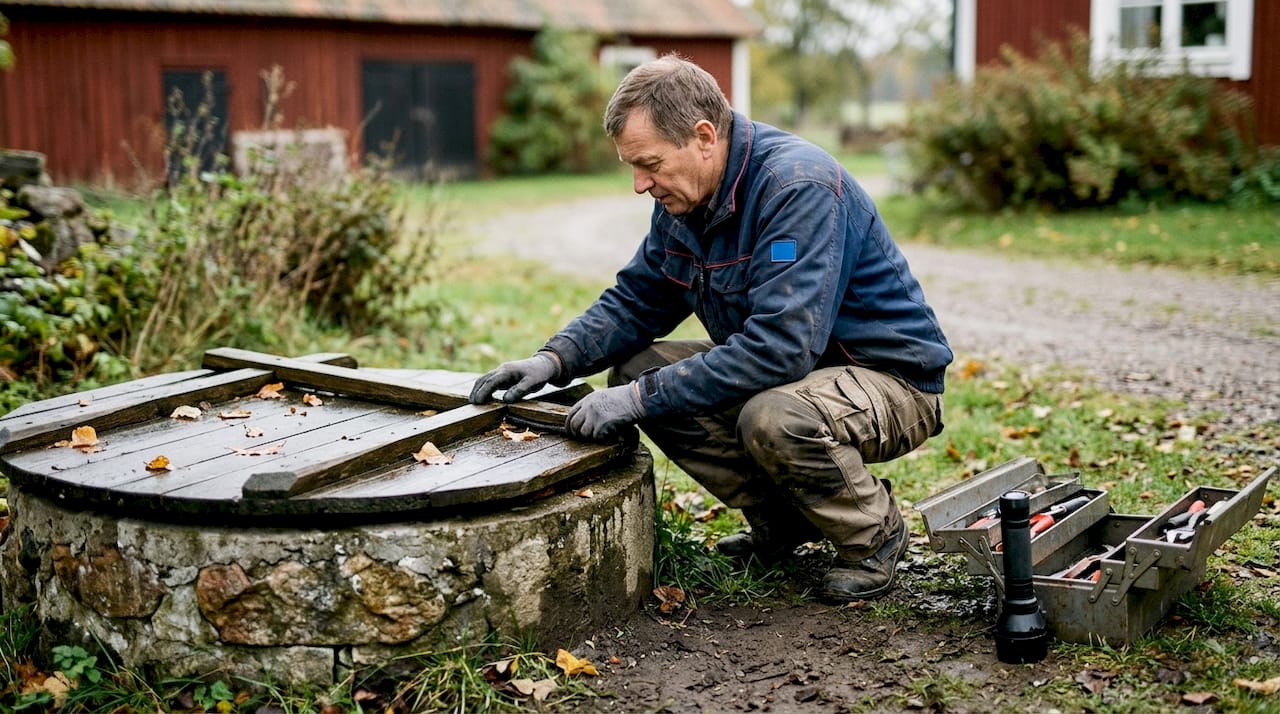
Preventive measures begin by understanding your well's vulnerability based on location, construction, and surroundings. Wells near agricultural land risk nitrate contamination. Dug wells are more susceptible to surface water intrusion than deep drilled bedrock wells. Wells in granite areas need radon control.
How to Protect Your Well and Improve Water Quality
Active well maintenance and regular monitoring are the foundation for safe drinking water. Here are concrete steps you can take:
- Perform a basic water analysis every three years according to the Public Health Agency of Sweden's recommendation, more often if problems are suspected
- Inspect the well cap annually to ensure it is tight and prevents the intrusion of surface water, insects, and small animals
- Keep the area around the well free from sources of contamination such as manure, chemicals, and sewage systems with at least a 30-meter protective distance
- Document all changes in the water's appearance, taste, or odor and take samples immediately if deviations occur
- Install appropriate water treatment based on analysis results, not on guesswork or neighbors' solutions
- Maintain treatment equipment according to the manufacturer's instructions, change filters in time, and check that the system is working
- Register your well with the municipality to receive information about risks in the area and potential grants for measures
Regular testing and proper measures are crucial for protecting health and ensuring clean water from a private well. The timing of sampling affects the result. Avoid sampling immediately after heavy rain or snowmelt when surface water may have temporarily intruded. The best time is after a period of normal water use.
| Analysis Type | When it is suitable | Scope | Recommended Frequency |
|---|---|---|---|
| Basic analysis | Routine check, new well owners | Bacteria, pH, metals | Every 3 years |
| Extended analysis | Suspected problems, sales | Includes more chemicals | As needed |
| PFAS analysis | Near industry, airports | 30 PFAS substances | If suspected |
| Radon analysis | Granite areas | Radon in water and air | One-time check + follow-up |
| Bacterial analysis | After intrusion, flooding | Bacteria only | Immediately in case of problems |
Common mistakes in sampling include not flushing the taps long enough before sampling, which gives misleading results from stagnant water in the pipes. The sampling bottle must be sterile and must not be washed or rinsed beforehand. The sample must be kept cool and analyzed within 24 hours for bacterial samples, otherwise bacteria multiply and the result becomes incorrect.
To test well water 2026 guide correctly, follow the laboratory's instructions carefully. Small errors in sampling can lead to large deviations in results and lead to unnecessary measures or missed problems.
Well water registration with the municipality provides access to information about known risks in your area, eligibility for grants for water-improving measures, and warnings in case of detected contamination in the vicinity. Many municipalities offer free advice to registered well owners.
Pro tip: Create a logbook for your well where you document all water samples, maintenance actions, and observations. This helps you see trends over time and is valuable when selling the property. A well-maintained well with documented sample history increases property value.
Discover Services for Water Analysis and Safe Well Water
Ensuring your water quality doesn't have to be complicated. Svenskt Vattenprov offers complete solutions tailored for Swedish well conditions. From basic bacterial analyses to comprehensive tests with 71 parameters, there are packages for every need and situation.
Our water analyses for private well owners are analyzed by a Swedac-accredited laboratory according to the Swedish Food Agency's regulations. The results are legally sound and can be used when contacting authorities or selling property. Each analysis includes clear explanations and concrete recommendations.
Do you need a quick check for bacteria? Water analysis for bacteria provides answers to the most common health risks. For more comprehensive security, we recommend our complete analysis packages covering everything from metals to chemicals and aesthetic parameters.
Frequently Asked Questions about Water Quality for Well Owners' Drinking Water
When should I test my well water?
Test your well water every three years as a routine check according to the Public Health Agency of Sweden's recommendation. Perform immediate sampling in case of changes in taste, odor, color, or after flooding, intrusion, or maintenance work on the well. New well owners should test the water before regular use.
What are the most common contaminants in well water?
The most common contaminants include coliform bacteria and E. coli from surface water or fecal contamination, iron and manganese causing brown-colored water, and nitrates from agricultural fertilizers. In some areas, arsenic from bedrock, radon in granite areas, and PFAS near industries or airports occur. For more information on water hygiene guide for well owners 2026, you can read our comprehensive guide.
How often should water analyses be done?
Perform a basic water analysis every three years for routine monitoring of healthy wells. For known problems or after measures, test annually until water quality has stabilized. Dug wells and wells near sources of contamination may require more frequent checks. Bacterial tests should be taken more often if the well has previously shown bacterial presence.
What do I do if my water is unfit?
Immediately stop drinking the water and use bottled water or draw from another safe source. Contact the municipal environmental and health protection committee for advice on measures. For bacterial problems, boiling may be a temporary solution, but long-term measures such as disinfection, well sanitation, or UV filter installation are required. Chemical contaminants often require specific water treatment or a new water source.
How can I register my well for safer management?
Register your well through well water registration with your municipality, which provides access to local information on water quality and risks. Registration is voluntary but strongly recommended as it gives you warnings in case of detected contamination in the area and potential grants for water-improving measures. Contact the municipal environmental office for registration forms and guidance.